
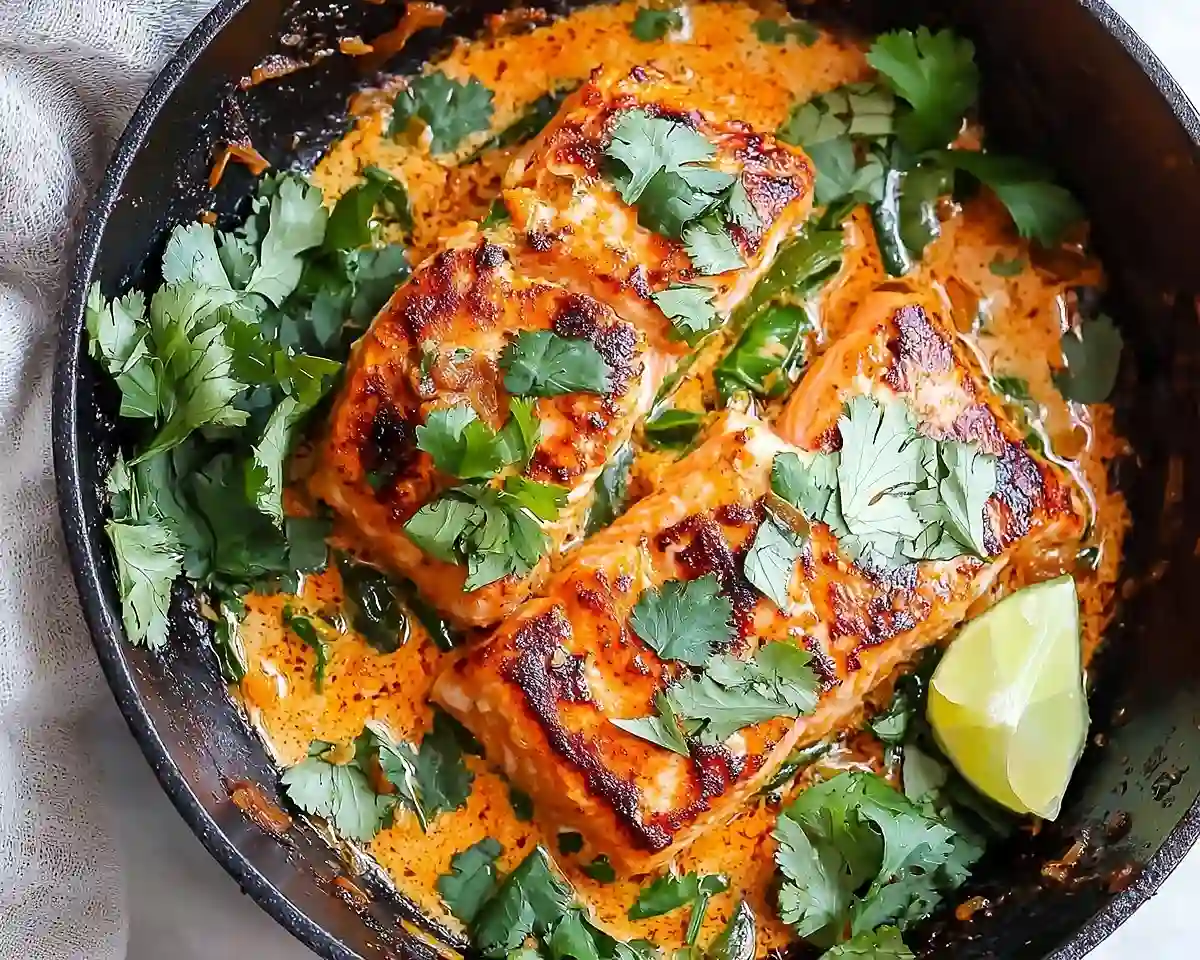
Salmon Coconut Curry with red curry paste, coconut milk, and fresh herbs. This healthy salmon curry dish delivers bold Thai flavors fast.
Hey, I’m Sofia! Welcome to Tasty at Home, where cooking is supposed to be fun, not scary.
Last winter, I stood in my kitchen staring at a beautiful salmon fillet and a can of coconut milk. My usual lemon-butter routine felt boring. I grabbed Thai red curry paste from the back of my pantry—you know, that jar you buy once and forget about?
Well… that spontaneous decision changed everything. The aroma of simmering curry, coconut, and lime filled my kitchen within minutes. My husband actually asked if I’d ordered takeout. Nope, just me finally mixing bold Asian flavors with weeknight simplicity.
This healthy salmon curry dish became our Friday night tradition. Rich, creamy, and bursting with flavor, it beats any restaurant version. Plus, it cooks faster than delivery arrives.
Tasty at Home – Where bold flavors meet everyday kitchens.
Table of Contents
What Makes This Asian Salmon Curry Dish Special
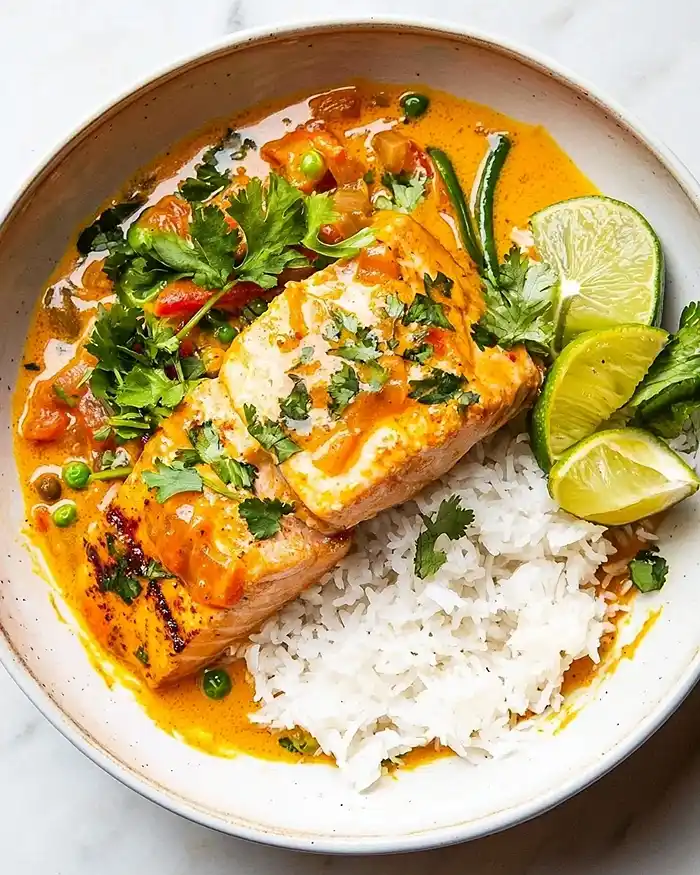
This recipe bridges Thai authenticity with American convenience. You get restaurant-quality results without specialty stores or complicated techniques.
The magic happens when buttery salmon meets creamy coconut milk and fiery curry paste. Fresh vegetables add crunch. Herbs bring brightness. Everything harmonizes in one skillet.
I’ve tested this recipe seventeen times (yes, really). Each version taught me something new about balancing heat, sweetness, and acidity. The result? A foolproof formula that works every single time.
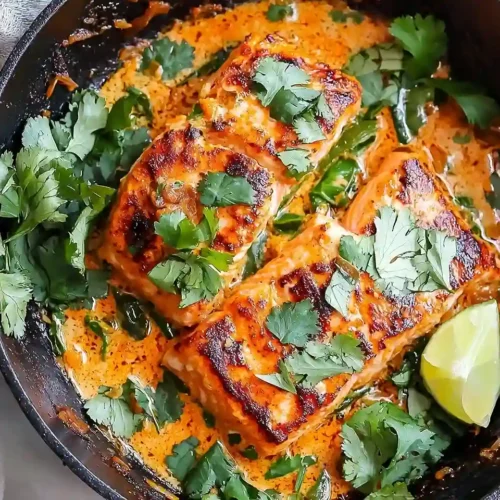
Salmon Coconut Curry
Equipment
- Large skillet
- spatula
- Sharp knife
- Cutting board
- Paper towels
- Can opener
- measuring spoons
Ingredients
Main Ingredients
- 1 pound Fresh salmon Skin-on or skinless
- To taste Salt & pepper Season generously
- 1 tablespoon Olive oil For searing
- 1 tablespoon Butter Adds richness
- ½ Medium onion Chopped, yellow or white
- 2 cloves Garlic Minced, fresh only
- 2 heaping tablespoons Thai red curry paste Key flavor base
- ½ teaspoon Fish sauce Optional
- 13.5 oz Full-fat coconut milk Never light
- ½ teaspoon Brown sugar Balances heat
- ½ cup Matchstick carrots Pre-cut saves time
- 1 heaping cup Broccolini Chopped or broccoli florets
- 1 teaspoon Fresh lime juice Brightens everything
- 2 tablespoons Fresh basil Torn, Thai basil preferred
- 2 tablespoons Fresh cilantro Chopped, finishing touch
Instructions
- Cut salmon into four pieces, pat dry, and season with salt and pepper. Let sit 5-10 minutes.
- Heat olive oil and butter in a skillet. Sear salmon skin-side down 5 minutes, flip and cook 2-3 minutes.
- Remove salmon, tent with foil, and leave about 1 tbsp oil in skillet.
- Sauté chopped onion 3 minutes until golden. Add garlic and curry paste, cook 1 minute.
- Add fish sauce, coconut milk, and brown sugar. Stir and add carrots and broccolini, simmer 5 minutes.
- Add lime juice, return salmon to pan, warm through 2 minutes. Garnish with basil and cilantro. Serve immediately.
Notes
Essential Ingredients for Bold Thai Flavors
For the protein base, choose fresh, high-quality salmon with firm flesh and a clean ocean smell. Wild-caught Alaskan or Atlantic salmon works beautifully. The fat content keeps the fish moist during cooking.
For the curry foundation, authentic Thai red curry paste is non-negotiable. Brands like Mae Ploy or Thai Kitchen deliver genuine flavor. Full-fat coconut milk creates that signature silky texture—don’t substitute light versions here.
Fresh aromatics and vegetables complete the dish. Look for firm broccolini with tight florets and vibrant carrots. Fresh basil and cilantro add the finishing touch that transforms good into unforgettable.
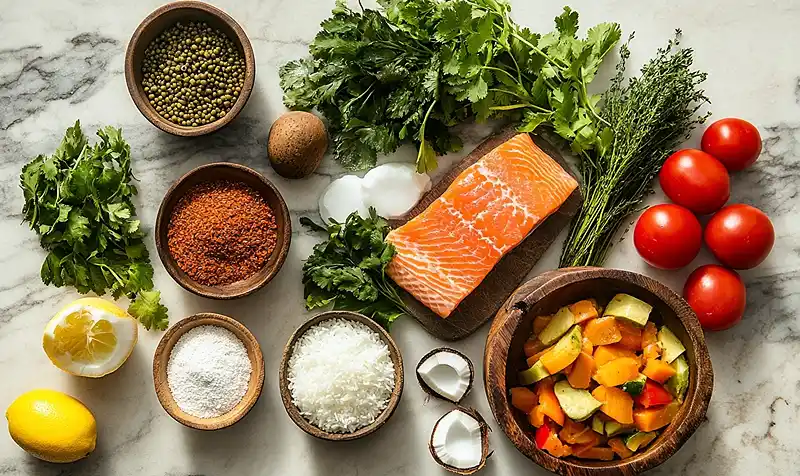
| Ingredient | Amount | Metric | Notes |
|---|---|---|---|
| Fresh salmon | 1 pound | 450g | Skin-on or skinless |
| Salt & pepper | To taste | To taste | Season generously |
| Olive oil | 1 tablespoon | 15ml | For searing |
| Butter | 1 tablespoon | 14g | Adds richness |
| Medium onion | 1/2, chopped | ~75g | Yellow or white |
| Garlic cloves | 2, minced | ~6g | Fresh only |
| Thai red curry paste | 2 heaping tablespoons | ~35g | Key flavor base |
| Fish sauce | 1/2 teaspoon | 2.5ml | Optional but magical |
| Full-fat coconut milk | 13.5 oz can | 400ml | Never light |
| Brown sugar | 1/2 teaspoon | 2g | Balances heat |
| Matchstick carrots | 1/2 cup | ~50g | Pre-cut saves time |
| Broccolini | 1 heaping cup, chopped | ~100g | Or broccoli florets |
| Fresh lime juice | 1 teaspoon | 5ml | Brightens everything |
| Fresh basil | 2 tablespoons, torn | ~5g | Thai basil preferred |
| Fresh cilantro | 2 tablespoons, chopped | ~5g | Finishing touch |
Shopping Tips for US Grocery Stores
Most ingredients live in standard supermarkets. Find Thai red curry paste in the international aisle near soy sauce and rice vinegar. Target, Whole Foods, and Trader Joe’s all stock reliable brands.
Coconut milk sits with Asian ingredients or sometimes near baking supplies. Grab the full-fat version—it’s usually in a 13.5-ounce can. Shake it before opening to recombine separated cream.
Fresh salmon appears at the seafood counter or pre-packaged near frozen sections. Ask the fishmonger for center-cut portions with even thickness. This ensures uniform cooking.
Smart Substitutions and Bold Add-ins
For International Readers:
- Replace fish sauce with soy sauce (though flavor differs slightly)
- Swap broccolini for regular broccoli, green beans, or snap peas
- Use ginger paste if fresh garlic isn’t available
Creative Variations:
- Add bell peppers for extra sweetness and color
- Include bamboo shoots for authentic Thai texture
- Throw in baby spinach during the last minute
- Use shrimp or firm white fish instead of salmon
- Make it spicy with fresh Thai chilies
Equipment and Step-by-Step Cooking Instructions
You need minimal equipment for maximum flavor. A large skillet or sauté pan (10-12 inches) handles everything. Cast iron works beautifully but stainless steel or non-stick also deliver excellent results.
Keep a spatula, sharp knife, and cutting board handy. Paper towels help dry the salmon—this step prevents sticking. A can opener and measuring spoons complete your arsenal.
Step 1: Prepare and Season the Salmon
Cut the salmon into four equal pieces for even cooking. Pat both sides completely dry with paper towels—moisture is the enemy of a good sear.
Season generously with salt and pepper. Don’t be shy here. The seasoning creates flavor depth that complements the curry sauce.
Let the salmon sit at room temperature for 5-10 minutes while you prep other ingredients. This promotes even cooking throughout.
Step 2: Achieve the Perfect Sear
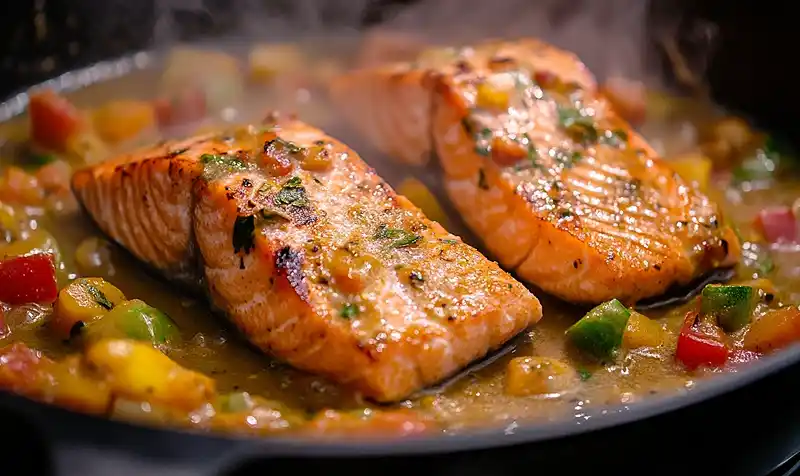
Add olive oil and butter to your skillet over medium-high heat. Wait until the butter melts and starts foaming—this signals the pan is ready.
Place salmon pieces skin-side down (if using skin-on). Listen for that satisfying sizzle. Cook undisturbed for 5 minutes.
Flip carefully and cook another 2-3 minutes. The fish should be almost done—slightly pink in the center. As Thomas Keller emphasizes, proper searing creates depth and locks in moisture.
Step 3: Remove Salmon and Adjust Pan
Transfer cooked salmon to a plate and tent loosely with foil. If you dislike salmon skin, slide it off now—it peels away effortlessly after cooking.
Spoon out excess oil, leaving about one tablespoon in the skillet. This prevents the curry from becoming greasy while maintaining enough fat for sautéing aromatics.
Keep the heat at medium. The remaining oil contains flavor from the salmon—don’t waste it.
Step 4: Build the Aromatic Base
Add chopped onion to the skillet and sauté for about 3 minutes. Stir occasionally until edges turn golden brown and soften.
Oops! I once skipped this step and regretted it. Raw onion in curry sauce tastes harsh and overpowering. Those three minutes of browning create sweetness and complexity.
Stir in minced garlic and Thai red curry paste. Cook for exactly 1 minute, stirring constantly. You’ll smell the spices blooming—nutty, warm, and intoxicating.
Step 5: Create the Creamy Curry Sauce
Pour in fish sauce (if using), coconut milk, and brown sugar. Stir until everything combines into a smooth, fragrant sauce.
Add matchstick carrots and chopped broccolini. Let the mixture bubble gently for about 5 minutes. The vegetables should reach tender-crisp perfection—bright, slightly softened, but still with snap.
Taste the sauce now. Adjust seasoning if needed. The fish sauce adds umami depth that’s hard to replicate, but if you’re skipping it, add a pinch more salt.
Step 6: Finish with Brightness and Herbs
Stir in fresh lime juice—this step is pure magic. The acidity cuts through richness and makes every flavor pop.
Return salmon pieces to the pan, nestling them into the sauce. Let everything warm through for 2 minutes. The salmon finishes cooking gently without drying out.
Sprinkle torn basil and chopped cilantro over the top. Season with additional salt and pepper as needed. Serve immediately while the herbs stay vibrant and the sauce is silky.
Expert Tips for Restaurant-Quality Results
Cook salmon to 125°F internal temperature for medium doneness. It continues cooking after you remove it from heat. Overcooked salmon turns dry and chalky—nobody wants that.
Use full-fat coconut milk always. Light versions separate and taste watery. The fat content creates that luxurious, clingy sauce that coats each piece beautifully.
Don’t rush the onion sautéing phase. Those three minutes build foundational sweetness. Raw or undercooked onions taste bitter and sharp in the finished dish.
Fresh herbs matter enormously. Dried basil and cilantro can’t replicate the bright, grassy notes that fresh herbs provide. Add them at the very end to preserve their impact.
Creative Variations for Every Occasion
Spicy Kick Version: Double the curry paste and add sliced Thai bird’s eye chilies. Serve with cooling cucumber slices on the side.
Vegetable-Loaded Option: Add bell peppers, mushrooms, and snap peas. This creates a complete one-pan meal with more fiber and nutrients.
Holiday Feast Twist: Use this healthy salmon curry dish as an elegant alternative to traditional Christmas dinner. The red and green colors feel festive without the heavy richness.
Meal Prep Friendly: Make the curry sauce ahead and refrigerate for up to 3 days. Cook salmon fresh when serving for best texture.
Low-Carb Adaptation: Serve over cauliflower rice instead of jasmine rice. The sauce still delivers incredible satisfaction without the carbs.
Storage and Make-Ahead Strategy
Store leftover salmon coconut curry in an airtight container for up to 3 days. The flavors actually deepen overnight as spices continue melding.
Reheat gently on the stovetop over medium-low heat. Add a splash of coconut milk if the sauce thickens too much. Avoid microwaving if possible—it can overcook the salmon.
Freeze the curry sauce (without salmon) for up to 3 months. Thaw overnight in the refrigerator. Cook fresh salmon and add to reheated sauce for best results.
| Storage Method | Duration | Best Practices |
|---|---|---|
| Refrigerator | 3 days | Airtight container, reheat gently |
| Freezer (sauce only) | 3 months | Leave out salmon, label container |
| Freezer (complete dish) | 1 month | Quality decreases, texture changes |
Perfect Pairings and Serving Suggestions
Serve over fluffy jasmine rice—the traditional choice that soaks up every drop of sauce. Coconut rice adds extra tropical flair. For a lighter option, try quinoa or cauliflower rice.
Pair with a crisp cucumber salad dressed in rice vinegar. The cool crunch contrasts beautifully with warm, creamy curry.
A glass of Riesling or Gewürztraminer complements the spicy-sweet profile. The slight sweetness in these wines balances curry heat perfectly. Beer lovers should reach for a wheat beer or lager.
This Asian salmon curry dish works beautifully for dinner parties. The vibrant colors and aromatic presentation impress guests every time. Make the sauce ahead and sear salmon while everyone mingles.
Salmon Coconut Curry FAQs
Can I use frozen salmon for this healthy salmon curry?
Absolutely, but thaw it completely first. Place frozen salmon in the refrigerator overnight for safe, even thawing. Pat it extremely dry before seasoning—frozen fish holds more moisture. The texture won’t match fresh salmon exactly, but you’ll still achieve delicious results.
What makes Thai red curry paste different from other curry pastes?
Thai red curry paste contains red chilies, lemongrass, galangal, and kaffir lime leaves. These ingredients create a bright, spicy flavor profile distinct from Indian curry powders. The paste consistency concentrates flavors more intensely than dry spice blends. It’s the secret weapon in authentic Thai cooking.
How do I know when salmon is perfectly cooked?
The fish should flake easily when pressed with a fork but still look slightly translucent in the very center. An instant-read thermometer should register 125°F for medium doneness. The salmon continues cooking from residual heat after you remove it from the pan.
Can I make this Asian salmon curry dish dairy-free?
Yes, simply skip the butter and use an extra tablespoon of olive oil instead. Coconut milk is already dairy-free and provides all the creaminess you need. This modification makes the recipe suitable for lactose-intolerant diners without sacrificing richness or flavor.
Your New Weeknight Hero Awaits
Man, oh man, this salmon coconut curry delivers every single time. Bold Thai flavors, creamy texture, and healthy protein—all in one incredible skillet.
You’ve got everything you need to create restaurant-quality meals at home. No complicated techniques, no hard-to-find ingredients, just straightforward cooking that impresses.
Ready to transform your weeknight dinner routine? Grab that salmon and curry paste. Your kitchen is about to smell absolutely amazing.
What’s your favorite way to prepare salmon? Drop your ideas in the comments below—I read every single one and love discovering new flavor combinations.
Try pairing this with our crispy honey garlic glazed salmon for a surf-and-surf dinner party. Or explore our baked lemon garlic butter salmon when you’re craving Mediterranean vibes instead.