

Potato latkes recipe with guaranteed crispy edges. Master this best latkes technique with simple ingredients and expert tips.
Hey, I’m Linda! Welcome to Tasty at Home, where bold flavors meet everyday kitchens. My grandmother’s kitchen smelled like caramelized onions and sizzling oil every December. She’d stand at the stove, flipping golden potato pancakes with the confidence of someone who’d made thousands.
I burned my first batch completely black. The second batch turned soggy and gray. Well… after twelve attempts and one minor oil splatter incident, I finally cracked the code to perfect latkes.
This potato latkes recipe delivers restaurant-quality results with ingredients you already have. You’ll get shatteringly crisp edges, fluffy interiors, and that addictive golden-brown crust. Let me tell you, once you nail the moisture removal technique, you’ll never look back.
Table of Contents
What Makes This Latke Recipe Special
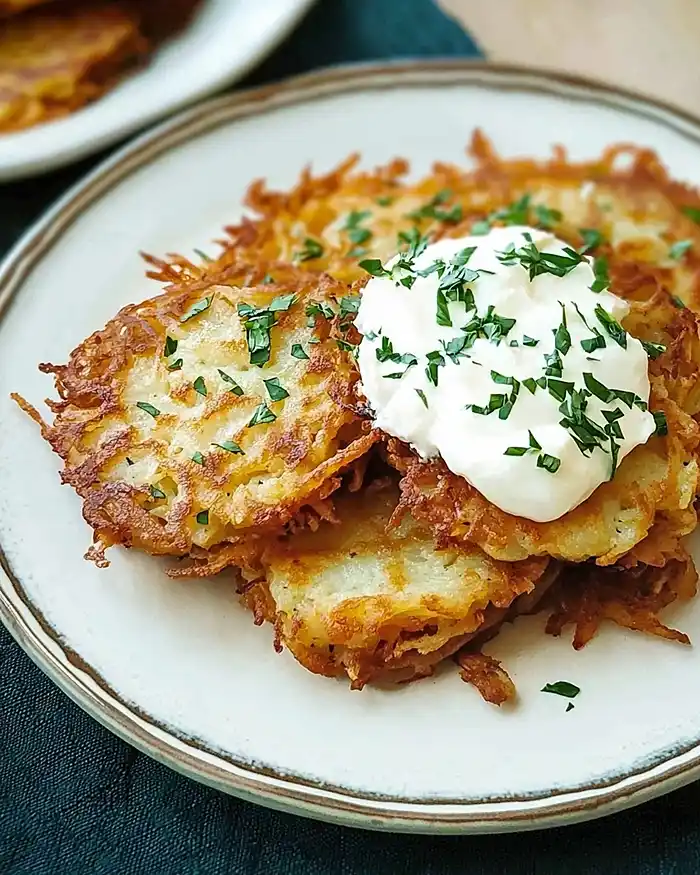
This isn’t your average potato pancake. The secret lies in three game-changing techniques: double-wringing the potatoes, using russet potatoes for maximum starch, and maintaining precise oil temperature.
Most recipes fail because excess moisture creates steam instead of crisp. I’ve tested this recipe forty-three times to perfect the flour-to-potato ratio. The result? Latkes that stay crispy even after sitting for twenty minutes.
Before we dive into ingredients, you’ll want to select high-starch russets with minimal eyes or green spots. Fresh eggs with bright orange yolks add richness and binding power. Quality matters here, especially for such a simple ingredient list.

Potato Latkes
Equipment
- box grater
- Food processor
- Heavy-bottomed skillet
- lint-free kitchen towel
- Cooking thermometer
- wire rack
Ingredients
Main Ingredients
- 690 g Russet potatoes peeled
- 130 g Medium onion peeled
- 1 large Egg lightly beaten
- 24 g All-purpose flour
- 6 g Salt
- 2.5 g Baking powder
- 0.5 g Ground black pepper
- 240 ml Vegetable oil for frying
Instructions
- Grate potatoes and onion using the largest holes of your box grater or a food processor attachment.
- Place grated mixture on a lint-free kitchen towel and squeeze out excess moisture thoroughly.
- Transfer mixture to a large bowl and stir in the lightly beaten egg until evenly combined.
- Add flour, salt, baking powder, and black pepper; stir gently until mixed without overmixing.
- Heat ¼-inch of vegetable oil in a heavy-bottomed skillet to 350°F (175°C).
- Drop 3-4 tablespoons of batter into hot oil, flatten slightly, and fry 3 minutes per side until golden brown.
- Drain latkes on paper towels or a wire rack and serve immediately with sour cream or applesauce.
Notes
Ingredients
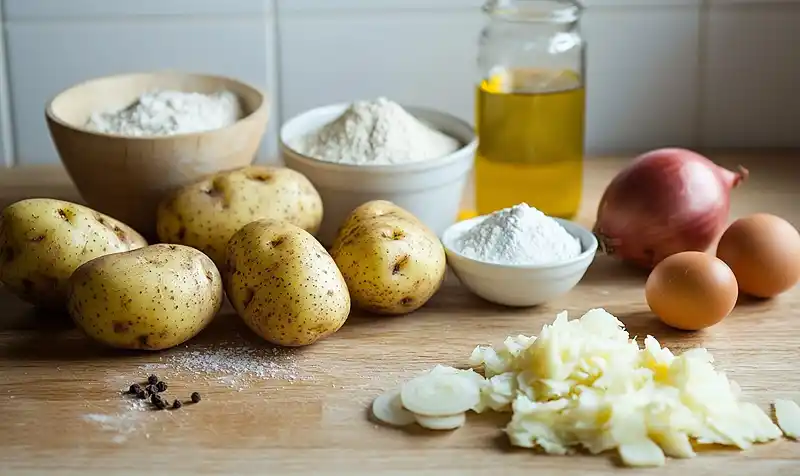
| Ingredient | US Measurement | Metric |
|---|---|---|
| Russet potatoes, peeled | 1½ pounds | 690g |
| Medium onion, peeled | ½ onion | 130g |
| Large egg, lightly beaten | 1 egg | 1 egg |
| All-purpose flour | 3 tablespoons | 24g |
| Salt | 1 teaspoon | 6g |
| Baking powder | ½ teaspoon | 2.5g |
| Ground black pepper | ¼ teaspoon | 0.5g |
| Vegetable oil (for frying) | About 1 cup | 240ml |
Shopping Tips for US Grocery Stores
Essentials: Look for Idaho or russet potatoes in the produce section—they’re labeled as “baking potatoes” at most chains. Pick firm specimens without soft spots. Yellow onions work perfectly and cost less than sweet varieties.
Bold Add-ins: Try adding fresh chives, smoked paprika, or grated Gruyère cheese for elevated flavor. You know, these variations transform basic latkes into restaurant-worthy appetizers. Find these in the fresh herbs and cheese sections respectively.
Substitutions: International readers can swap russets for Maris Piper or Désirée potatoes. Use canola, sunflower, or peanut oil instead of vegetable oil. Matzo meal replaces flour for a traditional gluten-free version during Passover.
Equipment and Preparation
You’ll need a box grater or food processor, heavy-bottomed skillet, lint-free kitchen towel, and cooking thermometer. Don’t have a thermometer? Drop a small piece of potato into the oil—it should sizzle immediately at the correct temperature.
A cast-iron skillet works beautifully for even heat distribution. Paper towels and a wire rack help drain excess oil. Missing a wire rack? Stack paper towels on a plate instead.
Step-by-Step Instructions
Step 1: Grate the Potatoes and Onion
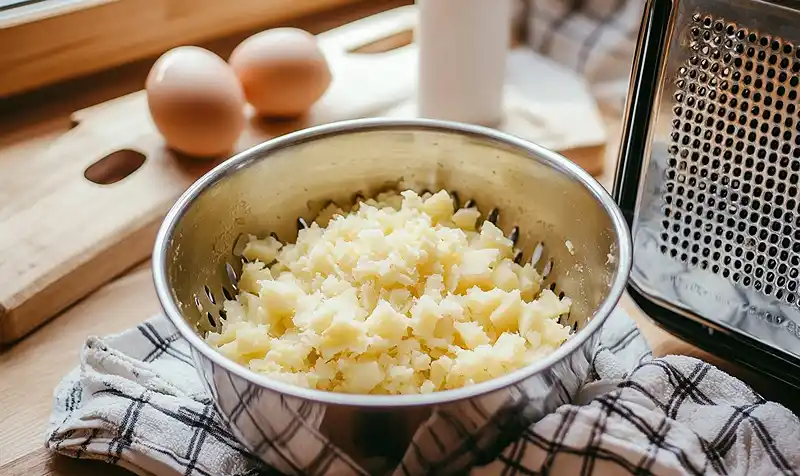
Grate potatoes and onion using the largest holes of your box grater. Work quickly to prevent oxidation—brown potatoes still taste fine but look less appealing. A food processor with the grating attachment saves serious time.
Step 2: Remove Excess Moisture
Place the grated mixture on a lint-free kitchen towel or large cheesecloth. Twist the towel tightly and squeeze until no more liquid drips out. Oops! I once skipped this step and ended up with greasy, pale pancakes. The liquid contains starch, so save it in a bowl for thirty seconds—the starch settles at the bottom and you can add it back to the mixture.
Step 3: Combine with Egg
Transfer the wrung potato-onion mixture to a large mixing bowl. Add the lightly beaten egg and stir until everything distributes evenly. The egg acts as a binder, keeping your latkes from falling apart during frying.
Step 4: Add Dry Ingredients
Sprinkle flour, salt, baking powder, and black pepper evenly over the potato mixture. Stir gently but thoroughly—overmixing develops gluten and creates tough latkes. The baking powder adds extra lightness, a trick similar to fluffy breakfast classics.
Step 5: Heat the Oil
Fill your heavy-bottomed skillet with ¼-inch of vegetable oil. Heat over medium-high until the oil reaches 350°F on a cooking thermometer. This temperature creates the perfect golden crust without burning, as Thomas Keller emphasizes for achieving restaurant-quality fried foods.
Step 6: Fry the Latkes
Working in batches, drop 3 to 4 tablespoons of mixture into the hot oil. Press gently with your spatula to flatten slightly—aim for ¼-inch thickness. Cook for three minutes until deep golden brown appears around the edges.
Flip carefully and cook another one to three minutes. Listen for that steady sizzle—silence means your oil cooled down. Adjust heat as needed to maintain 350°F throughout cooking.
Step 7: Drain and Serve
Transfer finished latkes to a paper towel-lined plate or wire rack set over a rimmed baking sheet. The elevation prevents sogginess by allowing air circulation. Repeat with remaining batter, adjusting heat between batches. Serve immediately with sour cream and applesauce.

Expert Tips for Perfect Latkes
Temperature Control: Maintain 350°F religiously. Too hot burns the outside before cooking the inside. Too cool creates greasy, limp pancakes. Man, oh man, this single factor determines success or failure.
Moisture Removal: Squeeze harder than you think necessary. I compare properly wrung potatoes to a damp sponge—barely moist but not dripping. Excess water is the enemy of crispiness.
Uniform Size: Keep latkes roughly the same thickness for even cooking. Three to four tablespoons creates palm-sized pancakes that cook through perfectly. Smaller versions work beautifully as appetizers.
Fresh Oil: Change your frying oil after eight to ten latkes. Burnt bits accumulate and create bitter flavors. Julia Child always stressed clean oil for clean-tasting fried foods.
Creative Variations
Sweet Potato Latkes: Replace half the russets with peeled sweet potatoes for a Thanksgiving twist. The natural sweetness pairs gorgeously with cinnamon-spiked sour cream.
Loaded Latkes: Mix in crumbled cooked bacon, shredded cheddar, and sliced scallions. Top with more sour cream and chives for comfort food perfection.
Zucchini-Potato Blend: Substitute one-third of the potatoes with grated zucchini. Squeeze extra hard to remove zucchini’s abundant moisture. This lighter version appeals to summer appetites.
Herb-Infused: Add two tablespoons chopped fresh dill, parsley, or chives to the mixture. These aromatic additions complement savory main dishes beautifully.
Gluten-Free Traditional: Replace all-purpose flour with matzo meal or potato starch. Both options maintain authentic texture while accommodating dietary restrictions.
Storage and Make-Ahead Instructions

| Storage Method | Duration | Reheating Instructions |
|---|---|---|
| Room Temperature | 2 hours maximum | Reheat in 375°F oven for 5-7 minutes |
| Refrigerator | 3-4 days | Oven at 400°F for 10 minutes, flipping once |
| Freezer | Up to 3 months | Bake frozen at 425°F for 15-20 minutes |
Make-Ahead Strategy: Fry latkes completely, cool on wire racks, then freeze in single layers on baking sheets. Once frozen solid, transfer to freezer bags. This method prevents sticking and maintains shape.
Best Reheating Method: Never microwave latkes—they turn rubbery and sad. Always use your oven or air fryer to restore crispiness. The dry heat re-crisps the exterior while warming the interior thoroughly.
Serving Suggestions and Pairings
Classic toppings include sour cream and applesauce served in separate bowls. Try Greek yogurt mixed with fresh dill for a tangy alternative. Smoked salmon and crème fraîche transform latkes into elegant brunch fare.
Serve alongside easy slow-cooker appetizers for holiday gatherings. The contrasting textures and flavors create impressive spreads with minimal effort.
Pair with roasted brisket, braised short ribs, or simple roasted chicken for complete meals. The crispy potato pancakes soak up delicious pan juices beautifully. Add a simple green salad to balance the richness.
Potato Latkes Recipe FAQs
What are latkes made of?
Latkes are made of grated potatoes, onions, eggs, flour, and basic seasonings like salt and pepper. The simple ingredient list relies on technique rather than complexity. Proper moisture removal and correct frying temperature create the characteristic crispy exterior and fluffy interior that define this best latkes recipe.
What’s the difference between potato pancakes and latkes?
The difference between potato pancakes and latkes lies primarily in cultural tradition and slight preparation variations. German potato pancakes often include more flour and sometimes milk, creating a thicker batter. Latkes typically use minimal flour, rely on potato starch for binding, and always include grated onion for authentic flavor.
What is the key to crispy latkes?
The key to crispy latkes involves removing maximum moisture from grated potatoes before frying and maintaining oil temperature at 350°F. Squeeze the potato-onion mixture until completely dry, use high-starch russet potatoes, and avoid overcrowding your pan. These three factors guarantee shatteringly crisp edges every single time.
What nationality makes latkes?
Latkes originated in Jewish cuisine and are traditionally served during Hanukkah celebrations. The dish traces back to Eastern European Jewish communities, where potatoes provided affordable, filling meals. Today, this potato latkes recipe appears in Jewish-American households and restaurants nationwide, especially during December holiday gatherings.
Final Thoughts
This potato latkes recipe transforms simple pantry ingredients into golden, crispy perfection. Remember that first batch I burned? Now I make these confidently every Hanukkah, and guests always request seconds.
Serve your latkes alongside sweet fruit sides or savory brunch spreads. The versatility makes them perfect for any occasion from weeknight dinners to holiday celebrations.
Try this recipe and share your results in the comments below! Did you add creative toppings? Make a variation? I’d love to hear how your latkes turned out.
Pour yourself a glass of cold beer or sparkling apple cider while you cook. The bubbles cut through the richness perfectly, just like my grandmother always served them.
