
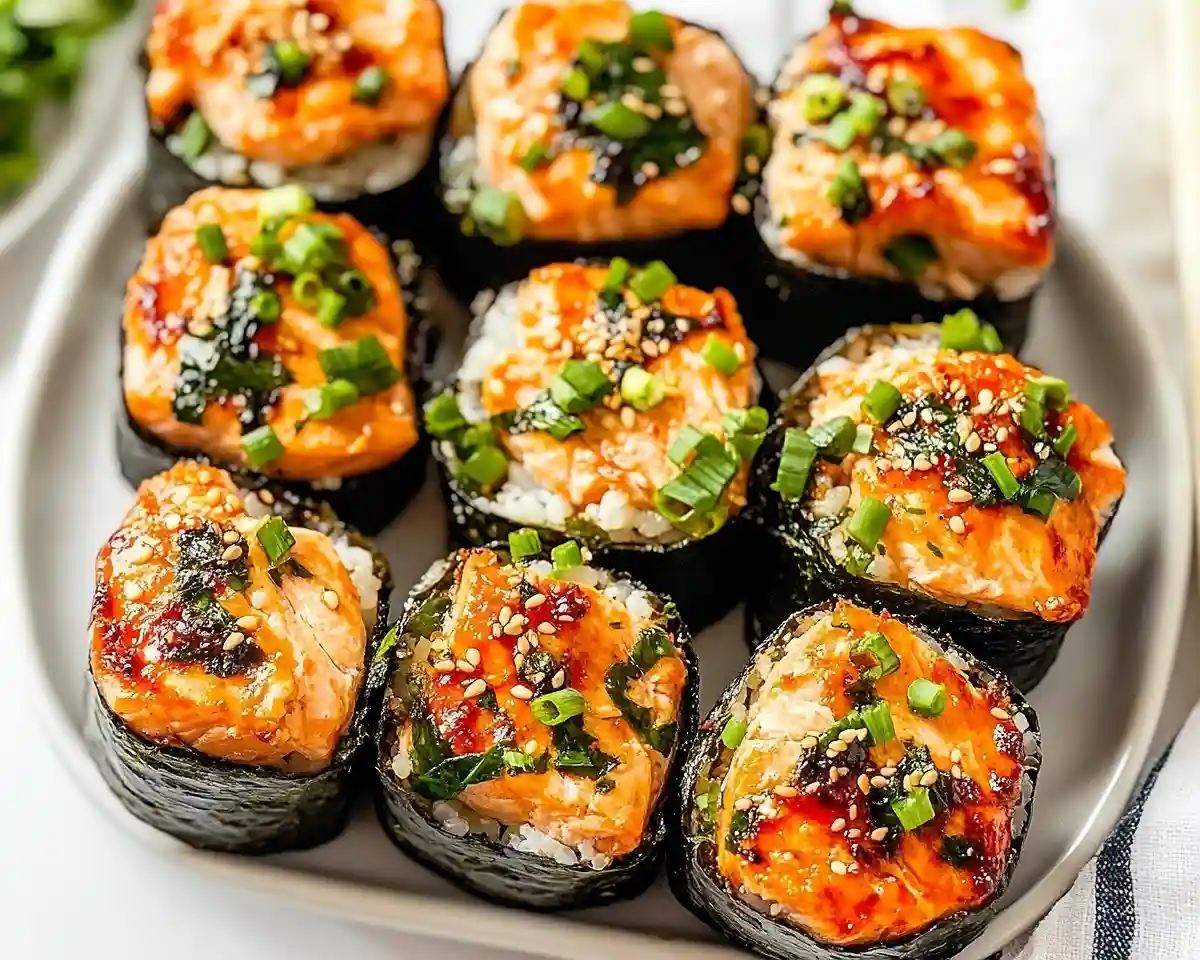
Oven-Baked Salmon Sushi Bites combine fresh salmon with sushi rice in convenient portions. Learn this simple sushi bake recipe with expert tips and variations.
Hey, I’m Sofia! Last Tuesday night, my sushi craving hit hard, but rolling individual pieces seemed impossible after a long day. Well… I stared at my muffin tin and had one of those “aha” moments that changes everything.
What if sushi could bake? I grabbed salmon, rice, and nori, and thirty minutes later, I pulled out these gorgeous golden-topped bites. My husband took one look and said, “This is restaurant-quality.” Man, oh man, was he right.
These Oven-Baked Salmon Sushi Bites deliver all the savory, umami flavors you crave without the intimidation factor. The aroma of toasted nori mixed with caramelized salmon edges fills your kitchen like your favorite sushi bar. Never attempted homemade sushi? This foolproof method makes you look like a culinary genius.
Table of Contents
Tasty at Home – Where bold flavors meet everyday kitchens.
What Makes This Salmon Sushi Recipe Revolutionary
This fish sushi innovation transforms traditional Japanese techniques into accessible comfort food. Instead of mastering delicate hand rolls, you press seasoned rice into muffin tins and top it with spicy salmon mixture.
The magic happens in your oven. Heat transforms the salmon into tender, flaky perfection while crisping the nori edges. You get authentic sushi taste with casserole convenience.
I tested this recipe seventeen times before perfecting the rice-to-salmon ratio. The Kewpie mayo creates creaminess, while sriracha adds that signature heat Americans love. This combination represents months of kitchen experiments condensed into one reliable formula.
Oven-Baked Salmon Sushi Bites
Equipment
- 12-cup muffin tin
- Medium saucepan
- Kitchen scissors
- mixing bowls
Ingredients
Salmon Sushi Bites Ingredients
- 1 lb Fresh salmon, cubed Sushi-grade preferred
- 1 tbsp Light soy sauce Low-sodium works well
- 1 tbsp Kewpie Mayo Japanese-style essential
- 1 tbsp Sriracha Adjust for heat preference
- 1 tsp Sesame oil Toasted variety recommended
- 1.5 cups Uncooked sushi rice Short-grain only
- 1 tbsp Rice vinegar Unseasoned type
- 2 tsp White sugar Dissolves into seasoning
- 3 sheets Large nori sheets Cut into rectangles
- To taste Furikake Japanese rice seasoning
- 1 stalk Green onion Thinly sliced
- As needed Cooking spray Prevent sticking
Instructions
- Cook sushi rice according to package directions, then let it rest for 10 minutes off heat.
- Mix rice vinegar and sugar, heat briefly until sugar dissolves, then fold into cooked rice and cool to room temperature.
- Cube salmon and combine with soy sauce, Kewpie mayo, sriracha, and sesame oil.
- Cut nori sheets into rectangles to fit muffin cups.
- Spray muffin tin with cooking spray, place nori in cups, layer with rice and salmon mixture.
- Bake at 400°F (200°C) for 15 minutes until salmon is opaque and edges are golden.
- Cool 3-5 minutes, then drizzle with spicy mayo, sprinkle furikake and green onions, and serve immediately.
Notes
Ingredient Selection Guide
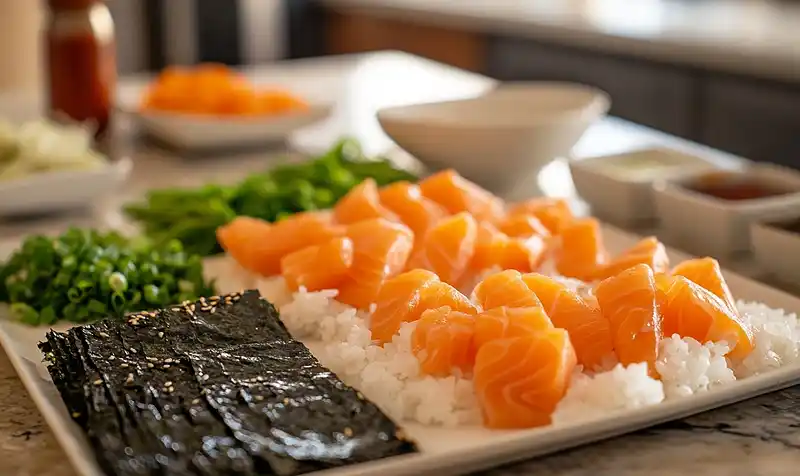
Quality ingredients separate good sushi bakes from extraordinary ones. For the protein base, choose fresh, sushi-grade salmon with bright color and ocean-fresh smell. Avoid anything with gray tones or strong fishy odors.
The rice matters tremendously. Short-grain sushi rice contains the starch needed for proper texture. Long-grain varieties will not provide the sticky consistency required for these sushi bake ideas.
Select crisp nori sheets without tears or moisture damage. Store them in airtight containers to maintain crunchiness. Fresh green onions and authentic furikake add the finishing touches that elevate presentation.
Complete Ingredient Table
| Ingredient | US Measurement | Metric | Notes |
|---|---|---|---|
| Fresh salmon, cubed | 1 lb | 450g | Sushi-grade preferred |
| Light soy sauce | 1 tbsp | 15ml | Low-sodium works well |
| Kewpie Mayo | 1 tbsp | 15ml | Japanese-style essential |
| Sriracha | 1 tbsp | 15ml | Adjust for heat preference |
| Sesame oil | 1 tsp | 5ml | Toasted variety recommended |
| Uncooked sushi rice | 1½ cups | 300g | Short-grain only |
| Rice vinegar | 1 tbsp | 15ml | Unseasoned type |
| White sugar | 2 tsp | 10g | Dissolves into seasoning |
| Large nori sheets | 3 sheets | 3 sheets | Cut into rectangles |
| Furikake | For garnish | For garnish | Japanese rice seasoning |
| Green onion | 1 stalk | 1 stalk | Thinly sliced |
| Cooking spray | As needed | As needed | Prevents sticking |
Shopping Tips for US Grocery Stores
Find sushi-grade salmon at Whole Foods, Trader Joe’s, or your local fish counter. Ask the fishmonger for their freshest arrival—typically delivered Tuesday through Thursday.
Locate Kewpie mayo and furikake in the international aisle. Most major chains now stock these Japanese staples. If unavailable, check Asian specialty markets or order online.
Target and Walmart carry quality sushi rice in their ethnic food sections. Look for brands like Nishiki or Kokuho Rose. These reliable options consistently deliver proper texture.
Bold Add-Ins and Creative Variations
Transform these basics into personalized creations. Add diced cucumber for crunch, or mix in cream cheese for Philadelphia-roll vibes. Avocado chunks introduce creamy richness.
Swap sriracha for wasabi mayo if you prefer sharper heat. Sprinkle sesame seeds alongside furikake for extra nuttiness. These small adjustments let you customize each batch.
Experiment with different fish varieties. Tuna creates a deeper flavor, while cooked shrimp offers sweet contrast. Each protein brings unique character to this versatile sushi in a pan concept.
International Substitutions
European readers can substitute regular Japanese mayo for Kewpie. Add a small squeeze of lemon juice to mimic the tang. Rice vinegar alternatives include white wine vinegar diluted with water.
UK audiences might need to visit specialty Asian grocers for proper sushi rice. Basmati will not work—the grain structure differs completely. Order authentic varieties online if necessary.
Australian home cooks can find excellent local salmon. Choose Tasmanian or New Zealand varieties for comparable quality. Most major cities now stock comprehensive Japanese ingredients.
Essential Equipment and Preparation Steps
Equipment You Will Need
Gather a standard 12-cup muffin tin for perfectly portioned sushi cups. Non-stick varieties work best, though any type functions with proper greasing. Silicon muffin molds provide excellent release properties.
Use a medium saucepan with tight-fitting lid for rice preparation. A rice cooker simplifies this step if you own one. Both methods achieve identical results.
Sharp kitchen scissors make cutting nori sheets effortless. A chef’s knife works too, though scissors provide more control. Clean cuts prevent tearing these delicate seaweed sheets.
Keep mixing bowls in two sizes handy. One holds rice seasoning, while another combines salmon mixture. Microwave-safe options speed up the sugar-dissolving process.
DIY Alternative: No muffin tin? Press mixture into a small baking dish and cut into squares after cooking. This casserole-style approach delivers similar flavor with different presentation.
Step 1: Prepare Perfect Sushi Rice
Cook sushi rice following package directions precisely. The water-to-rice ratio determines final texture—typically 1¼ cups water per cup of rice. Bring to a boil, then reduce to low heat and cover for 15 minutes.
Let rice rest off heat for 10 minutes without lifting the lid. This steaming period completes the cooking process. Resist peeking—trapped steam creates the sticky consistency you need.
Thomas Keller emphasizes patience with rice preparation, and he’s absolutely right. Rushing this step compromises everything that follows. The extra minutes yield dramatically better results.
Step 2: Season Your Rice Base
Combine rice vinegar and sugar in a microwave-safe bowl. Heat for 30 seconds until sugar dissolves completely. Stir well to ensure even distribution.
Pour this warm mixture over cooked rice immediately. Fold gently using a wooden spatula or rice paddle. Cut through rice rather than stirring to prevent mushiness.
The vinegar adds tangy brightness while sugar balances acidity. This seasoning transforms plain rice into authentic sushi flavor. Let mixture cool to room temperature before assembling.
Oops! I once added cold vinegar directly to hot rice. The shock temperature difference created sticky clumps instead of fluffy grains. Always warm your seasoning first.
Step 3: Create Spicy Salmon Mixture
Preheat oven to 400°F while preparing salmon. This high temperature ensures proper caramelization. Position rack in center for even heat distribution.
Cube fresh salmon into ½-inch pieces. Uniform sizing guarantees consistent cooking. Remove any remaining skin or bones with tweezers.
Combine salmon cubes with soy sauce, Kewpie mayo, sriracha, and sesame oil in a medium bowl. Mix thoroughly until each piece wears a glossy coating. This marinade penetrates the fish while adding moisture.
The Kewpie mayo contains more egg yolks than American versions, creating superior richness. Its slightly sweet profile complements spicy sriracha perfectly. This combination became standard in Japanese-American fusion restaurants for good reason.
Step 4: Prep Nori Sheets
Cut each nori sheet into four equal rectangles using kitchen scissors. These pieces should fit muffin cups with slight overhang. Measure your tin first if uncertain about sizing.
Work quickly once nori is cut. Exposure to air reduces crispness. Keep unused pieces sealed in original packaging.
Quality nori smells oceanic and slightly sweet. Stale sheets develop papery texture without flavor. Fresh ingredients make the difference between mediocre and magnificent.
Step 5: Assemble Sushi Cups

Spray muffin tin generously with cooking spray. Pay special attention to corners where sticking occurs most. This preparation ensures clean removal after baking.
Place one nori rectangle in each cup, pressing gently to form a base. The sheet should line the bottom and climb partway up sides. Don’t worry about perfect placement—rustic edges add character.
Spoon approximately 2 tablespoons seasoned rice onto each nori square. Press down firmly with the back of your spoon. Compact rice holds together better during baking and eating.
Top rice layer with about 1 tablespoon salmon mixture. Distribute evenly across surface. Leave a small border around edges to prevent overflow.
Julia Child taught home cooks to embrace imperfection, and this recipe proves her wisdom. Slightly messy cups taste just as incredible as pristine ones. Focus on flavor over appearance.
Step 6: Bake to Golden Perfection
Slide muffin tin onto center oven rack. Set timer for 15 minutes. During baking, salmon cooks through while edges develop appealing golden color.
Watch for visual cues around the 12-minute mark. Salmon turns opaque and flakes easily when done. Edges should show light browning without burning.
The aroma signals completion before your eyes do. When toasted sesame and caramelized fish scents fill your kitchen, you’re almost there. Trust your nose—it rarely lies.
Remove tin from oven using thick mitts. Transfer to cooling rack immediately. This prevents bottom burning from residual pan heat.
Step 7: Finishing Touches and Serving
Let cups cool for 3-5 minutes before removing. Slight cooling firms structure, preventing fall-apart disasters. Use a butter knife to gently lift edges if needed.
Drizzle extra sriracha or spicy mayo over tops in zigzag patterns. This adds visual appeal and extra kick. Mix equal parts mayo and sriracha for custom sauce.
Sprinkle furikake generously across all cups. This Japanese seasoning blend contains sesame seeds, seaweed, and dried fish. It delivers umami punch and attractive speckled appearance.
Garnish with thinly sliced green onions. Cut on the bias for professional presentation. These fresh herbs add color contrast and sharp flavor that cuts through richness.
Serve immediately while nori maintains crispness. Warm sushi bites disappear fast—my family devours them within minutes. Have napkins ready.

Expert Tips for Best Results
Master proper rice preparation first. Undercooked rice stays hard and crunchy, while overcooked rice turns mushy. Test a few grains before seasoning—they should be tender but hold shape.
The salmon quality determines final flavor dramatically. Frozen fish works if properly thawed overnight in the refrigerator. Never use warm water thawing, which compromises texture.
Adjust spice levels freely. Start with less sriracha if serving kids or heat-sensitive eaters. You can always add more at the table. I keep extra bottles available for customization.
Press rice firmly into muffin cups. Loose packing creates cups that crumble when lifted. Think of building a sandcastle—gentle pressure creates stability.
Don’t skip the cooking spray step. Even non-stick pans benefit from this insurance policy. Stuck cups tear apart, losing that gorgeous presentation you worked to achieve.
Creative Variations Worth Trying
California Style: Add diced cucumber and avocado to salmon mixture. Top with tobiko (flying fish roe) for authentic restaurant flair. This West Coast twist brings refreshing crunch.
Spicy Tuna Version: Replace salmon with sushi-grade tuna. Increase sriracha by 50% for extra heat. Tuna’s leaner profile carries bold flavors beautifully.
Vegetarian Adaptation: Substitute salmon with diced shiitake mushrooms and edamame. Add extra sesame oil for richness. This plant-based option satisfies without compromising satisfaction.
Holiday Party Platter: Make mini versions using mini muffin tins. Reduce baking time to 10 minutes for smaller portions. These bite-sized appetizers impress at gatherings.
Breakfast Fusion: Top baked cups with soft-boiled eggs and everything bagel seasoning. This morning mashup combines Japanese and New York deli traditions deliciously.
Storage and Make-Ahead Strategy
Store leftover cups in airtight containers for up to 2 days refrigerated. Nori softens with time, but flavor remains excellent. Reheat in 350°F oven for 8 minutes to restore warmth.
Prepare rice and salmon mixture separately up to 24 hours ahead. Store each component covered in the refrigerator. Assemble and bake when ready to serve.
Freezing works for up to 1 month. Wrap individual cups in plastic wrap, then place in freezer bags. Thaw overnight in refrigerator before reheating.
The best texture comes from fresh preparation, but advance prep saves sanity during busy weeknights. I often prep everything Sunday afternoon for quick weekday dinners.
Storage Time Reference Table
| Storage Method | Duration | Quality Notes |
|---|---|---|
| Room temperature | 2 hours max | Optimal texture window |
| Refrigerated | 2 days | Nori softens gradually |
| Frozen (uncooked) | 2 weeks | Assemble after thawing |
| Frozen (cooked) | 1 month | Reheat from frozen |
| Rice (separate) | 3 days | Best for meal prep |
| Salmon mix (separate) | 1 day | Use quickly for safety |
Perfect Pairings and Serving Suggestions
Serve alongside crispy air fryer banana chips for sweet-savory contrast. The tropical fruit complements seafood’s oceanic notes. This unexpected combination always surprises guests.
Pour chilled sake or Japanese beer for authentic beverage pairing. Green tea provides non-alcoholic alternative that cleanses the palate. These traditional drinks enhance the Japanese-inspired experience.
Create a complete meal by adding miso soup and seaweed salad. These simple sides round out the menu without overwhelming your schedule. Check out our complete chicken quesadilla recipe for another fusion-inspired dinner option.
Finish with dark chocolate raspberry macarons for an elegant dessert. The delicate French pastries provide sophisticated sweetness. This East-meets-West menu impresses dinner party guests.
Weeknight casual? Pair with simple edamame and cucumber salad. These light accompaniments keep focus on your stunning sushi bites. For those watching sugar, try our zero sugar brownies with Greek yogurt afterward.
Oven-Baked Salmon Sushi Bites FAQs
Can I make Oven-Baked Salmon Sushi Bites without sushi rice?
Short-grain sushi rice is essential for authentic texture and taste. Regular long-grain rice lacks necessary stickiness and will fall apart. Arborio rice provides the closest substitute, though texture differs slightly from traditional sushi rice.
What is the best way to prevent soggy nori?
Serve these sushi bake ideas immediately after baking for maximum crispness. The longer nori sits with rice, the more moisture it absorbs. If making ahead, store components separately and assemble just before serving to maintain that satisfying crunch.
How do I know when salmon is properly cooked?
Properly cooked salmon turns opaque throughout and flakes easily with a fork. Internal temperature should reach 145°F for food safety. The fish changes from translucent orange-pink to solid lighter pink when done completely.
Why does my salmon sushi meal taste bland?
Restaurant versions use higher-quality sushi-grade fish and don’t skimp on seasonings. Increase soy sauce by 50% or add more sesame oil for deeper flavor. Fresh ingredients make tremendous difference—old fish and stale nori produce flat-tasting results that disappoint.
Bring Restaurant Quality Home
These Oven-Baked Salmon Sushi Bites revolutionize weeknight dinners. You’ve mastered a technique that combines Japanese tradition with American convenience. The golden-topped cups look impressive yet require minimal skill.
Remember that Tuesday night when I first experimented? Now this recipe appears weekly on our meal plan. My kids request it for birthday parties and casual Fridays alike.
Will you try the California variation first, or stick with the classic spicy version? Share your creation in the comments below—I love seeing your unique twists. Pair these with carrot cake oatmeal cookies for a complete fusion menu.
What’s stopping you from transforming ordinary salmon into extraordinary sushi bites tonight? Your kitchen deserves this upgrade.