

Discover why this traditional Irish soda bread made with just 4 ingredients is the easiest, most satisfying bread you’ll ever bake — no yeast, no fuss, no waiting around.
I’ll be honest — I used to think homemade bread was way above my skill level. Then I stumbled across this Irish Soda Bread recipe, and let me tell you, it changed my whole baking game.
Four ingredients. One bowl. No kneading. No rising time. It’s practically foolproof, and the result is this gorgeous, crusty, soft-on-the-inside loaf that tastes like it came straight from a cozy Irish farmhouse kitchen.
Table of Contents
Why You’ll Love This Irish Soda Bread
This isn’t just a bread recipe — it’s your new go-to for lazy weekends, last-minute dinner guests, or honestly any time the carb cravings hit hard.
Traditional Irish soda bread relies on the magic of baking soda and buttermilk reacting together — no yeast needed. That means from bowl to table in under an hour. Seriously, it’s that fast.
It’s hearty, slightly tangy, and has this incredible golden crust with a soft, dense crumb inside. Slather it with Irish butter while it’s still warm and you’ll wonder why you ever bought bread from a store.
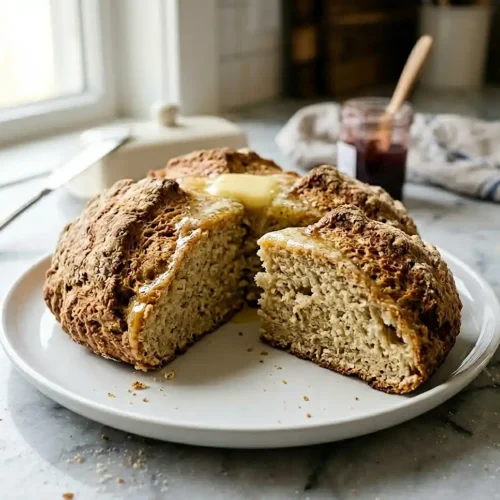
Irresistible Irish Soda Bread (Just 4 Ingredients)
Equipment
- Cast iron skillet
- Baking sheet
- Mixing bowl
- wooden spoon
- Sharp knife
- Parchment paper
Ingredients
Soda Bread Dough
- 4 cups all-purpose flour organic unbleached recommended
- ¾ teaspoon kosher salt
- ½ teaspoon baking soda make sure it is fresh
- 1 ½ cups buttermilk whole or 2%
Instructions
- Preheat the oven to 450°F. Lightly oil a 10-inch cast iron skillet or line a baking sheet with parchment paper.
- In a large bowl, whisk together the flour, kosher salt, and baking soda until evenly combined.
- Make a well in the center of the dry ingredients and pour in the buttermilk. Stir with a wooden spoon until a shaggy dough forms.
- Using clean hands, gently bring the dough together into a sticky ball, incorporating any dry flour. Do not overwork the dough.
- Transfer the dough to parchment paper and gently shape it into a round disc about 1½ to 2 inches thick.
- Using a sharp floured knife, score a deep cross on top of the dough and poke the center of each quarter once with the knife tip.
- Place the skillet in the hot oven for a few minutes, add a little butter or oil to coat the bottom, then place the dough in the skillet.
- Bake at 450°F for 15 minutes, then reduce the temperature to 400°F and bake for another 25 minutes.
- Carefully flip the bread upside down and bake for an additional 5 minutes. The loaf should sound hollow when tapped on the bottom.
- Let the bread rest for 5 to 10 minutes before slicing. Serve warm with butter.
Notes
Ingredients You’ll Need
One of the best things about this soda bread recipe is how simple the ingredient list is. You probably already have most of these in your pantry right now.
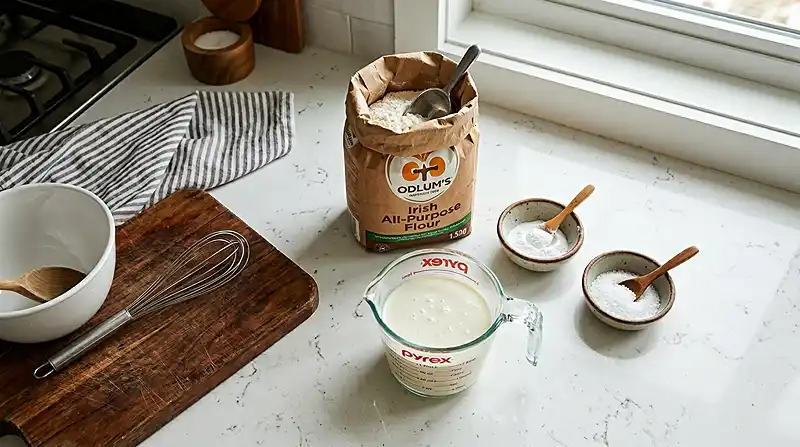
| Ingredient | Amount | Notes |
|---|---|---|
| All-purpose flour | 4 cups | Organic unbleached works great; see notes for gluten-free swap |
| Kosher salt | 3/4 teaspoon | Don’t skip this — it makes a big flavor difference |
| Baking soda | 1/2 teaspoon | Make sure it’s fresh! (more on that below) |
| Buttermilk | 1 1/2 cups | Whole or 2%; homemade buttermilk works too |
A Note on Baking Soda Freshness
Your baking soda being fresh is non-negotiable for a good rise. To test it, drop a teaspoon into hot water. If it fizzes like crazy, you’re good to go. No fizz? Toss it and grab a new box.
Old baking soda is the number one reason soda bread comes out flat and dense. Don’t let that happen to you!
Can You Make Homemade Buttermilk?
Absolutely! Just add 1 tablespoon of white vinegar or lemon juice to a measuring cup, then fill it to the 1 1/2 cup line with regular milk. Give it a stir and let it sit for 5 minutes. Voila — DIY buttermilk.
It works just as well as store-bought and it’s a great trick to have in your back pocket. Much like these soft and fluffy strawberry cinnamon rolls, the right acid makes all the difference in baking.
How to Make Irish Soda Bread (Step-by-Step)
Ready to make the easiest bread of your life? Let’s do this. The whole process is wonderfully low-stress, I promise.
Step 1: Preheat and Prep Your Pan
Preheat your oven to 450°F. While it heats up, prep your baking surface — either a 10-inch or larger cast iron skillet with a little oil or melted butter, or a baking sheet lined with parchment paper.
A cast iron skillet is truly the MVP here. It gives the bottom of the bread this amazing crispy crust that a regular pan just can’t replicate. Worth it every single time.
Step 2: Mix the Dry Ingredients
Grab a large glass or ceramic bowl — these materials don’t react with the acidity in the dough the way metal can. Whisk together your flour, kosher salt, and baking soda until evenly combined.
Then make a little well in the center of the dry mix. Think of it like a flour volcano waiting for its buttermilk lava. (Okay, maybe that metaphor went too far — but you get the idea.)
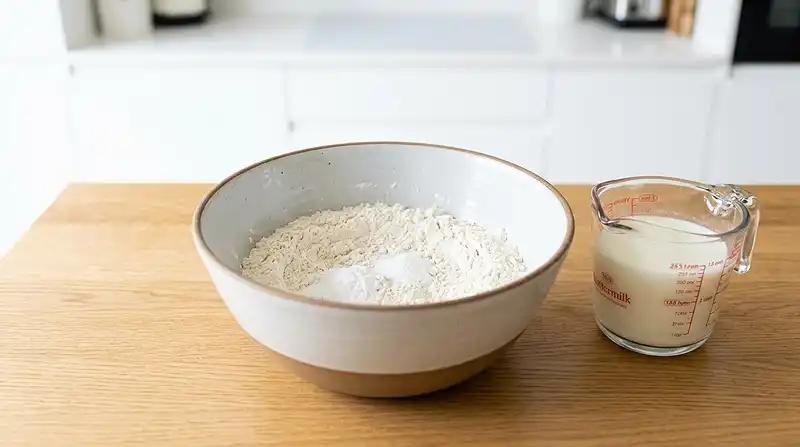
Step 3: Add the Buttermilk and Form the Dough
Pour your buttermilk into that well and stir with a sturdy wooden spoon until a shaggy, rough dough starts to come together. It won’t look pretty at this stage — and that’s totally fine.
With clean hands, gently work the mixture into a sticky dough, making sure all the dry flour gets incorporated. If it feels too dry, add a splash more buttermilk, a tablespoon at a time.
“Don’t overwork this dough. The less you handle it, the more tender your bread will be. It should feel just barely held together — rustic and rough is the vibe.”
Step 4: Shape and Score the Dough
Transfer the dough onto a piece of parchment paper and gently pat it into a round disc shape, about 1 1/2 to 2 inches thick. Don’t roll it out — just a gentle pat and shape.
Dip a sharp knife in flour, then score the top of the dough with a deep cross pattern (like cutting it into four quarters). Then, poke each quarter once with the tip of the knife.
This cross isn’t just for looks — it’s tradition, and it helps the bread bake evenly all the way through. Some say it also “lets the fairies out,” but we’ll let you decide if you believe that one.
Step 5: Bake It
Place your cast iron skillet in the preheated oven for a few minutes to warm up, then add a couple teaspoons of butter and swirl to coat the bottom. The sizzle when the dough hits that pan? Absolutely satisfying.
Slide your soda bread dough into the skillet and bake at 450°F for 15 minutes. Then, without opening the oven any longer than necessary, turn the temperature down to 400°F and bake for 25 more minutes.
Step 6: The Upside-Down Trick
Here’s the fun part — and yes, it sounds weird, but trust the process. After those 25 minutes, carefully flip the bread upside down in the pan and bake for 5 more final minutes.
To check if it’s done, tap on the bottom of the loaf. It should sound hollow — like knocking on a door. That hollow thud means your bread is fully baked through.
Let it rest for 5 to 10 minutes before slicing. Serve in wedges with a generous smear of real Irish butter. You’re welcome in advance.
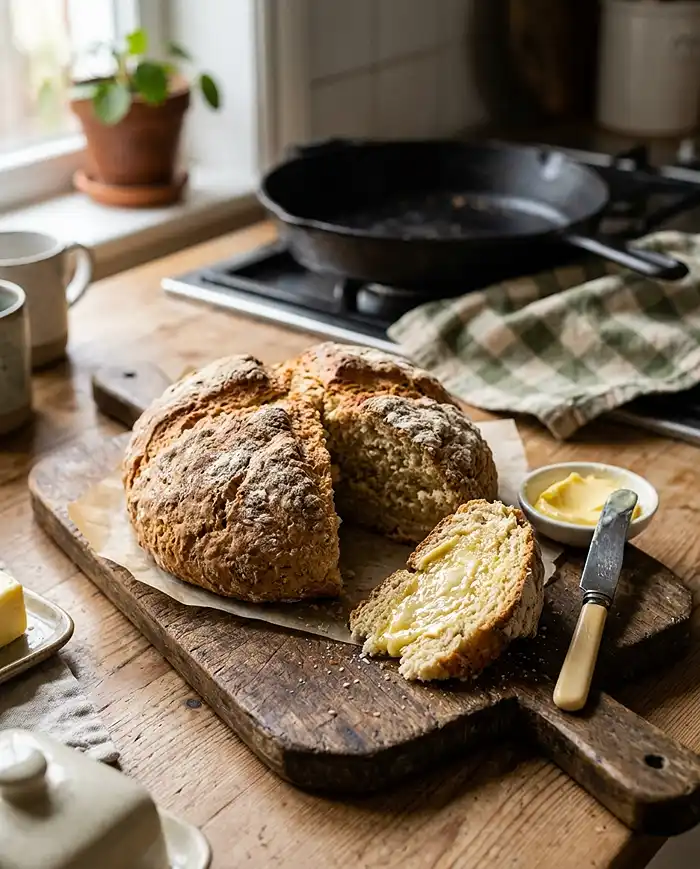
Expert Tips for the Best Soda Bread
Don’t Overknead
This is probably the most important tip. Soda bread is not yeast bread — you’re not trying to develop gluten here. The more you knead, the tougher the bread gets. Handle it just enough to bring it together.
Use Cold Buttermilk
Cold buttermilk straight from the fridge helps control the reaction between the acid and baking soda, giving you a better texture. Room temperature liquid can make the dough react too fast before it even hits the oven.
Score Deep Enough
When you score the cross on top, really go for it. A shallow score won’t open up properly during baking. You want those four quarters to bloom open slightly — that’s the classic look of traditional Irish soda bread.
Cast Iron is King
If you have a cast iron skillet, use it. The heat retention gives the bread an incredible crust on the bottom that a regular pan just can’t match. It’s one of those tools that genuinely makes a difference.
Variations and Fun Twists
Love the base recipe? Once you’ve made it once, it’s easy to riff on. Here are some fun directions to take your soda bread.
Add Raisins for a Sweet Version
Stir in about 3/4 cup of raisins (or currants!) into the dry ingredients before adding the buttermilk. This is the “spotted dog” version — sweeter, softer, and absolutely delicious with morning tea.
Go Herby and Savory
Add a tablespoon of fresh rosemary, thyme, or chives to the dry mix for a more savory loaf. Pairs beautifully with soups and stews. Thinking cozy dinner? Serve it alongside this 5-ingredient baked feta pasta for a seriously easy feast.
Make It Gluten-Free
You can swap in a 1:1 gluten-free all-purpose flour blend. Results may vary slightly by brand, but most good GF blends handle soda bread well. The texture will be a little more crumbly, but still delicious.
Add Cheese
Fold in about 1/2 cup of sharp shredded cheddar for a savory, cheesy version that’s honestly dangerous to have around. You will eat too much of it. Fair warning.
Troubleshooting Your Irish Soda Bread
Bread Is Too Dense
This usually means the baking soda was old, or the dough was overworked. Try a fresh box of baking soda and a gentler hand next time. Remember — shaggy and rough is your friend.
Bottom Is Burning
If the bottom is getting too dark before the inside is cooked, your oven might run hot or your skillet is very thin. Try placing the skillet on a higher rack, or slipping a second baking sheet underneath it to buffer some of the direct heat.
Dough Is Too Sticky
Don’t panic — soda bread dough is supposed to be sticky! Resist the urge to add lots more flour. Just lightly flour your hands and the parchment paper surface when shaping, and you’ll be fine.
Center Is Gummy
If the inside isn’t fully cooked, it likely needed more time or the loaf was too thick. Make sure your disc is no more than 2 inches thick, and always do the hollow knock test before pulling it out of the oven.
Storage Instructions
| Method | How | How Long |
|---|---|---|
| Room Temperature | Wrap tightly in a clean kitchen towel or plastic wrap | Up to 2 days |
| Refrigerator | Store in an airtight container or zip bag | Up to 5 days |
| Freezer | Slice first, wrap each slice individually, freeze in a bag | Up to 3 months |
How to Reheat Soda Bread
For the best results, wrap slices in foil and warm them in a 350°F oven for about 10 minutes. You can also toast slices directly in a toaster for a crunchier texture — honestly amazing with butter.
From frozen, just let slices thaw at room temperature for about 30 minutes, then toast or warm as usual. It tastes just as good as fresh baked, which feels like a small miracle.
No-Waste Kitchen Ideas
Got stale leftover soda bread? Don’t throw it out! Cube it and bake into croutons, blitz into breadcrumbs for coating chicken or topping casseroles, or use thick slices as a base for bruschetta.
You can even use day-old soda bread to make a rustic bread pudding. It soaks up custard beautifully and makes a wonderfully cozy dessert — not too different in spirit from this no-bake strawberry dream dessert for easy comfort food vibes.
Irish Soda Bread FAQs
Can I make Irish Soda Bread without buttermilk?
Yes! The easiest swap is to make your own by adding 1 tablespoon of white vinegar or lemon juice to regular milk and letting it sit for 5 minutes. You can also use plain yogurt thinned with a little milk. The acidity is what activates the baking soda, so you need something tangy.
Why does Irish Soda Bread use baking soda instead of yeast?
Traditional Irish soda bread was developed as a quick, practical bread using only what was readily available — flour, salt, soda, and soured milk. The baking soda reacts with the acid in the buttermilk to create carbon dioxide bubbles that make the bread rise.
No waiting for dough to rise, no special equipment. It was the original “I need bread fast” solution, and honestly it still is.
Can I bake this in a regular pan instead of cast iron?
Absolutely. A parchment-lined baking sheet works great. The bread might not get quite as crispy on the bottom, but it will still bake up beautifully. Just follow the same temperature and timing instructions.
Why do you score a cross on top of the bread?
Scoring the cross helps the heat penetrate the thickest part of the bread evenly during baking, so the center cooks through properly. It also gives the bread its classic, recognizable look. Tradition says it wards off evil spirits — practical and protective!
Give This Recipe a Try!
This Irish Soda Bread with just 4 ingredients is one of those recipes that proves you don’t need fancy techniques or a long ingredient list to make something truly special.
It’s the kind of bread that fills your kitchen with the best smell, comes together in no time, and makes you feel like an absolute baking genius. Whether you’re celebrating St. Patrick’s Day or just Tuesday, it’s always the right time for soda bread.
If you loved this recipe, you might also enjoy baking up these glazed strawberry bread loaves or cooling down with a batch of soft lemon crinkle cookies for dessert.
Made this bread? I’d love to hear how it went! Drop a comment below, leave a star rating, and save this recipe to your Pinterest boards so you can find it again whenever the soda bread craving strikes. Happy baking!
