
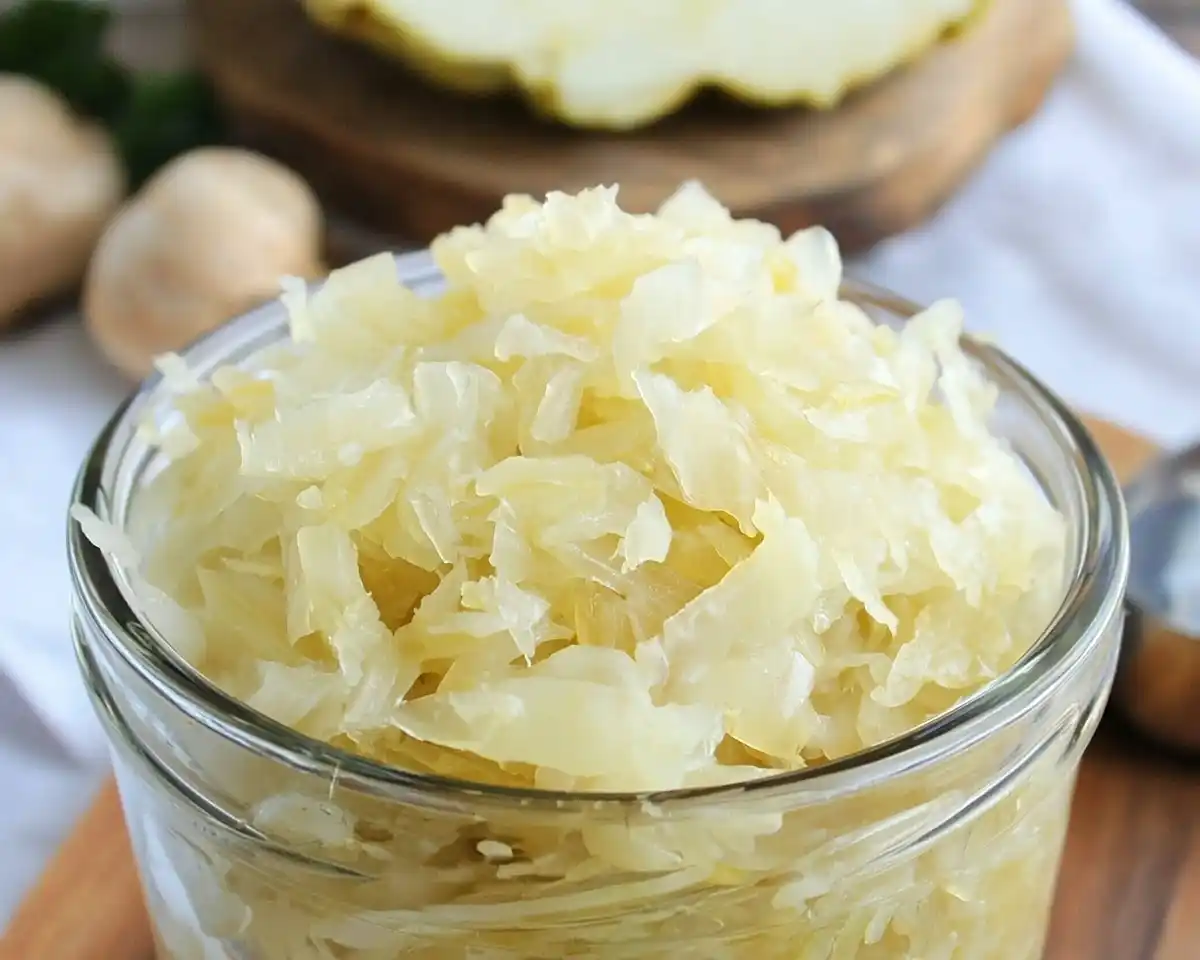
Learn how to make sauerkraut at home with this proven fermentation guide. Fresh cabbage transforms into tangy, probiotic-rich perfection in just 2 weeks.
Hey, I’m Linda! Welcome to Tasty at Home, where bold flavors meet everyday kitchens.
Last winter, my gut health was a mess. My doctor suggested adding more fermented foods to my diet, and honestly? I thought she was crazy. Then I tasted my neighbor’s homemade sauerkraut at a potluck, and man, oh man, everything changed. That tangy, crunchy bite was nothing like the mushy stuff from grocery store shelves.
I dove headfirst into fermentation that very week. My first batch? Total disaster—I used iodized salt and ended up with slimy, bitter cabbage that went straight to the compost bin. Oops! But I learned, adjusted, and now I make sauerkraut every month. This recipe represents countless batches, temperature tests, and taste trials until I nailed the perfect tangy crunch.
Tasty at Home – Where bold flavors meet everyday kitchens.
Table of Contents
Why This Sauerkraut Recipe Works
This isn’t your grandmother’s complicated fermentation project. Well… actually, it might be, but I’ve simplified it for modern kitchens while keeping all the authentic flavor.
What makes this homemade sauerkraut stand out? First, we’re using the absolute freshest cabbage we can find—this ensures maximum juice for natural brine creation. Second, the salt-to-cabbage ratio is precise enough to encourage beneficial bacteria while preventing harmful growth. Third, we’re skipping fancy equipment you don’t need.
I’ve tested this recipe in 70-degree summers and 60-degree winters. It works beautifully across temperature ranges, though timing varies. You’ll get consistent, probiotic-rich results every single time.
Homemade Sauerkraut
Equipment
- Large mixing bowl
- Mason jar or ceramic crock
- Cabbage tamper or potato masher
- Sharp knife or mandoline slicer
- Small plate or glass weight
Ingredients
Main Ingredients
- 2 lbs Fresh green cabbage Choose firm, heavy heads
- 3-4 tsp Sea salt or kosher salt Never use iodized salt
Instructions
- Remove damaged leaves, cut cabbage in half, remove core, and slice thinly (1/8 inch).
- Place sliced cabbage in a large bowl, sprinkle with salt, toss, and let sit 20 minutes. Pound cabbage to release more juice.
- Pack cabbage into jar or crock in small handfuls, pressing down to remove air pockets. Fill about two-thirds full.
- If cabbage isn’t fully submerged, create supplemental brine (1 tsp salt in 1 cup water) and pour over cabbage.
- Place a weight on top of the cabbage to keep submerged. Screw lid fingertip tight to allow gas escape.
- Ferment at 65-70°F for 2-4 weeks. Taste starting day 4 to check tanginess. Open lid daily to release CO2.
- Once desired tanginess is reached, remove weights, screw lid tightly, and store in refrigerator. Keeps 6 months or longer.
Notes
Essential Ingredients for Perfect Sauerkraut
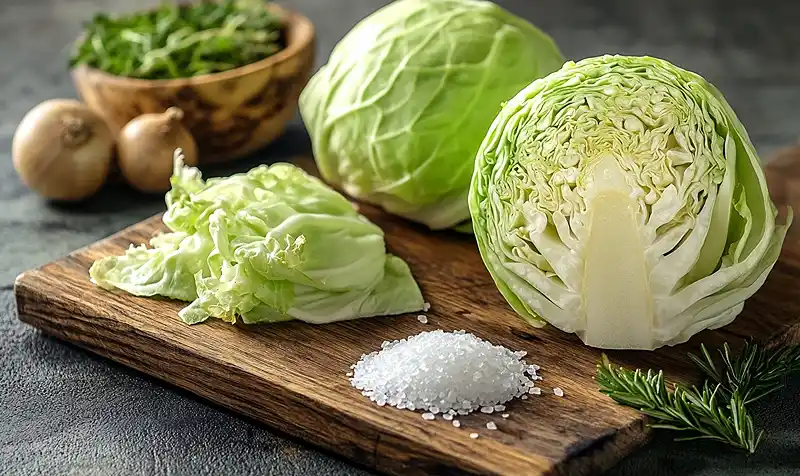
Choose green cabbage that feels heavy for its size and has tightly packed, crisp leaves. Fresh cabbage contains more natural sugars and moisture, which directly impacts fermentation success. For salt, reach for pure sea salt or kosher salt without additives—iodized salt inhibits the beneficial bacteria we’re cultivating.
| Ingredient | US Measurement | Metric | Notes |
|---|---|---|---|
| Fresh green cabbage | 2 lbs (1 medium head) | 900g | Choose firm, heavy heads |
| Sea salt or kosher salt | 3-4 teaspoons | 18-24g | Never use iodized salt |
Shopping Tips for US Grocery Stores:
Head to your local grocery store and select cabbage from the produce section’s outer bins where turnover is highest. Press the cabbage gently—it should feel solid and dense. Avoid any heads with brown spots, cracks, or wilted outer leaves. Most major chains like Kroger, Safeway, and Whole Foods stock excellent cabbage year-round, but fall harvests offer the absolute best quality.
For salt, check the baking aisle or specialty sections. Look for labels that say “pure” or “no additives.” Diamond Crystal kosher salt and Redmond Real Sea Salt are my personal favorites.
Bold Add-Ins and Creative Variations
Essentials: Just cabbage and salt create traditional sauerkraut perfection.
Bold Add-Ins: Try caraway seeds (1 tablespoon per 2 lbs cabbage) for German-style kraut, red pepper flakes for heat, or juniper berries for an earthy twist. You can also mix in shredded carrots, sliced apples, or fresh dill during the initial salting phase.
International Substitutions:
Readers outside the US can substitute any fresh cabbage variety—red cabbage works beautifully and creates stunning pink kraut. Use Himalayan pink salt or any pure, uniodized salt available in your region.
Equipment You Need (Plus DIY Alternatives)
You don’t need specialized fermentation crocks to make sauerkraut. Let me tell you, I’ve made incredible batches in simple mason jars.
Essential Equipment:
- Large mixing bowl (glass or stainless steel)
- Half-gallon mason jar or ceramic crock
- Cabbage tamper or potato masher
- Sharp knife or mandoline slicer
- Small plate or glass weight (optional)
DIY Alternatives:
No cabbage tamper? Use a potato masher or even clean hands to press the cabbage. Missing a weight? A small glass jar filled with water works perfectly to keep cabbage submerged. Don’t have a mandoline? A sharp chef’s knife and patience create equally thin slices.
Thomas Keller always emphasizes that proper knife skills matter more than fancy gadgets. Take your time slicing evenly for consistent fermentation.
Step-by-Step Sauerkraut Instructions
Step 1: Prepare Your Cabbage Foundation
Remove any bruised or damaged exterior leaves from the cabbage. Cut the head in half through the core, then carefully cut out the tough core from each half. This core doesn’t ferment well and creates tough bits in your finished sauerkraut.
Slice the cabbage very thinly, approximately 1/8 inch thick. I recommend slicing by hand with a sharp knife for the best texture—food processors can bruise the cabbage and create mushy results. Work slowly and keep your fingers tucked safely away from the blade.
You want ribbons of cabbage that are thin enough to ferment evenly but substantial enough to maintain a pleasant crunch. Julia Child always said that proper knife work is the foundation of excellent cooking, and she’s absolutely right here.
Step 2: Salt and Wait for the Magic
Place all the sliced cabbage in your large bowl. Sprinkle the salt evenly over the cabbage—use 1.5 to 2 teaspoons of salt per pound of cabbage. Toss everything together with clean hands, distributing the salt throughout.
Let the salted cabbage sit for 20 minutes. During this time, osmosis pulls moisture from the cabbage cells, creating the brine that will protect your fermentation. You’ll notice the cabbage beginning to wilt and liquid pooling at the bottom of the bowl.
After 20 minutes, use your tamper or potato masher to pound the cabbage firmly for several minutes. This releases even more liquid and breaks down the cell walls. The cabbage should look significantly wilted and be swimming in its own juice.
Step 3: Pack the Jar Like a Pro
Transfer the cabbage to your mason jar or crock in small handfuls. After each addition, use the tamper to press down firmly, releasing air pockets and packing everything tightly. This step is crucial—trapped air creates opportunities for mold growth.
Fill your jar only about two-thirds full. Remember, fermentation creates carbon dioxide bubbles that will cause the mixture to rise. I learned this lesson the hard way when my overfilled jar bubbled over onto my counter during a particularly vigorous fermentation!
Continue mashing and packing until the cabbage is completely submerged under liquid. The brine should cover the cabbage by at least half an inch.
Step 4: Create Supplemental Brine (If Needed)
Sometimes, despite thorough mashing, you won’t have quite enough natural brine to cover the cabbage completely. This happens more often with older cabbage that contains less moisture.
If your cabbage isn’t fully submerged, dissolve 1 teaspoon of salt in 1 cup of water. This creates a 2% brine solution that matches the salinity of your cabbage’s natural juices. Pour this supplemental brine over the cabbage until everything is covered.
Never skip this step. Exposed cabbage develops mold and ruins your entire batch—trust me on this one.
Step 5: Weight Down and Seal
Place a weight on top of the cabbage to keep it submerged throughout fermentation. Choose something heavy, clean, and non-reactive like a small glass jar, a glass fermentation weight, or a ceramic plate that fits inside your vessel.
For mason jars, I often skip the weight if the jar diameter is small enough. The narrow opening naturally keeps most cabbage below the brine line. However, you’ll need to check daily and push down any floaters.
Screw the lid on to fingertip tightness only—not fully tight. This allows gases to escape while keeping bugs and debris out. Too-tight lids create pressure that can cause explosions. Yes, exploding jars are a real thing in fermentation!
Step 6: Ferment at the Right Temperature
Place your jar in a dark location where the temperature stays between 65-70°F. Kitchen cabinets, pantries, or basement shelves work perfectly. Avoid areas near heat sources or in direct sunlight.
At this ideal temperature range, ferment your sauerkraut for at least 2 weeks. I personally prefer 3-4 weeks for deeper flavor development. Starting on day 4, taste a small forkful daily to monitor tanginess levels.
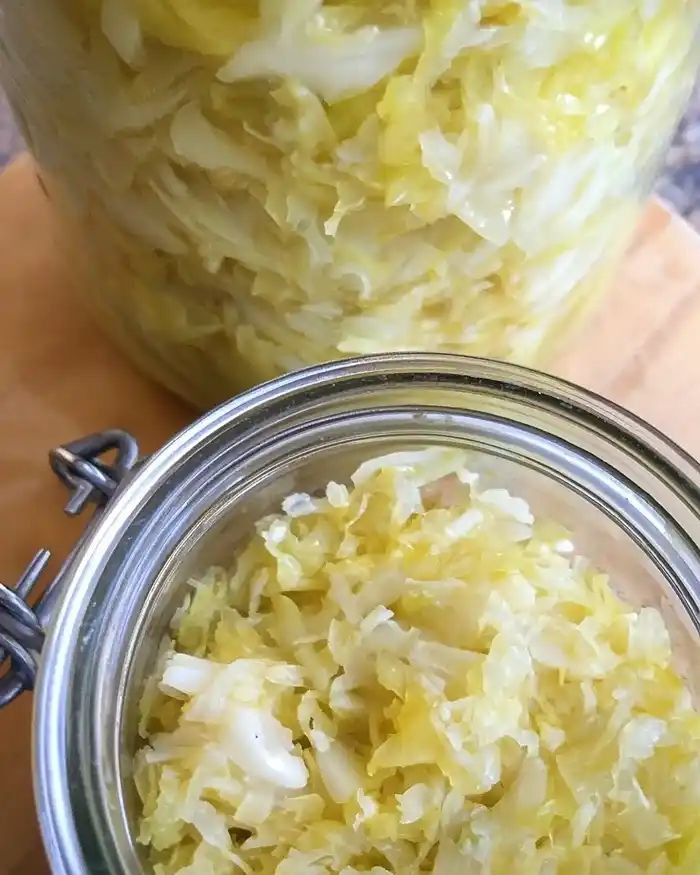
Open the jar lid once daily to release built-up carbon dioxide (this process is called “burping”). Don’t be alarmed when the brine becomes fizzy or develops bubbles—this signals healthy microbial activity. The cabbage will gradually change from bright green to a pale yellowish-beige color.
Warmer temperatures speed fermentation, while cooler temps slow it down. At 75°F, your kraut might be ready in 10 days. At 60°F, it could take a full month.
Step 7: Store Your Finished Sauerkraut
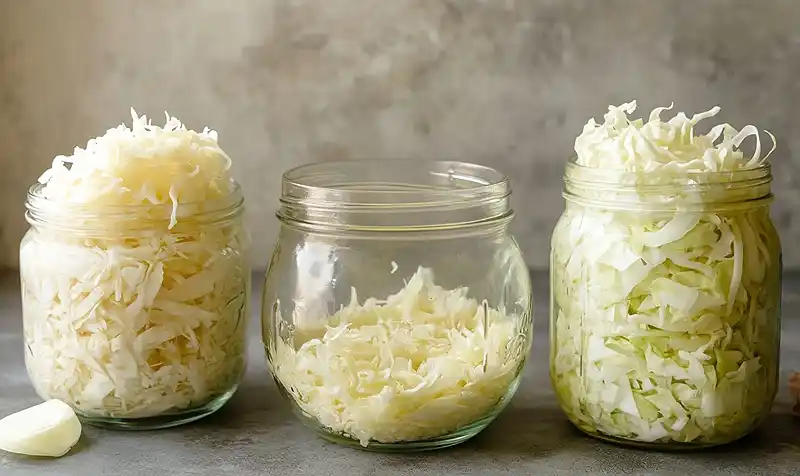
Once your sauerkraut reaches the perfect level of tanginess for your taste, remove any weights and screw the lid on tightly. Transfer the jar to your refrigerator immediately.
Cold temperatures (38-50°F) dramatically slow fermentation without stopping it completely. Your sauerkraut will continue developing flavor very gradually in the fridge. Stored properly, homemade sauerkraut keeps for 6 months or longer in refrigeration.
If your finished sauerkraut tastes too salty, simply rinse it under cold water before eating. Some people prefer their kraut straight from the jar, while others enjoy it as a tangy topping for hearty soups.
Expert Tips for Sauerkraut Success
Use the Freshest Cabbage Available: Visit farmers’ markets during fall harvest season for just-picked cabbage. The fresher your cabbage, the more natural juice it releases. This means better brine coverage and superior texture in your finished product.
Temperature Matters More Than You Think: Consistency is key with fermentation. Wild temperature swings create unpredictable results. If your kitchen runs warm, ferment in a cooler basement or use a temperature-controlled fermentation chamber.
Trust Your Senses: Good sauerkraut smells pleasantly sour and tangy, never putrid or rotten. If you see fuzzy mold (not just white scum, which is harmless kahm yeast), discard the batch and start over. Safety always comes first.
Start Tasting Early: Everyone’s preference differs for sourness level. Some folks love mild, barely-fermented kraut after just one week. Others prefer intensely tangy kraut that’s fermented for six weeks. Taste daily starting on day 4 to find your sweet spot.
Creative Sauerkraut Variations
German-Style Kraut: Add 1 tablespoon caraway seeds and 2 crushed juniper berries per pound of cabbage before fermenting. This creates the classic flavor profile you’d find at Oktoberfest celebrations.
Spicy Kimchi-Style Kraut: Mix in 2 tablespoons red pepper flakes, 3 minced garlic cloves, and 1 tablespoon grated ginger for a fusion twist. This variation pairs beautifully with comfort food casserole.
Ruby Kraut: Substitute red cabbage for green to create stunning magenta sauerkraut packed with extra antioxidants. Add sliced apples and a cinnamon stick for a sweet-tart holiday variation.
Garden Vegetable Kraut: Mix shredded carrots, sliced radishes, and chopped fresh dill into your cabbage. This creates a colorful, nutritious kraut perfect for topping weeknight dinner favorites.
Horseradish Kraut: Grate 2 tablespoons fresh horseradish into your cabbage mixture for a sinus-clearing kick. This variation complements rich, fatty meats exceptionally well.
Storage and Make-Ahead Strategy
Sauerkraut is the ultimate make-ahead food. Prepare large batches when cabbage goes on sale, then store jars in your refrigerator for months of convenient probiotic-rich meals.
Proper Storage Guidelines:
| Storage Method | Temperature | Duration | Notes |
|---|---|---|---|
| Refrigerator | 38-40°F | 6-12 months | Best for maintaining crunch |
| Cold cellar | 40-50°F | 4-6 months | Traditional storage method |
| Freezer | 0°F | Not recommended | Kills beneficial probiotics |
Transfer finished sauerkraut to smaller jars for convenient portioning. Always use clean utensils when scooping kraut to prevent contamination. Keep the remaining kraut submerged under brine to maintain freshness.
For make-ahead meal prep, ferment several jars at once. Label each jar with the fermentation start date so you can track flavor development. Rotate your stock, eating older batches first.
Serving Suggestions and Pairings
Serve sauerkraut raw as a condiment to preserve all those beneficial probiotics. The live cultures are destroyed by heat, so add kraut to hot dishes just before serving.
Try it on Reuben sandwiches, alongside bratwurst, or heaped onto savory beef and noodle dishes. The tangy crunch cuts through rich, fatty foods beautifully. I also love adding a forkful to scrambled eggs or mixing it into potato salad for unexpected zing.
For an authentic German meal, serve sauerkraut with roasted pork, boiled potatoes, and crusty rye bread. Pair it with a cold beer or sparkling apple cider for the complete experience.
Frequently Asked Questions
Can I make sauerkraut without a fermentation crock?
You can absolutely make sauerkraut without a fermentation crock. Regular mason jars work perfectly for small batches—I’ve made dozens of successful batches in half-gallon jars. The key is keeping the cabbage submerged under brine regardless of your container choice.
What temperature is best for fermenting homemade sauerkraut?
The best temperature for fermenting homemade sauerkraut is between 65-70°F. This range encourages beneficial lactobacillus bacteria while discouraging harmful organisms. Warmer temperatures speed fermentation, while cooler conditions slow the process but often develop more complex flavors.
How long does homemade sauerkraut take to ferment?
Homemade sauerkraut takes at least 2 weeks to ferment at ideal temperatures, though many prefer 3-4 weeks for deeper flavor. Start tasting on day 4 to find your preferred tanginess level. Warmer conditions reduce fermentation time, while cooler temps extend it.
Can sauerkraut go bad or expire?
Sauerkraut can go bad if improperly stored, though properly fermented kraut lasts 6-12 months refrigerated. Signs of spoilage include fuzzy mold, off-putting rotten smells, or slimy texture. Harmless white film (kahm yeast) can be skimmed off and doesn’t indicate spoilage.
Final Thoughts on Homemade Sauerkraut
You know what? Making sauerkraut transformed my relationship with fermented foods. What started as a desperate attempt to improve my gut health became a genuine passion. Now I can’t imagine my kitchen without a jar of tangy, probiotic-rich kraut fermenting on the counter.
This recipe works whether you’re completely new to fermentation or you’ve been making sauerkraut for years. The straightforward process, minimal ingredients, and incredible health benefits make it absolutely worth trying. Plus, the satisfaction of creating your own fermented foods from scratch? Unbeatable.
Serve your homemade sauerkraut alongside classic American comfort foods like cheesy tortellini meatball soup for a probiotic boost. The tangy crunch adds surprising depth to familiar favorites.
Ready to start your fermentation journey? Grab the freshest cabbage you can find and let’s make some sauerkraut!
Drop a comment below and tell me about your first batch. Did everything go smoothly, or did you encounter any unexpected challenges? I’d love to hear your sauerkraut success stories!
