
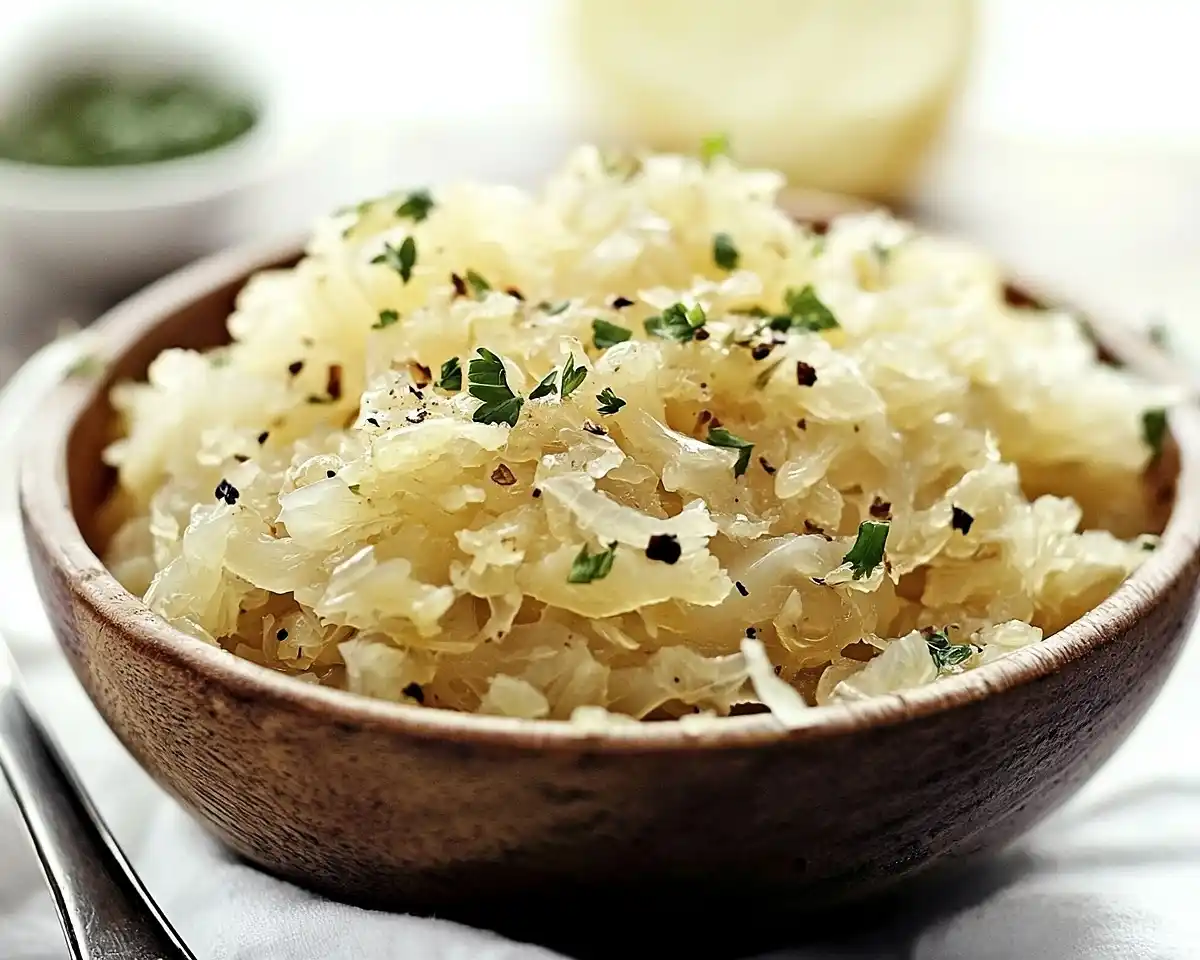
Learn how to cook sauerkraut perfectly with apples and spices. This easy sauerkraut recipe transforms tangy cabbage into a flavorful side dish in just 30 minutes.
Hey, I’m Sofia! Welcome to Tasty at Home, where cooking is supposed to be fun, not scary. Last winter, my German neighbor handed me a jar of homemade sauerkraut and said, “Cook this right, and you’ll never buy the canned stuff again.” She was absolutely right.
I’ll admit, my first attempt was a soggy, overly sour disaster. But after testing this recipe twelve times (yes, twelve), I finally cracked the code. The secret? Caramelized apples, aromatic spices, and a grated potato that magically thickens everything into silky perfection.
This isn’t your grandmother’s boiled cabbage. We’re talking about sweet-tart sauerkraut with layers of flavor that’ll make you wonder why you ever settled for the mushy stuff from a can. Whether you’re planning a cozy Sunday dinner or preparing a side for kielbasa, this cooked sauerkraut delivers every single time.
Table of Contents
What Makes This Sauerkraut Recipe Special
This traditional approach transforms ordinary jarred sauerkraut into something extraordinary. The combination of caramelized onions and apples balances the natural tartness perfectly. Meanwhile, the grated potato creates a velvety texture that store-bought versions simply can’t match.
I’ve tested this recipe with different apple varieties, spice combinations, and cooking methods. After all those trials, this version consistently delivers restaurant-quality results. The aromatic blend of juniper berries, cloves, and bay leaves creates depth that makes this dish unforgettable.
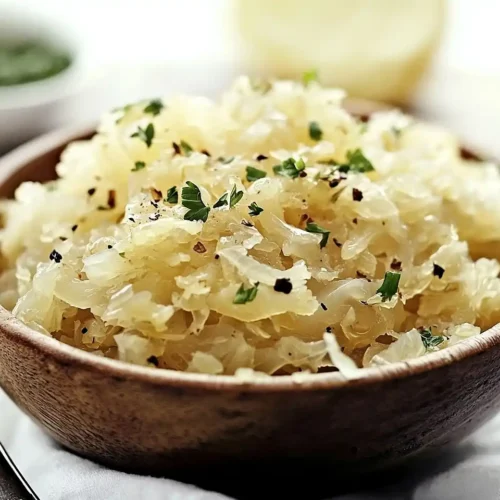
How to Cook Sauerkraut
Equipment
- Saucepan or Dutch oven with lid
- Chef’s knife
- box grater
- wooden spoon
- Colander
Ingredients
Essential Components
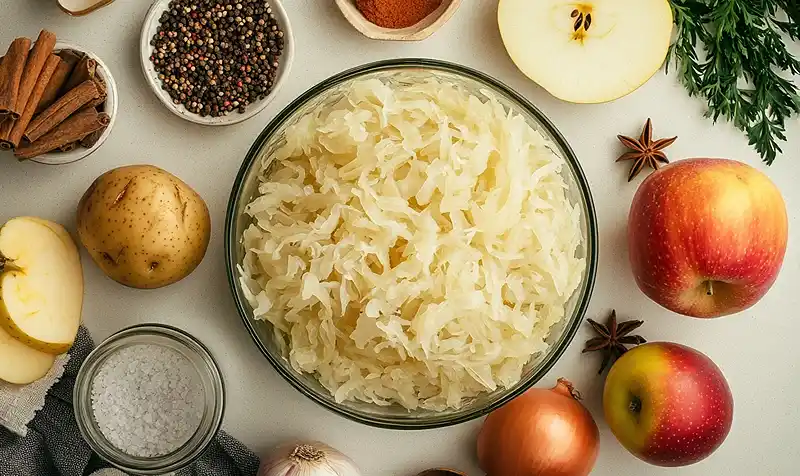
- 1 lb Sauerkraut drained, refrigerated preferred
- 1 Medium onion yellow or white, sliced
- 1 Large apple Granny Smith recommended, cored and sliced
- 1 tbsp Sunflower oil or vegetable oil
- 1 tbsp Granulated sugar for caramelization
- 1 Large potato finely grated
- 1 cup Chicken stock low-sodium preferred
Bold Aromatics & Spices
- 1 tsp Black peppercorns whole
- 6 Whole cloves
- 1 tsp Juniper berries
- 3 Bay leaves
Instructions
- Drain the sauerkraut thoroughly. Finely slice the onion and apple.
- Heat oil in a saucepan over medium heat and cook the onion and apple for 3–4 minutes until translucent.
- Finely grate the potato and set aside.
- Sprinkle sugar over the onion-apple mixture and let it caramelize for about 2 minutes.
- Add spices, sauerkraut, grated potato, and chicken stock. Stir well to combine.
- Bring to a boil, then reduce heat, cover, and simmer gently for 30 minutes until tender and flavorful.
Notes
Selecting Quality Ingredients
For the aromatic base, fresh onions and crisp apples are non-negotiable. Choose tart apples like Granny Smith for the best flavor balance. For the sauerkraut itself, look for refrigerated versions at your local grocery store—they offer better texture than canned options.
The spices matter more than you think. Fresh juniper berries and whole peppercorns release essential oils during cooking that ground versions simply can’t provide. Quality chicken stock adds richness that water alone cannot achieve.
Ingredients
Essential Components
| Ingredient | US Measurement | Metric | Notes |
|---|---|---|---|
| Sauerkraut | 1 lb | 450g | Drained weight, refrigerated preferred |
| Medium onion | 1 | 1 | Yellow or white |
| Large apple | 1 | 1 | Granny Smith recommended |
| Sunflower oil | 1 tablespoon | 15ml | Or vegetable oil |
| Granulated sugar | 1 tablespoon | 12g | For caramelization |
| Large potato | 1 | 200-250g | Russet works best |
| Chicken stock | 1 cup | 240ml | Low-sodium preferred |
Bold Aromatics & Spices
| Ingredient | US Measurement | Metric | Purpose |
|---|---|---|---|
| Black peppercorns | 1 teaspoon | 5g | Whole, not ground |
| Whole cloves | 6 | 6 | Essential for depth |
| Juniper berries | 1 teaspoon | 5g | Traditional German flavor |
| Bay leaves | 3 | 3 | Turkish or California |
Shopping Tips for US Grocery Stores
You’ll find jarred sauerkraut in the refrigerated section near pickles and olives. Some stores also carry it canned, but refrigerated varieties offer superior texture and flavor. Juniper berries might require a trip to the spice aisle or a specialty store—they’re worth tracking down for authentic taste.
Look for firm, crisp apples without bruises. The potato should feel solid and free from green spots. As for the chicken stock, homemade delivers the best results, but quality store-bought works perfectly fine.
International Substitutions
If you’re cooking outside the US, substitute rapeseed oil for sunflower oil. Metric cooks should use 450g sauerkraut and 200g potato. British readers can use cooking apples (Bramley) instead of Granny Smith.
Can’t find juniper berries? Add a splash of gin during cooking—it contains juniper flavor. No chicken stock? Vegetable stock works, though the dish becomes vegetarian and slightly less rich.
Equipment & Kitchen Tools
You’ll need a large saucepan or Dutch oven with a lid—at least 3-quart capacity. A sharp chef’s knife makes slicing the onion and apple quick work. Keep a box grater handy for the potato, and have a wooden spoon ready for stirring.
A colander drains the sauerkraut efficiently. Measuring spoons and cups ensure accuracy. If you don’t have a proper saucepan, a deep skillet with a lid works in a pinch.
How to Cook Sauerkraut Step-by-Step
Step 1: Prepare Your Ingredients
Drain the sauerkraut thoroughly in a colander. Press gently to remove excess liquid, but don’t rinse—you want to keep some of that tangy brine. Finely slice the onion into thin half-moons, and cut the apple into similar-sized pieces after removing the core.
This prep work takes about 5 minutes. Having everything ready before you start cooking prevents scrambling later. As Julia Child always emphasized, mise en place makes cooking enjoyable rather than stressful.
Step 2: Sauté the Aromatics
Heat the sunflower oil in your saucepan over medium heat. Add the sliced onion and apple, stirring occasionally for 3-4 minutes. You’re looking for the onions to turn translucent and soft, not browned.
The apples will start releasing their natural sweetness. This creates the flavor foundation for your entire dish, so don’t rush this step.
Step 3: Grate the Potato
While the onions cook, finely grate the potato using the smallest holes on your box grater. Work quickly to prevent oxidation, which turns the potato brown. Set it aside in a small bowl until needed.
Here’s where I made my biggest mistake initially—I used chunks instead of grated potato. The result was lumpy and uneven. Grating distributes the starch throughout the dish, creating that signature creamy texture.
Step 4: Caramelize the Sugar
Sprinkle the granulated sugar evenly over the cooked onions and apples. Stir lightly and let it caramelize for 2 minutes. Watch carefully—the sugar should turn golden and glossy, not dark brown or burnt.
This caramelization step adds subtle sweetness that balances the sauerkraut’s natural acidity. The aroma at this stage smells like apple pie meets savory comfort food.
Step 5: Add Everything Else
Add the black peppercorns, cloves, juniper berries, and bay leaves to the pan. Stir for 30 seconds to wake up the spices. Then add the drained sauerkraut, grated potato, and chicken stock all at once.
Stir everything together thoroughly. The grated potato should distribute evenly throughout the mixture. Make sure no clumps remain.
Step 6: Simmer to Perfection
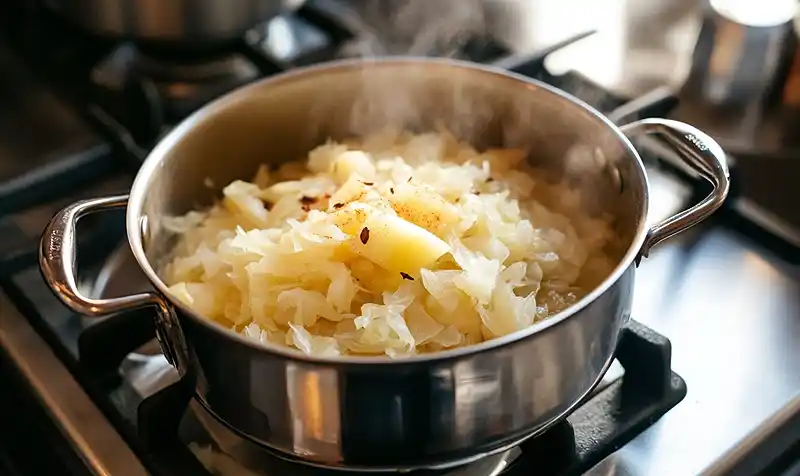
Bring the mixture to a full boil over high heat. Once bubbling, reduce the heat to medium-low and cover with your lid. Let it simmer gently for 30 minutes, stirring occasionally.
The potato will dissolve into the liquid, creating a silky sauce that clings to each strand of cabbage. You’ll know it’s done when the sauerkraut tastes tender and the flavors have melded together beautifully. As Thomas Keller notes, proper simmering develops complexity that high heat simply cannot achieve.
Expert Tips for Perfect Sauerkraut Results
Timing Matters
Don’t skip the full 30-minute simmer. This allows the spices to infuse completely and the potato starch to work its thickening magic. If you’re short on time, 20 minutes minimum will work, but you’ll sacrifice some depth.
Taste and Adjust
Before serving, taste your sauerkraut. If it’s too tart, add another teaspoon of sugar. Too sweet? A splash of apple cider vinegar brings it back into balance.
Make It Your Own
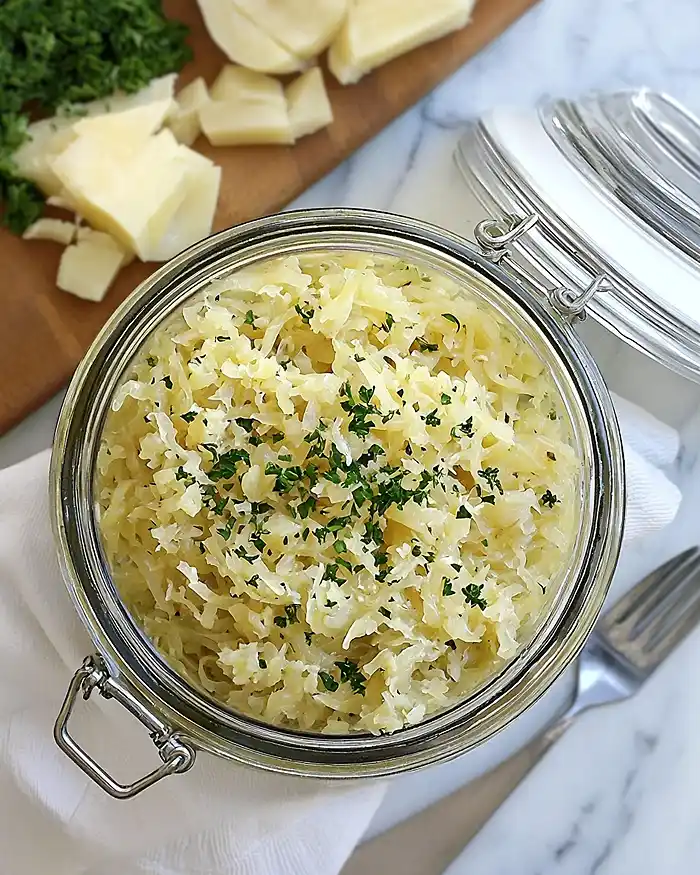
This recipe adapts beautifully to different flavor profiles. For a smokier version, add 4 strips of cooked bacon during the simmer. Want it vegetarian? Use vegetable stock and add smoked paprika for depth.
Creative Variations
Holiday Version
Add dried cranberries and a splash of white wine during the simmer for a festive Thanksgiving side. This pairs beautifully with traditional Eastern European breads and appetizers.
German Beer Hall Style
Replace half the chicken stock with dark beer and add caraway seeds. Serve alongside bratwurst and mustard for an authentic Oktoberfest experience.
Polish-Inspired
Add smoked kielbasa slices during the last 10 minutes of cooking. This transforms the dish into a complete one-pot meal. Try pairing it with glazed kielbasa and pineapple bites as an appetizer.
Low-Carb Adaptation
Skip the potato and sugar entirely. Use bone broth for extra richness and add extra bay leaves to compensate for the missing body.
Sweet and Savory Fusion
Stir in golden raisins and a tablespoon of maple syrup for a dish that works beautifully with pork chops or roasted chicken.
Storage and Make-Ahead Instructions
Refrigeration
Store leftover cooked sauerkraut in an airtight container for up to 5 days. The flavors actually improve on day two, making this perfect for meal prep.
Freezing
This dish freezes beautifully for up to 3 months. Cool completely before transferring to freezer-safe containers. Leave an inch of headspace to allow for expansion.
Reheating
Reheat gently on the stovetop with a splash of stock or water. Microwave reheating works but can create uneven hot spots—stir halfway through for best results.
Make-Ahead Strategy
Prepare this dish up to two days in advance. Store refrigerated and reheat before serving. The flavors meld together even more, creating a richer final dish.
| Storage Method | Duration | Best Practice |
|---|---|---|
| Refrigerator | 5 days | Airtight container |
| Freezer | 3 months | Leave 1″ headspace |
| Room temp | 2 hours max | Discard after |
Perfect Pairings and Serving Suggestions
This cooked sauerkraut shines alongside German-style dishes. Serve it with bratwurst, pork schnitzel, or roasted pork shoulder. It also complements rich, fatty meats beautifully—the acidity cuts through heaviness perfectly.
For lighter meals, pair it with grilled chicken or baked salmon. The sweet-tart flavor profile works surprisingly well with seafood. Consider serving it as part of a larger spread with cucumber and hummus bites for contrast.
Traditional German potato dumplings or buttered egg noodles make excellent starch companions. A cold German beer or crisp Riesling completes the experience. For appetizers, try mini jalapeño popper egg rolls to start the meal.
Sauerkraut Recipe FAQs
Can you cook sauerkraut straight from the jar?
Yes, you can cook sauerkraut straight from the jar. Simply drain it well and follow the recipe as written. Jarred sauerkraut benefits enormously from the added apples, spices, and caramelization process, which transforms its basic flavor profile into something special.
What’s the best way to reduce sauerkraut sourness?
The best way to reduce sauerkraut sourness involves rinsing it briefly under cold water before cooking. However, the caramelized sugar and sweet apples in this recipe naturally balance the acidity without requiring rinsing. The 30-minute simmer mellows the sharpness significantly.
How do you know when cooked sauerkraut is done?
You know when cooked sauerkraut is done by checking for tender texture and fully melded flavors. The cabbage should feel soft but not mushy, and the liquid should have thickened slightly from the potato starch. Taste a strand—it should be pleasantly tangy without harsh acidity.
Can I make this sauerkraut recipe without a potato?
Yes, you can make this sauerkraut recipe without a potato, though you’ll lose the creamy texture. To compensate, add an extra tablespoon of butter at the end of cooking or use a cornstarch slurry (1 teaspoon cornstarch mixed with 2 tablespoons cold water) during the last 5 minutes of simmering.
Conclusion
Well, there you have it—the ultimate guide to cooking sauerkraut that actually tastes amazing. This isn’t just another cook cabbage recipe you’ll make once and forget. It’s the kind of dish that becomes your go-to for Sunday dinners, holiday gatherings, and those nights when you want something deeply comforting.
Remember my neighbor’s advice? She was onto something. Once you taste sauerkraut with properly caramelized apples and aromatic spices, you’ll understand why traditional German cooks never settle for shortcuts.
Serve this alongside your favorite protein, maybe with a cold beer and some hearty bread. Better yet, make a double batch—it disappears faster than you’d think. For a complete meal spread, pair it with Texas caviar and crusty rolls.
Have you tried cooking sauerkraut with different apple varieties or spices? Drop a comment below and share your experience. I’d love to hear how you make this recipe your own.
Tasty at Home – Where bold flavors meet everyday kitchens.