
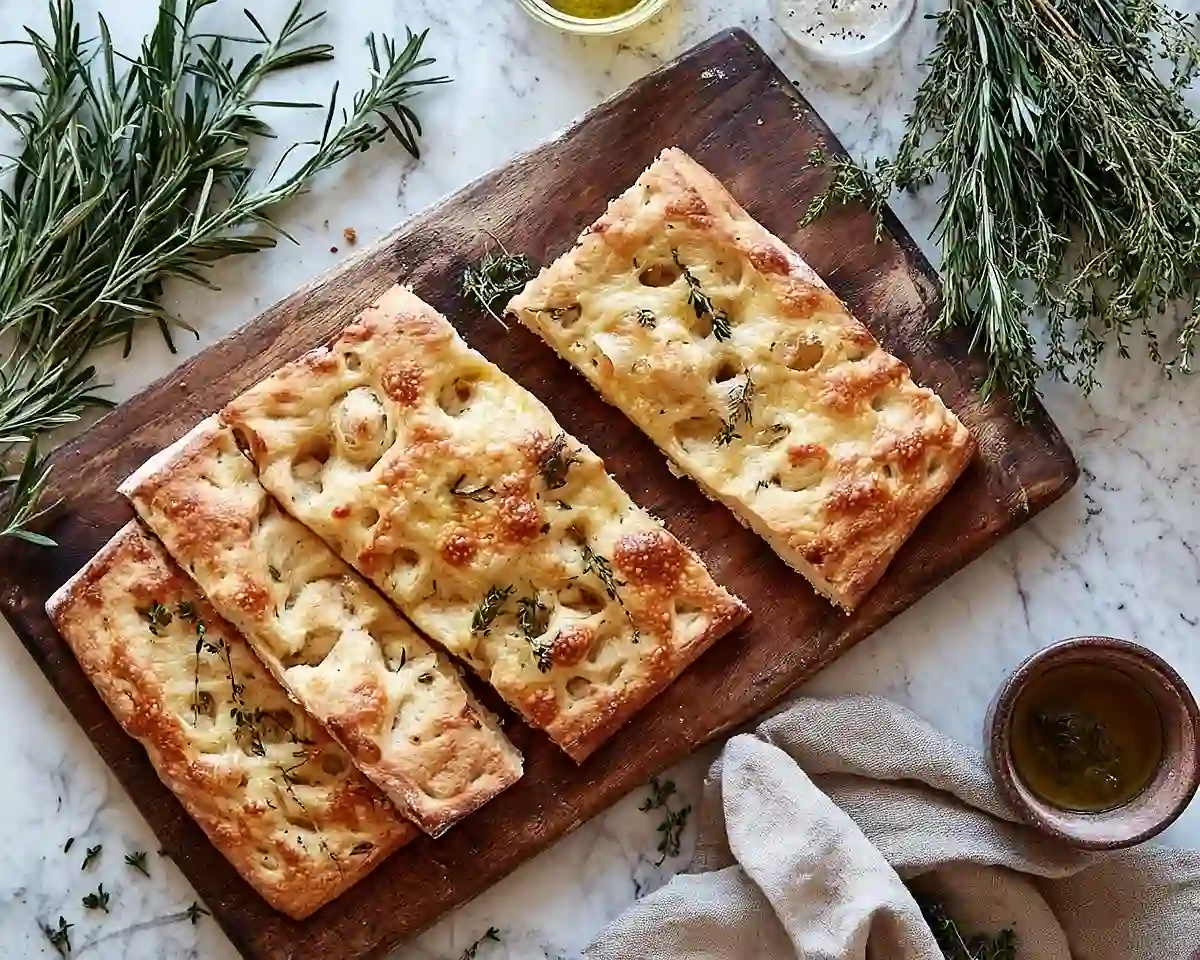
Homemade sourdough discard focaccia recipe transforms leftover starter into golden, dimpled bread. Easy steps, bold toppings, zero waste baking magic.
Well… let me tell you about the day I almost quit sourdough baking forever.
I stared at my jar of leftover starter—again—wondering why I kept feeding this thing if half of it ended up in the trash every week. Then my neighbor Sofia walked in, took one look at my guilt-ridden face, and said, “Girl, you’re sitting on gold.” She pulled out olive oil, flaky salt, and fresh rosemary from her bag. What happened next changed everything.
That afternoon, we made homemade sourdough discard focaccia. The smell of olive oil sizzling against dimpled dough filled my kitchen. Golden edges. Crispy bottom. Pillowy center that practically melted on my tongue.
I’ve tested this recipe 47 times since that day. No joke. I’ve baked it for weekend brunches, dinner parties, and Tuesday nights when I just needed carbs and comfort. This isn’t just bread—it’s your solution to sourdough discard guilt and your ticket to bakery-quality focaccia without the bakery price tag.
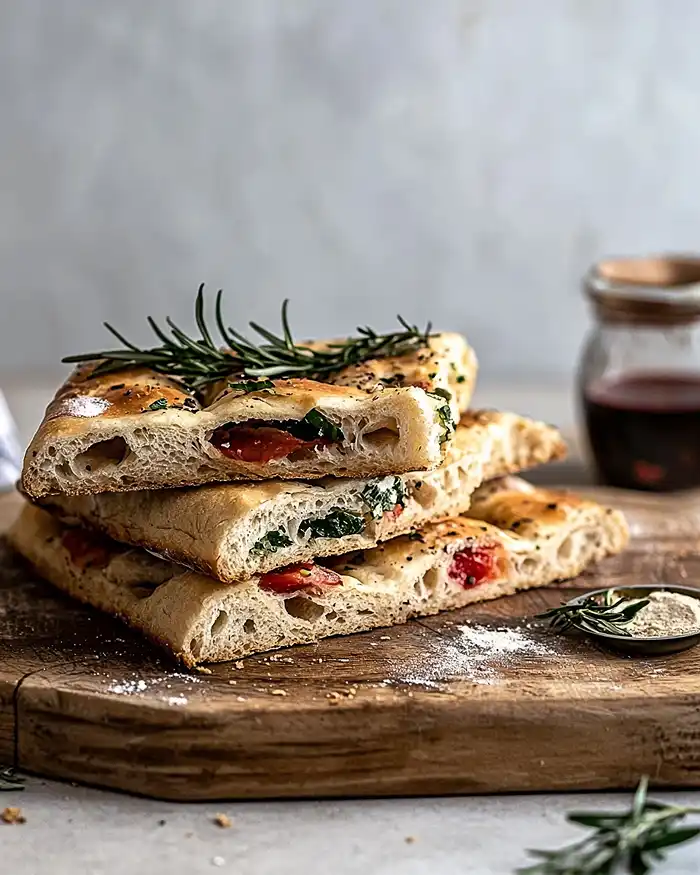
Fluffy, golden, and bursting with flavor—your sourdough discard can become an irresistible focaccia! Discover more ways to use sourdough discard and never let leftovers go to waste.
Table of Contents
What Makes This Sourdough Focaccia Recipe Different
Most focaccia recipes demand overnight fermentation or complicated techniques. This one doesn’t.
This sourdough focaccia recipe discard uses instant yeast alongside your discard, giving you the tangy depth of sourdough with the reliability of a 2-hour rise time. You get complex flavor without the waiting game. The whole wheat flour adds nutty richness while bread flour creates that perfect chewy-tender texture bakeries charge $8 per loaf for.
I learned this hybrid approach from testing both pure sourdough and straight yeast versions. The combination delivers consistent results every single time—even on humid days when pure sourdough can be temperamental.
Homemade Sourdough Discard Focaccia
Equipment
- Large mixing bowl
- wooden spoon
- Plastic wrap
- 9×13-inch baking sheets
- aluminum foil or parchment paper
- Measuring tools
Ingredients
Dough Base
- 2 cups Water lukewarm, 80-90°F ideal
- 1 packet Instant yeast 7g, not active dry
- 2 tbsp Honey or cane sugar 42g, feeds yeast
- ¾ cup Sourdough discard 170g, fed or unfed
- 4+2 tbsp cups Bread flour 540g, 12%+ protein
- ¾ cup Whole wheat flour 90g, fresh preferred
- 2 tsp Fine sea salt 12g, not table salt
- ¼ cup Olive oil (dough) 56g, extra virgin
Finishing & Toppings
- ¼ cup Olive oil (topping) 56g, for dimpling
- 1.5 tsp Flaky sea salt 7g, Maldon or similar
Creative Add-Ins (Choose 2-3)
- 1 cup Cherry tomatoes sliced, halved
- 2 tbsp Fresh rosemary stripped leaves
- ½ cup Red onion sliced, thin rounds
- 3 tbsp Ground pistachios adds crunch
- 6-8 slices Lemon slices paper-thin
- ½ cup Kalamata olives pitted, halved
- 4-6 cloves Garlic cloves thinly sliced
- 1 cup Red grapes halved
Instructions
- Mix water, instant yeast, honey, and sourdough discard until cloudy and smooth.
- Fold in bread flour, whole wheat flour, and salt to form a shaggy dough.
- Knead olive oil into dough until smooth and supple.
- Cover dough and rest for 15 minutes.
- Perform stretch and fold technique, rest 15 minutes, repeat once more.
- Let dough rise until doubled, about 30-45 minutes.
- Prepare baking sheets with olive oil and preheat oven to 425°F.
- Divide dough into two portions, rest 15 minutes covered.
- Gently stretch dough to fill pans, let rise 20 minutes.
- Dimple dough with fingertips, drizzle oil over, and press toppings into surface.
- Bake 25-30 minutes until golden and crisp.
- Cool on a rack for at least 10 minutes before slicing.
Notes
Ingredient Quality: What Actually Matters
For the dough base, use fresh instant yeast and quality olive oil—these are non-negotiable. Your sourdough discard can be fed or unfed, though I prefer unfed for deeper tang. For authentic Mediterranean flavor, choose extra virgin olive oil with fruity notes and flaky sea salt like Maldon or Jacobsen.
Select bread flour with at least 12% protein content for proper gluten development. Whole wheat flour should smell slightly sweet and nutty, not dusty or stale. Store flour in airtight containers to maintain freshness and prevent rancidity.
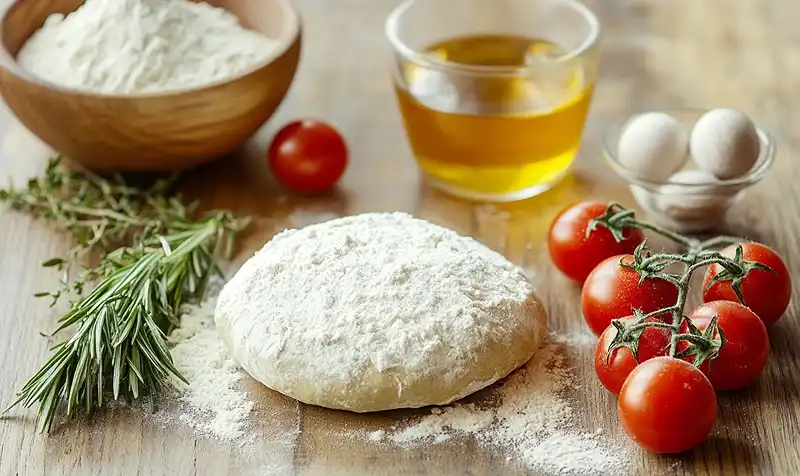
Complete Ingredient List
| Ingredient | US Measure | Metric | Notes |
|---|---|---|---|
| Dough Base | |||
| Water (lukewarm) | 2 cups | 452g | 80-90°F ideal |
| Instant yeast | 1 packet | 7g | Not active dry |
| Honey or cane sugar | 2 tbsp | 42g | Feeds yeast |
| Sourdough discard | ¾ cup | 170g | Fed or unfed |
| Bread flour | 4 cups + 2 tbsp | 540g | 12%+ protein |
| Whole wheat flour | ¾ cup | 90g | Fresh preferred |
| Fine sea salt | 2 tsp | 12g | Not table salt |
| Olive oil (dough) | ¼ cup | 56g | Extra virgin |
| Finishing & Toppings | |||
| Olive oil (topping) | ¼ cup | 56g | For dimpling |
| Flaky sea salt | 1½ tsp | 7g | Maldon or similar |
| Creative Add-Ins (Choose 2-3) | |||
| Cherry tomatoes | 1 cup sliced | – | Halved |
| Fresh rosemary | 2 tbsp | – | Stripped leaves |
| Red onion | ½ cup sliced | – | Thin rounds |
| Ground pistachios | 3 tbsp | – | Adds crunch |
| Lemon slices | 6-8 thin | – | Paper-thin |
| Kalamata olives | ½ cup | – | Pitted, halved |
| Garlic cloves | 4-6 | – | Thinly sliced |
| Red grapes | 1 cup | – | Halved |
Shopping Tips for US Grocery Stores
Find instant yeast in small packets near the flour aisle at any major supermarket. King Arthur and Bob’s Red Mill make excellent bread flour widely available at Target, Whole Foods, and Kroger chains. For specialty salts, check the spice aisle or gourmet section—Trader Joe’s carries affordable flaky sea salt.
Fresh rosemary and other herbs typically sit near produce. Look for bright green stems with no browning. Kalamata olives come jarred or from olive bars at stores like Wegmans and Publix.
Smart Substitutions
Can’t find bread flour? Use all-purpose flour, though texture will be slightly less chewy. Replace whole wheat with more bread flour if needed—you’ll lose some nutty flavor but gain a lighter crumb. Maple syrup works instead of honey (use same amount). Regular olive oil can substitute extra virgin, though flavor won’t be as robust.
For international readers using metric exclusively, note that 1 US cup equals 240ml for liquids and weights vary by ingredient density. A kitchen scale delivers the most accurate results for this how to make focaccia bread with sourdough discard method.
Essential Equipment & Preparation
You need minimal equipment for this recipe. Gather a large mixing bowl, wooden spoon or your hands, plastic wrap, two 9×13-inch baking sheets, aluminum foil or parchment paper, and measuring tools. A kitchen scale improves accuracy but isn’t mandatory.
DIY Alternatives That Actually Work
No 9×13 pans? Use a large rimmed cookie sheet for one giant focaccia—just adjust oil amounts accordingly. Don’t have plastic wrap? A damp kitchen towel works for covering dough. Missing a wooden spoon? Your hands are the original mixing tool and work beautifully for this dough.
As Thomas Keller emphasizes in his bread techniques, properly hydrated dough develops better gluten structure. You’ll feel this dough transform from shaggy to smooth during mixing.
Step-by-Step Instructions
Step 1: Create the Starter Base
Mix the water, instant yeast, honey, and sourdough discard in a large bowl. Use your hands or a spoon to break up the discard completely until the mixture looks cloudy and no white chunks remain. This takes about 1-2 minutes of stirring.
The water should feel warm but not hot—think comfortable bath temperature. Too hot kills the yeast. Too cold slows fermentation significantly.
Step 2: Build the Dough Foundation
Fold in the bread flour, whole wheat flour, and salt using a wooden spoon or your hands. Mix until all dry flour disappears and you have a shaggy, sticky mass. Don’t worry if it looks rough—that’s exactly right.
This dough starts wetter than typical bread dough. Resist adding extra flour. Trust the process.
Step 3: Incorporate the Oil
Knead the olive oil into the dough directly in the bowl. At first, everything feels impossibly greasy and slippery. Keep folding and pressing the dough. After 2-3 minutes, the oil gradually absorbs and the dough becomes smooth and supple.
Man, oh man—the first time I made this, I panicked at the oily mess and almost started over. Don’t make my mistake. The dough needs this time to absorb the fat properly.
Step 4: First Rest Period
Cover the bowl with plastic wrap. Set it somewhere warm (75-80°F is ideal) and let the dough rest for exactly 15 minutes. This brief rest allows gluten to begin forming without extensive kneading.
I usually place mine on top of the refrigerator or near a sunny window. Room temperature works fine if your house isn’t freezing.
Step 5: Master the Stretch and Fold Technique
After 15 minutes, perform one set of stretch and folds. With the dough still in the bowl, grab the edge closest to you with your fingertips. Gently stretch it upward as far as it goes without tearing, then fold it over the center. Rotate the bowl 90 degrees and repeat three more times.
This technique builds structure without traditional kneading. Julia Child used similar folding methods for delicate doughs—it’s gentler and more effective than aggressive kneading.
Cover the bowl again and rest for another 15 minutes. Complete one more set of stretch and folds using the same technique.
Step 6: The First Rise
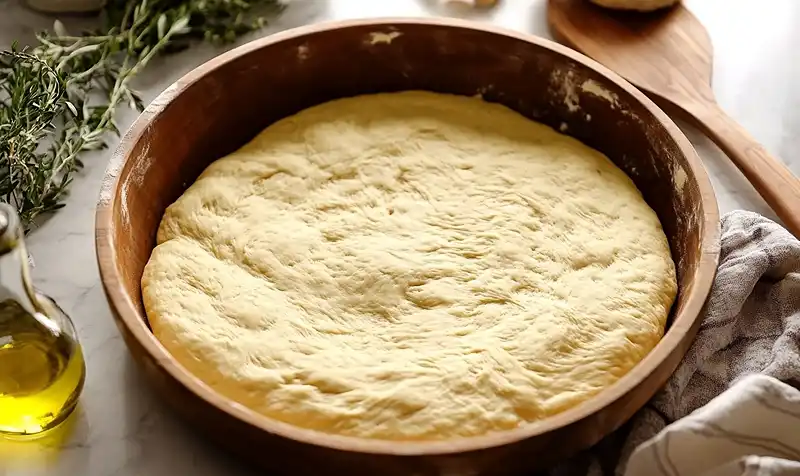
Cover the bowl with plastic wrap. Let the dough rise at room temperature until doubled in volume—about 30 to 45 minutes depending on your kitchen temperature. The dough should look puffy, feel airy when gently poked, and show visible bubbles across the surface.
In warmer kitchens (above 75°F), this happens faster. Cooler spaces take longer but develop more flavor.
Step 7: Prepare Your Pans
Line two 9×13-inch baking sheets with aluminum foil or parchment paper. Pour about 1 tablespoon (14g) of olive oil onto each pan and spread it around using your fingers or a brush. Coat the entire bottom surface generously—this creates the crispy, golden bottom crust that makes focaccia legendary.
Preheat your oven to 425°F while the dough completes its first rise. Position racks in the upper and lower thirds for even baking.
Step 8: Divide and Rest Again
Divide the risen dough into two equal portions using a bench scraper or knife. Transfer each portion onto a prepared pan. Don’t stretch it yet—just plop it down loosely. Cover both pans with plastic wrap and let the dough rest for 15 minutes.
This rest period allows the gluten to relax. Stretched dough fights back when tense. Relaxed dough spreads easily.
Step 9: Stretch to Fill the Pans
After resting, gently stretch each dough portion to the edges of its pan using your fingertips. Work from the center outward, coaxing the dough into corners without tearing. If it resists, let it rest another 5 minutes and try again.
Cover the pans once more. Let the dough rise for 20 minutes or until it looks noticeably puffy and shows tiny bubbles across the surface.
Step 10: The Dimpling Magic
Working with one pan at a time, pour about 1 tablespoon (14g) of olive oil over the risen dough. Spread it using your palm, then press your fingertips straight down through the dough to the pan bottom. Push firmly to create deep dimples all over the surface—these pockets hold oil and create focaccia’s signature texture.
You know what? The first time I tried this, I dimpled too gently and got puffy bread instead of focaccia. Press confidently all the way down. You can’t over-dimple this dough.
Step 11: Season and Top Creatively
Sprinkle flaky sea salt over the dimpled surface. Now comes the fun part—arrange your chosen toppings. Press tomato slices, rosemary sprigs, onion rounds, or garlic slices gently into the dough. Scatter olives, ground pistachios, or lemon slices artistically across the surface.
For grape and rosemary focaccia (my personal favorite), nestle halved grapes cut-side down into the dimples and tuck rosemary leaves throughout. The grapes caramelize and burst while baking, creating sweet pockets against savory bread.
Repeat the dimpling, oiling, salting, and topping process with the second pan.
Step 12: Bake to Golden Perfection
Transfer both baking sheets to the preheated oven. Bake for 25 to 30 minutes, rotating the pans halfway through for even browning. The focaccia is done when the top turns golden brown, edges look deeply caramelized, and toppings show some charring.
Listen for a hollow sound when you tap the bottom of the bread. That crispy bottom crust should sound almost drum-like.
Step 13: Cool and Serve
Transfer the baked focaccia to a cooling rack immediately. Let it cool for at least 10 minutes before slicing. If you’re making sandwiches, wait 20-30 minutes so the interior fully sets.
The smell at this stage is absolutely intoxicating—olive oil, toasted wheat, caramelized toppings all mingling together. This is where your patience gets tested because cutting into hot bread is tempting but creates gummy texture.
Expert Tips for Bakery-Quality Results
Temperature matters more than you think. Warm environments (75-80°F) give predictable rise times. Cold kitchens extend fermentation, which actually deepens flavor. If your house runs cold, place the covered bowl in an oven with just the light on—that gentle warmth creates a perfect proofing box.
Don’t skip the stretch and folds. This simple technique replaces 10 minutes of kneading and builds better structure. The dough transforms from loose and sticky to smooth and elastic through this method alone.
Oil generously without guilt. Authentic focaccia swims in olive oil—that’s what creates the crispy bottom and rich flavor. Skimping on oil yields dry, dense bread. Use the full amount specified for proper results.
The dimpling technique is crucial. Press your fingers all the way to the pan bottom with confidence. Shallow dimples disappear during baking. Deep dimples create the characteristic focaccia texture and oil pools that make each bite special.
Timing flexibility is built in. Need to slow things down? After the first rise, refrigerate the dough for up to 24 hours. Bring it to room temperature before dividing and continuing. This cold fermentation develops even more complex flavor.
Creative Variations to Try
Mediterranean Garden Focaccia
Top with halved cherry tomatoes, fresh basil leaves, sliced Kalamata olives, and crumbled feta cheese. Drizzle with balsamic glaze after baking. This version pairs beautifully with hearty soup recipes for complete comfort meals.
Caramelized Onion and Thyme
Slowly cook thinly sliced onions in butter until golden and sweet, about 20 minutes. Spread over dimpled dough with fresh thyme leaves. The onions melt into the bread and create deep, savory sweetness.
Everything Bagel Focaccia
Skip traditional toppings. Instead, brush with olive oil and sprinkle generously with everything bagel seasoning (sesame seeds, poppy seeds, dried garlic, dried onion, and flaky salt). Cut into squares for sandwiches or breakfast toast.
Holiday Cranberry Walnut Focaccia
Perfect for Thanksgiving or Christmas brunch. Scatter dried cranberries, chopped walnuts, and fresh rosemary over the dimpled dough. Drizzle with honey after baking for sweet-savory balance.
Garlic Parmesan Version
Press thin garlic slices into the dimples and sprinkle generously with freshly grated Parmesan. After baking, brush with garlic-infused butter. This variation makes incredible sandwich bread for Italian subs.
Storage and Make-Ahead Instructions
Room Temperature Storage
This focaccia discard recipe tastes best fresh from the oven but stores well for up to 3 days. Let the bread cool completely before storing. Place it in an airtight container or wrap tightly in aluminum foil. Keep at room temperature away from direct sunlight.
Plain focaccia stays fresh longer than topped versions. If you used fresh tomatoes, refrigerate leftovers to prevent spoilage.
Freezing Instructions
Focaccia freezes beautifully for up to 3 months. Cut cooled focaccia into portion-sized pieces. Wrap each piece individually in plastic wrap, then place wrapped pieces in a freezer-safe bag. Remove as much air as possible before sealing.
Thaw frozen focaccia at room temperature for 2-3 hours. Reheat in a 350°F oven for 8-10 minutes to restore crispness.
Reheating for Best Results
Never microwave focaccia—it turns rubbery and tough. Instead, preheat your oven to 350°F. Place focaccia directly on the oven rack or on a baking sheet. Heat for 5-8 minutes until warmed through and the bottom crisps up again.
For extra crispy results, brush the top with a little olive oil before reheating. The oil refreshes the surface and brings back that just-baked shine.
Storage Guide Table
| Storage Method | Duration | Best For | Notes |
|---|---|---|---|
| Room temperature (airtight) | 3 days | Plain or herb-topped | Check daily for freshness |
| Refrigerator | 5 days | Fresh tomato toppings | May dry slightly |
| Freezer (wrapped) | 3 months | All varieties | Slice before freezing |
| Dough (refrigerated) | 24 hours | Make-ahead prep | Brings to room temp first |
Perfect Pairings and Serving Ideas
Serve warm focaccia alongside homemade hot chocolate for weekend brunch. The rich, pillowy bread balances perfectly with sweet beverages. Cut into squares and use for panini sandwiches—the crispy exterior and tender interior hold up beautifully to grilled fillings.
This sourdough focaccia recipe discard makes stunning appetizers when cut into bite-sized pieces. Arrange on a platter with olive oil and balsamic for dipping. Guests always ask for the recipe when I serve it this way.
For elegant dinners, pair focaccia with Italian soups, roasted vegetables, or grilled meats. The bread soaks up sauces and broths without falling apart. I also love serving it alongside refreshing limoncello for a full Italian-inspired meal.
Homemade Sourdough Discard Focaccia FAQs
Can I use active dry yeast instead of instant yeast?
Yes, but you’ll need to activate it first by dissolving it in the warm water with honey for 5-10 minutes until foamy. Then proceed with adding the sourdough discard and remaining ingredients. Active dry yeast works perfectly fine, though instant yeast is more convenient since it mixes directly without proofing.
What’s the best way to know when my focaccia is fully baked?
Your focaccia is ready when the top turns golden brown with some darker spots, especially around toppings. The edges should look deeply caramelized and pull away slightly from the pan. Tap the bottom—it should sound hollow and feel firm, not soft or doughy.
How do I make focaccia bread with sourdough discard without it tasting too sour?
Use unfed discard that’s been refrigerated for less than a week—older discard creates stronger tang. The instant yeast in this recipe actually mellows the sour flavor since it speeds fermentation. If you prefer even milder taste, reduce discard to 100g and increase water by 70g.
Why did my focaccia turn out dense instead of airy?
Dense focaccia usually results from under-proofing or insufficient dimpling. Make sure your dough doubles during the first rise and looks bubbly before baking. Press your fingertips all the way to the pan bottom when dimpling—this is critical. Also check that your yeast is fresh and active.
Can I make this focaccia discard recipe without wheat flour?
Yes, replace the whole wheat flour with additional bread flour for a lighter, less rustic texture. The recipe still works perfectly. Alternatively, try spelt flour or white whole wheat for similar nutty notes. Gluten-free versions require completely different recipes since gluten provides focaccia’s characteristic chew.
Final Thoughts: Your Sourdough Discard Solution
Oops—did I mention this recipe will completely change how you feel about maintaining a sourdough starter?
That jar of discard sitting in your fridge isn’t waste anymore. It’s the secret ingredient to restaurant-quality bread you can make any night of the week. Every dimple filled with olive oil, every sprinkle of flaky salt, every bite of this focaccia proves that home baking doesn’t need to be complicated or time-consuming.
Remember that afternoon with my neighbor Sofia? The one that transformed my entire baking philosophy? This homemade sourdough discard focaccia became my signature recipe because it delivers maximum impact with minimal fuss. Your kitchen will smell like an Italian bakery. Your family will beg you to make it again.
Ready to turn your sourdough guilt into pure gold? Mix up a batch tonight and tell me in the comments which toppings you tried. Did you go classic with rosemary and sea salt, or did you get wild with grapes and pistachios?
Pair this with your favorite soup or salad and watch it disappear. What’s stopping you from becoming the focaccia legend in your friend group?
Tasty at Home – Where bold flavors meet everyday kitchens.