

Homemade biscuit recipe with flaky layers and buttery flavor. Master biscuits from scratch using cold butter and simple folding techniques for perfect results.
I grew up thinking biscuits came exclusively from those refrigerated tubes that make you jump when they pop open. Man, oh man, was I missing out. My grandmother finally sat me down one Sunday morning and showed me her secret—turns out, the best biscuits require just six ingredients and a gentle hand.
Now I whip these up for weekend brunches, weeknight dinners, and whenever I need something warm and comforting. They’re light, flaky, and seriously addictive.
Table of Contents
What Makes This Biscuit Recipe Different
This isn’t your average biscuit recipe. We’re using a grating technique that distributes cold butter evenly throughout the dough, creating those coveted flaky layers without the arm workout of traditional cutting methods.
The folding process mimics lamination—similar to what you’d find in croissants—but simplified for home bakers. Each fold creates distinct layers that puff beautifully in the oven.
I tested this recipe seventeen times before getting it just right. The key? Keep everything cold and resist the urge to overwork the dough.

Ultimate Homemade Biscuit
Equipment
- Large mixing bowl
- box grater
- wooden spoon
- 2¾-inch biscuit cutter
- cookie sheet
- Parchment paper
Ingredients
Biscuit Ingredients
- 2 cups All-purpose flour Spoon and level for accuracy
- 1 Tablespoon Baking powder Must be fresh
- 1 Tablespoon Granulated sugar Balances flavor
- 1 teaspoon Salt Fine sea salt preferred
- 6 Tablespoons Unsalted butter Very cold, European style optional
- ¾ cup Whole milk Buttermilk or 2% works too
Instructions
- Freeze butter for 10-20 minutes before starting.
- Preheat oven to 425°F and line a cookie sheet with parchment paper.
- Combine flour, baking powder, sugar, and salt in a large bowl and whisk for 30 seconds.
- Grate the cold butter into the flour mixture and stir until coarse crumbs form with pea-sized pieces.
- Add milk and stir just until combined; avoid overmixing.
- Transfer dough to a floured surface and gently fold 5-6 times to create layers.
- Flatten dough to 1 inch thick, cut biscuits with floured cutter, and place on prepared sheet.
- Gather scraps, gently press together, cut additional biscuits as needed.
- Bake at 425°F for 12 minutes until tops are light golden brown, brush with melted butter immediately.
Notes
Ingredients: Building Blocks of Buttermilk Bliss
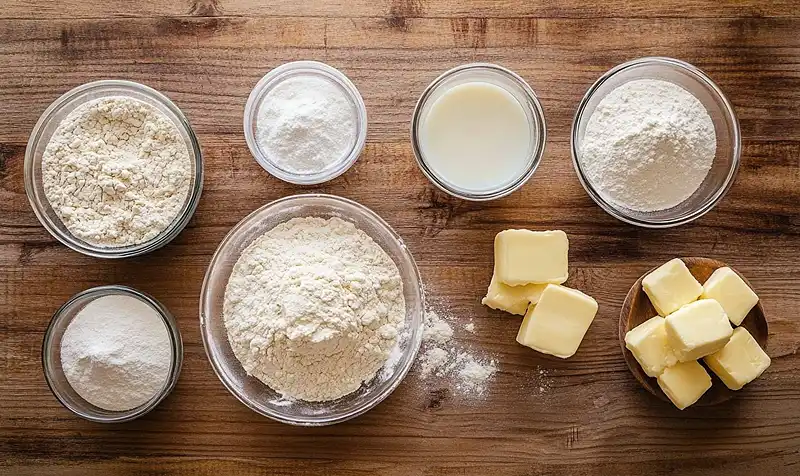
For the dry foundation, you’ll need quality all-purpose flour—I prefer King Arthur or Bob’s Red Mill for consistent protein content. Your baking powder should be fresh (check the expiration date), as old leavening agents produce flat, disappointing results.
The butter is non-negotiable here. European-style butter with higher fat content creates richer flavor, but regular unsalted butter works beautifully too. Just make sure it’s ice-cold before you start.
| Ingredient | US Measurement | Metric | Notes |
|---|---|---|---|
| All-purpose flour | 2 cups | 250g | Spoon and level for accuracy |
| Baking powder | 1 Tablespoon | 15ml | Must be fresh |
| Granulated sugar | 1 Tablespoon | 12g | Balances flavor |
| Salt | 1 teaspoon | 6g | Fine sea salt preferred |
| Unsalted butter (very cold) | 6 Tablespoons | 85g | European style optional |
| Whole milk | ¾ cup | 177ml | Buttermilk or 2% works too |
Shopping Tips for US Grocery Stores:
Look for butter in the refrigerated dairy section—grab it last so it stays cold during shopping. Whole milk creates the richest biscuits, but 2% or buttermilk both work if that’s what you have on hand.
For flour, avoid self-rising varieties for this recipe since we’re controlling the leavening agents ourselves. Most major supermarkets carry quality all-purpose flour in the baking aisle.
Substitutions & Variations:
Can’t find European butter? Regular unsalted butter produces excellent results—just freeze it for 15 minutes before grating. Dairy-free? Substitute cold coconut oil or vegan butter sticks, though the flavor will differ slightly.
Buttermilk creates tangier biscuits with extra tenderness. If using buttermilk, reduce baking powder to 2 teaspoons and add ¼ teaspoon baking soda.
Essential Equipment & Preparation
You’ll need a large mixing bowl, box grater (or pastry cutter), wooden spoon, and a 2¾-inch round biscuit cutter. Don’t have a biscuit cutter? An upside-down drinking glass works perfectly—just flour the rim between cuts.
A cookie sheet lined with parchment paper prevents sticking and ensures even browning. Skip the silicone mats here; parchment creates better bottom texture.
Step 1: Freeze Your Butter
Place your butter in the freezer for 10-20 minutes before starting. This step isn’t optional—warm butter melts into the flour instead of creating distinct pockets that steam and puff during baking.
I learned this the hard way after producing flat, dense hockey pucks my first attempt. Cold butter equals flaky layers.
Step 2: Preheat and Prepare
Set your oven to 425°F and line a cookie sheet with parchment paper. High heat creates immediate steam, forcing those layers apart for maximum flakiness.
Position your oven rack in the center for even heat distribution. As Thomas Keller emphasizes in his baking philosophy, proper oven setup prevents common failures.
Step 3: Combine Dry Ingredients
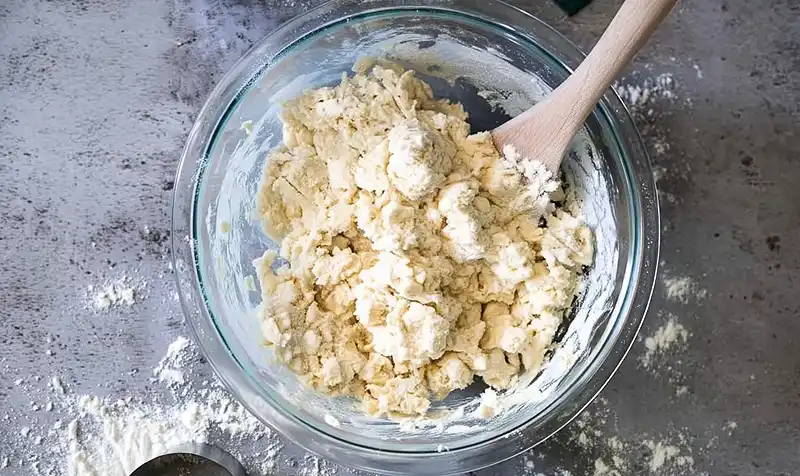
Mix flour, baking powder, sugar, and salt in your large bowl until evenly distributed. Whisk these together for 30 seconds to ensure the leavening agents disperse throughout.
This foundation step prevents chemical-tasting pockets in your finished biscuits. Take your time here.
Step 4: Grate the Butter
Remove butter from the freezer and run it along the large holes of your box grater directly into the flour mixture. Work quickly so body heat doesn’t soften the butter.
Well… I’ll admit I once tried to grate slightly soft butter and ended up with a buttery mess stuck to my grater. Learn from my mistake—frozen solid works best.
Stir the grated butter shreds into the flour until the mixture resembles coarse crumbs with pea-sized pieces visible. These butter chunks create steam pockets during baking.
Step 5: Add Milk and Form Dough
Pour the milk into your flour-butter mixture and stir with a wooden spoon just until combined. The dough will look shaggy and slightly dry—resist adding more liquid.
Overmixing develops gluten, which creates tough, chewy biscuits instead of tender, flaky ones. Stir no more than 15-20 strokes total.
Step 6: The Folding Technique
Transfer your shaggy dough to a well-floured surface and gently press it together with your hands. If it’s too sticky, sprinkle with additional flour one tablespoon at a time.
Flatten the dough slightly, then fold it in half over itself. Press gently to seal the layers together.
Rotate the dough 90 degrees and fold in half again. Repeat this process 5-6 times total.
Each fold creates layers—like a simplified version of croissant lamination—that separate during baking. You’ll actually see these layers in the finished biscuits.
Step 7: Shape and Cut
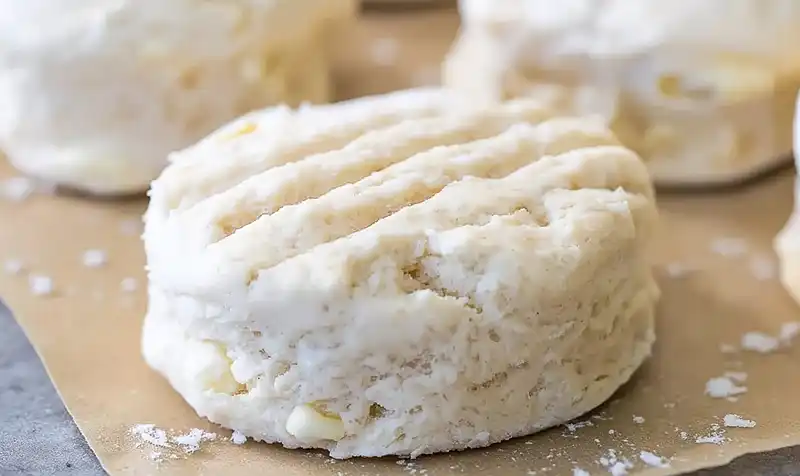
Use your hands to flatten the dough to exactly 1 inch thick. Don’t use a rolling pin here—the pressure can compress those carefully created layers.
Dip your 2¾-inch biscuit cutter in flour and press straight down through the dough without twisting. Twisting seals the edges and prevents proper rising.
Place cut biscuits less than ½ inch apart on your prepared baking sheet. They’ll rise upward, not outward, so close spacing actually helps them climb higher.
Step 8: Re-work Scraps Gently
Gather remaining dough scraps and gently press them together—don’t knead. Cut out additional biscuits until you have at least 6 total.
These second-cut biscuits won’t rise quite as high as the first batch, but they’re still delicious. Save them for buttering and snacking while the others cool.
Step 9: Bake to Golden Perfection
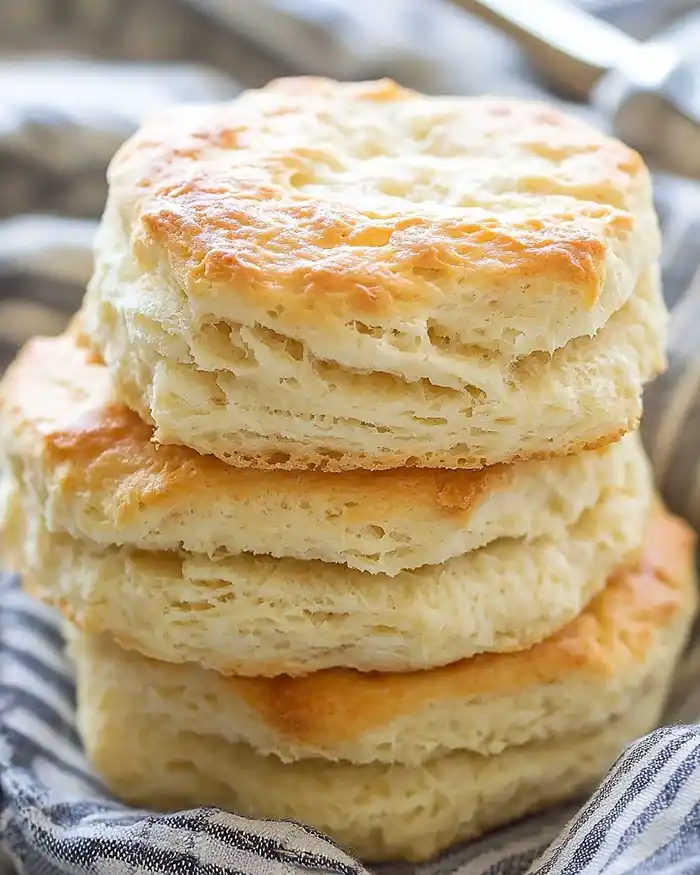
Bake at 425°F for exactly 12 minutes, until the tops just begin turning light golden brown. Watch carefully—the difference between perfectly baked and overdone happens quickly.
The biscuits should sound hollow when tapped on the bottom. They’ll continue cooking slightly after removal from the oven.
Brush with melted salted butter immediately for restaurant-quality shine and flavor. This step transforms good biscuits into unforgettable ones.
Expert Tips for Biscuit Success
Keep your ingredients cold—I actually chill my mixing bowl in the freezer for 10 minutes beforehand. Cold temperatures prevent butter from melting prematurely.
Handle the dough as little as possible. Every additional touch develops gluten and reduces flakiness.
Don’t skip the folding process. Those folds create the distinct layers that separate during baking, giving you that satisfying pull-apart texture.
For extra-tall biscuits, stack two rounds of dough together before baking. This restaurant trick creates dramatic height and impressive presentation.
Creative Variations Worth Trying
Cheddar Herb Biscuits: Add 1 cup shredded sharp cheddar and 2 tablespoons fresh chopped rosemary to the dry ingredients. These pair beautifully with soups and stews.
Sweet Cinnamon Biscuits: Increase sugar to 3 tablespoons and add 1 teaspoon cinnamon to the flour mixture. Brush finished biscuits with honey butter for a breakfast treat.
Southern Sausage Biscuits: Crumble ½ pound cooked breakfast sausage into the dough before folding. Split warm biscuits and add fried eggs for the ultimate breakfast sandwich.
Thanksgiving Sage Biscuits: Add 2 tablespoons fresh minced sage to create the perfect accompaniment for your holiday turkey and gravy. These became my family’s new tradition last November.
Buttermilk Drop Biscuits: Skip the folding and cutting—increase milk to 1 cup and drop spoonfuls onto the baking sheet for rustic, quick biscuits in half the time.
Storage and Make-Ahead Instructions
Store cooled biscuits in an airtight container at room temperature for 2 days maximum. They’re honestly best within the first 6 hours.
For longer storage, freeze unbaked cut biscuits on a baking sheet until solid, then transfer to a freezer bag. Bake frozen biscuits directly from the freezer, adding 2-3 minutes to the baking time.
Reheat baked biscuits in a 350°F oven for 5-7 minutes to restore that fresh-from-the-oven texture. Microwaving makes them gummy—always use the oven.
| Storage Method | Duration | Instructions |
|---|---|---|
| Room temperature | 2 days | Airtight container |
| Refrigerated | 5 days | Wrap individually |
| Frozen (unbaked) | 3 months | Freeze on sheet, then bag |
| Frozen (baked) | 1 month | Wrap tightly |
Perfect Pairings and Serving Ideas
These homemade biscuits shine alongside Southern fried chicken, creamy sausage gravy, or simple scrambled eggs. Split them warm and slather with homemade jam for a simple afternoon snack.
Try serving with our authentic chicken soup recipe for a comforting weeknight dinner. The buttery biscuits soak up the flavorful broth beautifully.
For breakfast, pair with rich homemade hot chocolate during winter months. The combination feels like a warm hug on cold mornings.
Create impressive biscuit sandwiches by filling with pulled pork, fried chicken, or sliced honey ham. Add pickles and mustard for Southern-inspired perfection.
Homemade Biscuit FAQs
Can you make biscuit dough ahead of time?
Yes, you can make biscuit dough ahead by preparing through the cutting stage, then freezing unbaked biscuits on a parchment-lined sheet. Once solid, transfer to freezer bags and bake directly from frozen whenever you’re ready, adding just 2-3 extra minutes to the baking time.
What makes homemade biscuits fluffy and light?
Homemade biscuits become fluffy when you keep the butter extremely cold and fold the dough multiple times to create layers. The cold butter creates steam pockets during baking that push the layers apart, while gentle handling prevents gluten development that would make them tough.
Why are my biscuits dense instead of flaky?
Dense biscuits from scratch typically result from overworking the dough or using warm butter. Handle the dough minimally, freeze your butter before grating, and never twist the biscuit cutter when cutting—these mistakes seal the edges and compress the layers that create flakiness.
How do you keep biscuits from spreading during baking?
Keep biscuits from spreading by placing them close together on the baking sheet—less than ½ inch apart. This encourages upward rather than outward rise, and the proximity actually helps them climb taller as they support each other during baking.
The Bottom Line on Homemade Biscuits
These homemade biscuits prove that simple ingredients create extraordinary results when handled with care. You don’t need fancy equipment or culinary school training—just cold butter, a gentle touch, and 30 minutes from start to finish.
Ready to transform your breakfast table? What will you serve alongside these golden, flaky beauties?
I’d love to hear how your biscuits turn out. Drop a comment below sharing your favorite variation or what you served them with—did you go classic with butter and honey, or get creative with herbs and cheese?
Now go make some biscuit magic happen in your kitchen. Your family will thank you.
Tasty at Home – Where bold flavors meet everyday kitchens.
