
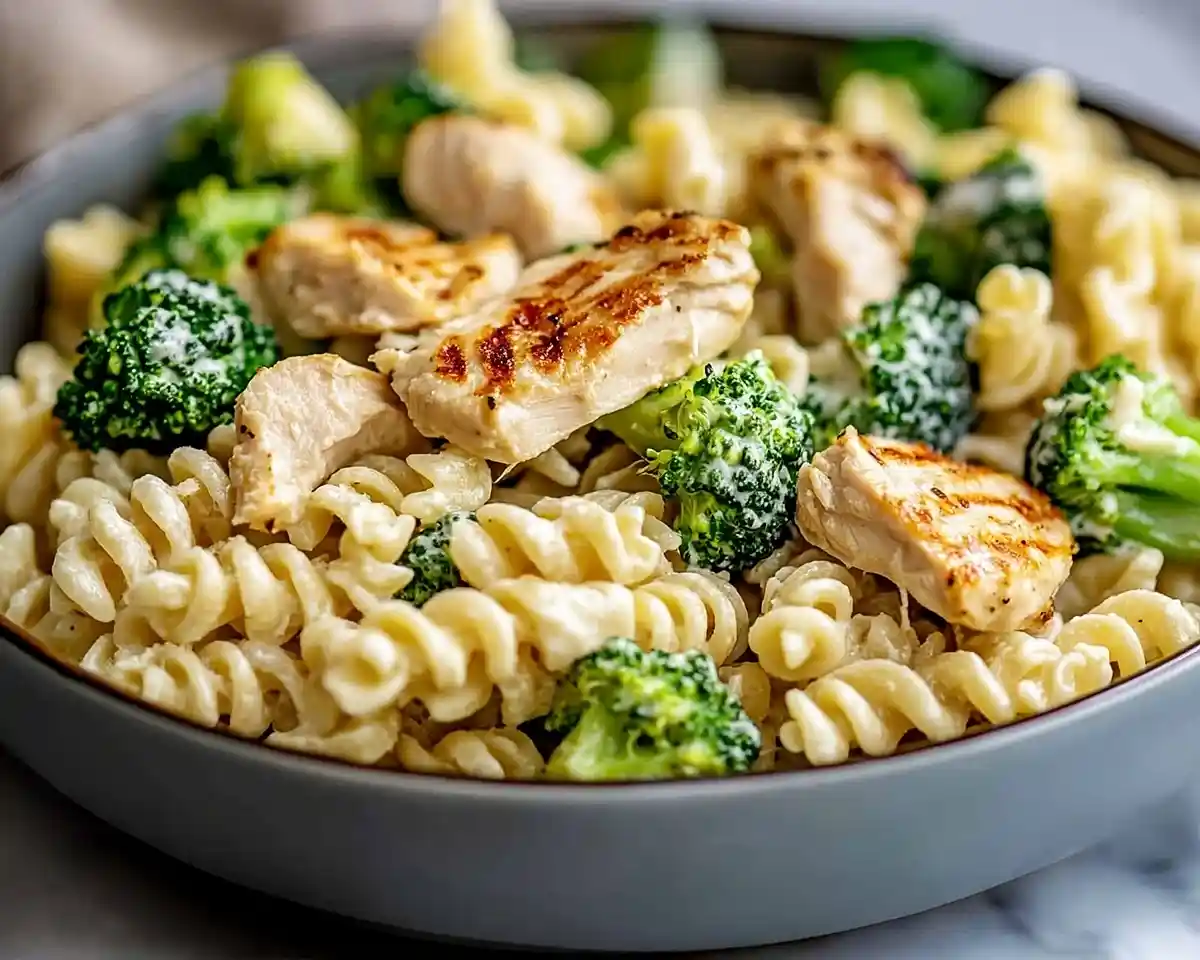
High protein rotisserie chicken broccoli pasta ready in 30 minutes. Creamy, satisfying rotisserie chicken lunch packed with protein and veggies. Easy weeknight dinner!
Hey, I’m Linda! Welcome to Tasty at Home, where bold flavors meet everyday kitchens. Last Tuesday, I stood in my kitchen at 6 PM, staring at a rotisserie chicken I grabbed during lunch and wondering what magic I could create. My family needed protein, vegetables, and comfort—all in one dish.
That’s when this high protein rotisserie chicken broccoli pasta was born. I’ve tweaked the sauce ratios three times (the first batch was too thick, oops!), adjusted the cheese blend twice, and finally landed on this creamy, protein-packed perfection. The best part? It takes less time than ordering takeout.
This rotisserie chicken pasta delivers 32 grams of protein per serving while tasting like your favorite Italian restaurant splurged on premium ingredients. You know what? It’s become our Tuesday tradition now—quick, nourishing, and absolutely delicious.
Tasty at Home – Where bold flavors meet everyday kitchens.
Table of Contents
What Makes This High Protein Rotisserie Chicken Broccoli Pasta Special
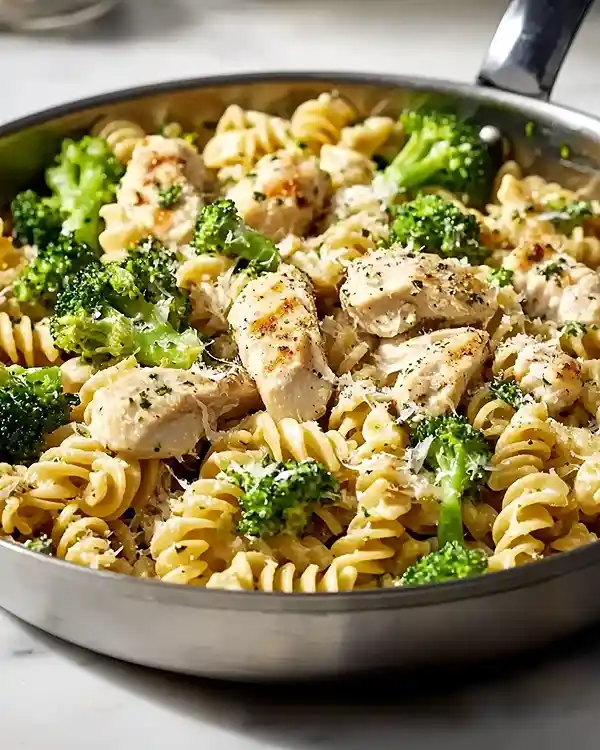
This recipe transforms a store-bought rotisserie chicken into restaurant-quality comfort food in just 30 minutes. The secret lies in building layers of flavor through proper technique—sautéing aromatics low and slow, creating a velvety sauce off-heat, and finishing with starchy pasta water for that glossy, professional sheen.
The protein content sets this apart from typical pasta dishes. While standard pasta meals hover around 15-20 grams of protein per serving, this rotisserie chicken broccoli pasta delivers over 30 grams thanks to the generous chicken portion and dual cheese blend. Thomas Keller always emphasizes building flavor in stages, and that’s exactly what happens here.
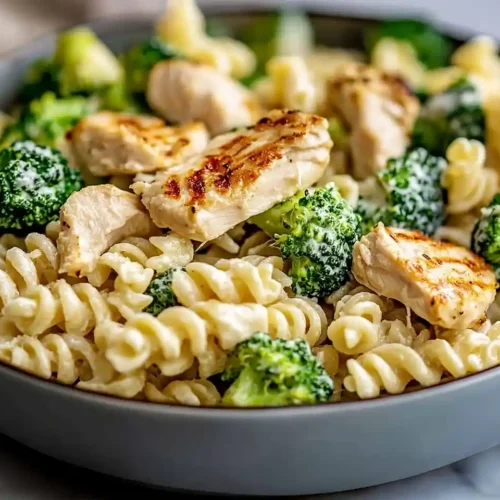
High Protein Rotisserie Chicken Broccoli Pasta
Equipment
- Large pot
- Skillet
- Chef’s knife
- box grater
- Measuring cups and spoons
- tongs
- Ladle
Ingredients
Main Ingredients
- 1 lb Penne pasta Use bronze-cut for better sauce adhesion
- 3-4 lbs Rotisserie chicken Yields about 4 cups shredded meat
- 4 cups Broccoli florets Fresh preferred, frozen acceptable
- 2 tbsp Olive oil Extra virgin for best flavor
- 3 cloves Garlic Fresh only, minced fine
- 1 medium Yellow onion Diced small for even cooking
- 2 tbsp Butter Unsalted, European-style preferred
- 1 cup Heavy cream Full-fat for proper emulsion
- ½ cup Chicken broth Low-sodium to control salt
- 1 cup Parmesan cheese Freshly grated, never pre-shredded
- ½ cup Mozzarella cheese Whole milk, shredded fresh
- 1 tsp Italian seasoning Dried herb blend
- ½ tsp Garlic powder Adds depth to fresh garlic
- ¼ tsp Red pepper flakes Optional heat element
Instructions
- Cook the pasta and broccoli together in salted boiling water until pasta is al dente and broccoli is tender-crisp. Reserve 1 cup pasta water before draining.
- In a large skillet over medium-low heat, melt butter with olive oil. Add diced onion and cook until translucent, then add minced garlic for 30 seconds.
- Add heavy cream and chicken broth, simmer gently for 2-3 minutes to reduce slightly and emulsify.
- Remove skillet from heat, add Parmesan and mozzarella cheeses, whisk until smooth. Stir in Italian seasoning, garlic powder, salt, black pepper, and red pepper flakes.
- Add drained pasta and broccoli to the creamy sauce, then fold in shredded rotisserie chicken. Adjust consistency with reserved pasta water as needed.
- Stir in 1 tablespoon cold butter before serving for extra shine and creaminess. Taste and adjust seasoning if necessary.
- Plate the pasta in serving bowls or a family-style platter. Garnish with extra Parmesan, olive oil, cracked pepper, and chopped parsley if desired.
Notes
Essential Ingredients for Maximum Protein & Flavor
When shopping for this dish, focus on quality where it counts. Choose a rotisserie chicken that feels heavy for its size—that indicates moist, well-seasoned meat rather than dried-out bird. Fresh broccoli florets deliver better texture than frozen, though frozen works beautifully in a pinch.
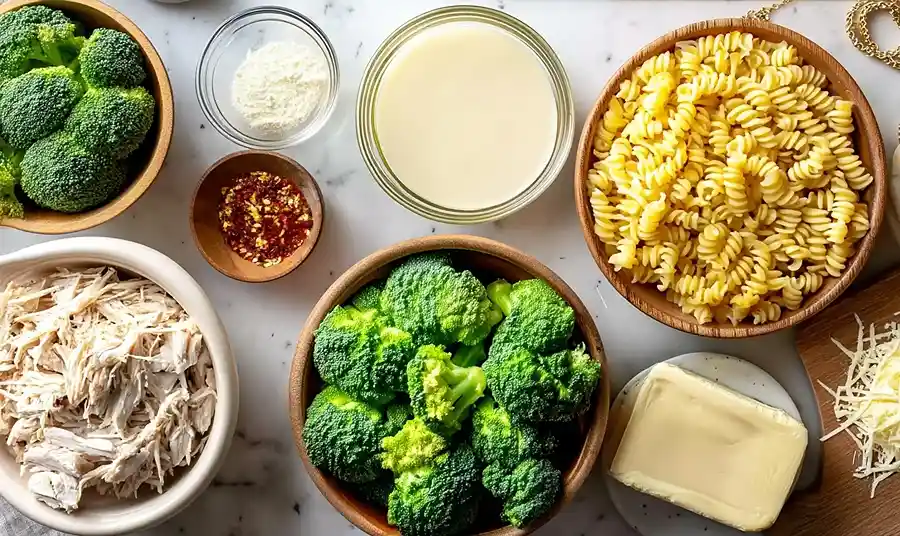
| Ingredient | Amount | Metric | Notes |
|---|---|---|---|
| Penne pasta | 1 lb | 454g | Use bronze-cut for better sauce adhesion |
| Rotisserie chicken | 3-4 lbs whole | 1.4-1.8kg | Yields about 4 cups shredded meat |
| Broccoli florets | 4 cups | 400g | Fresh preferred, frozen acceptable |
| Olive oil | 2 tbsp | 30ml | Extra virgin for best flavor |
| Garlic cloves | 3 | – | Fresh only, minced fine |
| Yellow onion | 1 medium | 150g | Diced small for even cooking |
| Butter | 2 tbsp | 28g | Unsalted, European-style preferred |
| Heavy cream | 1 cup | 240ml | Full-fat for proper emulsion |
| Chicken broth | 1/2 cup | 120ml | Low-sodium to control salt |
| Parmesan cheese | 1 cup | 100g | Freshly grated, never pre-shredded |
| Mozzarella cheese | 1/2 cup | 60g | Whole milk, shredded fresh |
| Italian seasoning | 1 tsp | 2g | Dried herb blend |
| Garlic powder | 1/2 tsp | 1g | Adds depth to fresh garlic |
| Red pepper flakes | 1/4 tsp | 0.5g | Optional heat element |
Shopping Tips for Perfect Results
Hit your local grocery store’s deli section first thing in the morning when rotisserie chickens are freshest. Look for birds with golden, crispy skin and no dried edges. For the cheese, head to the specialty section and grab a wedge of authentic Parmigiano-Reggiano—the pre-grated stuff contains cellulose that prevents smooth melting.
Broccoli should have tight, dark green florets with firm stalks. Avoid any yellowing or flowering heads. Man, oh man, the difference between fresh and tired broccoli is like night and day in this dish.
Bold Add-Ins & Creative Variations
Want to customize your meals to make with rotisserie chicken? Add sun-dried tomatoes for tangy sweetness, swap in whole wheat penne for extra fiber, or toss in baby spinach during the final minute. Mushrooms sautéed with the onions bring earthy depth, while a splash of white wine in the cream sauce adds restaurant-level sophistication.
For international readers using metric measurements, this recipe scales beautifully. The key ratios remain consistent regardless of measurement system.
Ingredient Quality Indicators
Select Parmesan that looks slightly crystalline when broken—those are flavor-packed amino acid crystals. Your heavy cream should pour thick and coat a spoon. Fresh garlic cloves should feel firm with tight, papery skin, never soft or sprouting.
Equipment You’ll Need (Plus Simple Alternatives)
Gather your tools before you start cooking. A large pot (at least 6 quarts) handles the pasta and broccoli together. Your biggest skillet—12 inches works perfectly—gives everything room to mingle without crowding. You’ll also need a sharp chef’s knife for shredding chicken, a box grater for cheese, measuring cups and spoons, tongs for tossing, and a ladle or measuring cup for reserved pasta water.
Well… don’t have a massive skillet? Use a Dutch oven instead—it distributes heat evenly and holds plenty of volume. No box grater? Buy a small wedge of pre-grated Parmesan from the cheese counter (not the shelf-stable kind) as your backup plan.
Step 1: Cook the Pasta and Broccoli Together
Bring your large pot of water to a rolling boil over high heat, then add 2 tablespoons of kosher salt—it should taste like the ocean. Add penne pasta and set a timer according to package directions for al dente, usually 10-12 minutes. During the final 3 minutes, drop broccoli florets directly into the boiling pasta water.
This technique serves two purposes. First, you save time and dishes by cooking both components simultaneously. Second, the broccoli picks up subtle pasta flavor while the pasta absorbs vegetable nutrients.
Watch for the pasta to reach al dente—it should have a slight firmness when bitten, never mushy. The broccoli turns vibrant green and tender-crisp. Before draining anything, scoop out 1 full cup of that starchy pasta water and set it aside in a heat-proof measuring cup. This liquid gold becomes your sauce adjuster later.
Drain the pasta and broccoli together in a large colander, giving it one good shake to remove excess water. Don’t rinse—you want that surface starch for sauce adhesion. Set everything aside while you build the sauce base.
Step 2: Build Your Aromatic Foundation
Place your largest skillet over medium-low heat and add olive oil and butter together. Let the butter melt completely until it just starts to foam at the edges. This moderate temperature prevents burning while developing deep flavor.
Add diced onion and spread it across the pan in an even layer. Cook for 4-5 minutes, stirring occasionally with a wooden spoon. You’re looking for translucent, softened onions with no color—Julia Child called this “sweating” the aromatics, and it builds sweetness without bitterness.
Add minced garlic and cook for just 30 seconds, stirring constantly. Garlic burns quickly and turns bitter, so keep it moving. You’ll know it’s ready when your kitchen fills with that irresistible aroma and the garlic just begins to turn golden at the edges.
This foundation technique appears in countless Italian-American classics. I learned this from watching old cooking shows—low heat, patience, and constant attention create magic.
Step 3: Create the Creamy Sauce Base
Pour in heavy cream and chicken broth, using a silicone spatula to scrape up any flavorful bits stuck to the pan bottom. Raise heat slightly to medium and bring the mixture to a gentle simmer for 2-3 minutes. Look for small bubbles forming around the edges and across the surface, not a violent rolling boil.
This simmering stage reduces the liquid slightly and concentrates flavors while the cream and broth emulsify into one cohesive base. Stir occasionally to prevent any scorching on the bottom. The mixture should look smooth and unified, not separated.
Here’s where I made my biggest mistake the first time—I kept the heat too high and the cream broke, creating an oily, grainy mess instead of velvet smoothness. Medium heat and patience prevent this disaster every single time.
Step 4: Add Cheese for Ultimate Creaminess
Remove your skillet completely from the heat and let it sit for 30 seconds. This cooling period prevents the cheese from seizing or becoming grainy when added to the hot liquid. Temperature control separates amateur sauces from professional ones.
Sprinkle in freshly grated Parmesan and shredded mozzarella, then whisk vigorously in a circular motion until both cheeses melt completely into the sauce. The mixture should transform into a smooth, glossy, unified cream with no visible cheese shreds. Add Italian seasoning, garlic powder, 1/2 teaspoon salt, 1/4 teaspoon black pepper, and red pepper flakes.
Taste the sauce at this stage—it should be rich, savory, and well-seasoned. Remember, the pasta and chicken will dilute these flavors slightly, so the sauce should taste a touch stronger than your final desired result.
The dual cheese combination creates both flavor complexity and ideal texture. Parmesan brings sharp, nutty notes and thickening power, while mozzarella adds stretchy creaminess and mild dairy sweetness.
Step 5: Combine Everything with Expert Technique
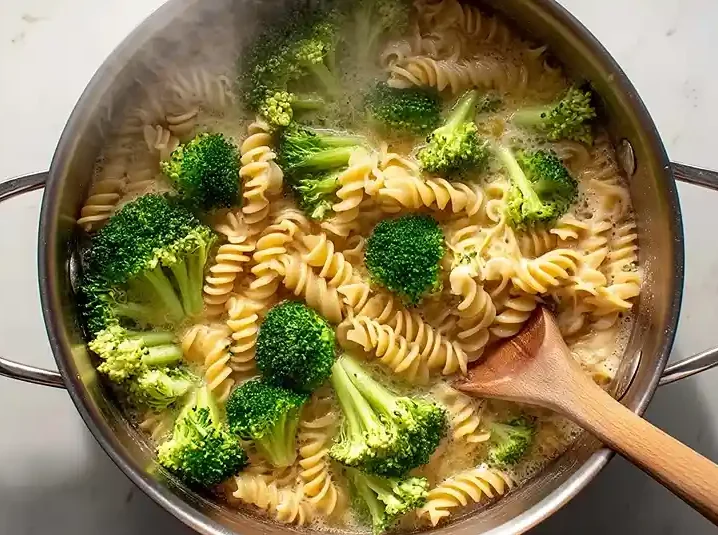
Add your drained pasta and broccoli directly to the creamy sauce in the skillet. Use tongs to toss everything together, lifting and turning until every piece of penne gets coated in that luscious cream. Work gently to avoid breaking the tender broccoli florets.
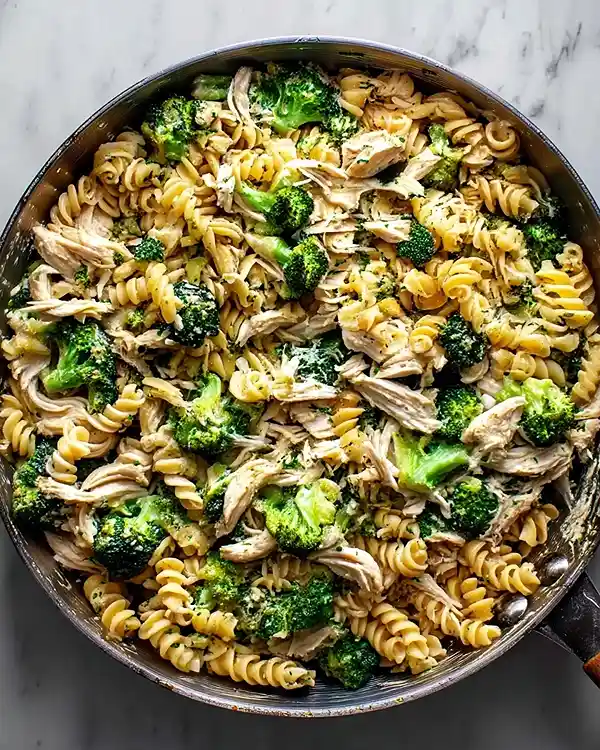
Fold in 4 cups of shredded rotisserie chicken last, distributing it evenly throughout the pasta. The residual heat from the sauce warms the chicken perfectly without drying it out. Let me tell you, this is when the dish comes together visually—those pops of green broccoli, golden chicken, and cream-coated pasta look absolutely stunning.
If the sauce seems thick or dry, add reserved pasta water 2 tablespoons at a time, tossing between additions. That starchy water loosens the sauce while helping it cling better to the pasta. You’re aiming for a creamy, glossy consistency that coats the back of a spoon without being soupy.
Step 6: The Restaurant-Quality Finish
Stir one final cold knob of butter (about 1 tablespoon) into the finished pasta just before serving. This technique, called “mounting” the sauce with butter, adds incredible shine and silky mouthfeel. Top restaurants do this with virtually every sauce they serve.
Taste one more time and adjust seasoning if needed. Sometimes the dish wants an extra pinch of salt or a crack of fresh black pepper. Trust your palate here—you know what tastes good.
Step 7: Plate and Garnish Like a Pro
Transfer the high protein rotisserie chicken broccoli pasta to warmed serving bowls or a large family-style platter. Garnish with extra Parmesan shavings, a drizzle of good olive oil, fresh cracked pepper, and a sprinkle of chopped fresh parsley if you have it.
Serve immediately while the sauce is at peak creaminess. This dish waits for no one—it’s best enjoyed straight from the pan to the table.
Expert Tips for Perfect Results Every Time
Always reserve pasta water before draining—I’ve forgotten this step more times than I’ll admit, and it’s the difference between good and restaurant-quality sauce. The starch acts as a natural emulsifier and thickener.
Shred your rotisserie chicken while it’s still slightly warm for easiest results. Cold chicken from the fridge becomes rubbery and difficult to pull apart. Remove the skin and discard bones, then use two forks or your hands to shred meat into bite-sized pieces.
Don’t skip the off-heat cheese addition—adding cheese to boiling liquid causes the proteins to seize and separate, creating that grainy, broken texture nobody wants. Thirty seconds of patience prevents total disaster.
Use bronze-cut pasta if available. The rough surface texture helps sauce cling better than smooth, Teflon-extruded pasta. You’ll notice the difference in every bite.
Creative Variations for Different Occasions
Transform this rotisserie chicken lunch into Cajun-Style Chicken Pasta by swapping Italian seasoning for Cajun spice blend and adding diced bell peppers with the onions. The heat level jumps while maintaining that creamy comfort.
Make it Tuscan-Inspired by adding sun-dried tomatoes, baby spinach, and white beans. This variation packs even more protein while introducing Mediterranean flavors that complement the chicken beautifully.
For Lighter Weeknight Version, use half-and-half instead of heavy cream and reduce cheese by 1/4 cup. You’ll save calories without sacrificing too much richness. Add extra broccoli to boost volume and nutrition.
Create Buffalo Chicken Broccoli Pasta by tossing the shredded chicken in buffalo sauce before adding it to the pasta. Mix 2 tablespoons of ranch seasoning into the cream sauce for tangy heat that game day crowds devour.
During fall and winter, make Harvest Chicken Pasta by adding roasted butternut squash cubes and dried cranberries. The sweet and savory combination screams Thanksgiving comfort in a bowl. This works beautifully alongside traditional turkey carcass soup for holiday meal planning.
Make-Ahead and Storage Strategies
This rotisserie chicken pasta stores well for up to 4 days in an airtight container in the refrigerator. The sauce thickens as it cools—that’s completely normal. When reheating, add 2-3 tablespoons of milk, cream, or chicken broth to restore the original creamy consistency.
Reheat on the stovetop over medium-low heat, stirring frequently, until warmed through. Microwave reheating works in a pinch—use 50% power in 1-minute intervals, stirring between each, to prevent drying out the pasta edges.
| Storage Method | Duration | Reheating Instructions |
|---|---|---|
| Refrigerator (airtight container) | 4 days | Stovetop with added liquid, or microwave at 50% power |
| Freezer (freezer-safe container) | 2 months | Thaw overnight in fridge, reheat on stovetop |
| Meal prep portions | 4 days | Individual containers make grab-and-go lunches easy |
For freezing, slightly undercook the pasta during initial preparation—it continues cooking during reheating. Cool completely before transferring to freezer-safe containers, leaving 1/2 inch headspace for expansion. Thaw overnight in the refrigerator before reheating.
Perfect Pairings for Complete Meals
Serve this high protein rotisserie chicken broccoli pasta with a crisp Caesar salad for textural contrast. The cool, crunchy romaine cuts through the rich, creamy pasta beautifully. Garlic bread or crusty Italian bread helps scoop up every drop of sauce.
For beverages, pour a medium-bodied Chardonnay or Pinot Grigio with enough acidity to balance the cream. Prefer red? Go with a light Pinot Noir. Kids love this with cold milk or sparkling lemon water.
This pasta works wonderfully alongside other crowd-pleasing mains for buffet-style dinners. Consider pairing it with white chicken enchiladas for a fusion feast, or serve smaller portions as a side with ground beef and potatoes casserole for potluck success.
Looking for more pasta inspiration? Check out our butter chicken linguine for another creamy, protein-rich option that uses similar techniques with completely different flavors.
High Protein Rotisserie Chicken Broccoli Pasta FAQs
Can I use a different pasta shape for this rotisserie chicken broccoli pasta?
Can I use a different pasta shape for this rotisserie chicken broccoli pasta? Absolutely—rigatoni, fusilli, farfalle, or cavatappi all work beautifully because their shapes trap the creamy sauce in nooks and crevices. Avoid angel hair or thin spaghetti, which can’t support the heavy sauce and tend to clump together.
What’s the best way to prevent the sauce from breaking or becoming grainy?
What’s the best way to prevent the sauce from breaking or becoming grainy? Remove the skillet completely from heat before adding cheese, let it cool for 30 seconds, then whisk vigorously as you add the cheese. Temperature control prevents protein separation, which causes that grainy texture. Also, always use freshly grated cheese—pre-shredded varieties contain anti-caking agents that interfere with smooth melting.
How do I make this rotisserie chicken pasta dish dairy-free or lighter?
How do I make this rotisserie chicken pasta dish dairy-free or lighter? Substitute heavy cream with full-fat coconut milk or cashew cream for dairy-free versions, and use nutritional yeast instead of Parmesan for cheesy flavor. For a lighter version, use half-and-half instead of cream, reduce cheese by half, and add extra broccoli to maintain volume and satisfaction.
Can I prep components of this high protein rotisserie chicken broccoli pasta ahead of time?
Can I prep components of this high protein rotisserie chicken broccoli pasta ahead of time? Yes—shred the rotisserie chicken up to 2 days ahead and store it in an airtight container in the refrigerator. Chop onions and garlic the night before, and pre-measure your spices. However, cook the pasta fresh and make the sauce right before serving for best texture and flavor.
Bringing It All Together
This high protein rotisserie chicken broccoli pasta proves that weeknight dinners don’t require hours of effort or complicated techniques. You’ve got creamy comfort, serious protein, vegetables, and incredible flavor all in one skillet. The best part? It costs less than half of what you’d pay for similar portions at an Italian restaurant.
Remember that Tuesday I mentioned at the beginning? My family now requests this dish weekly. My youngest declared it “better than mac and cheese”—the ultimate kid compliment, right?
Pair this with a glass of Chardonnay and garlic bread for date night at home, or serve it family-style with a big salad for Sunday dinner. If you’re feeling adventurous, try the buffalo chicken variation during your next football gathering. For more creative ways to use leftover rotisserie chicken, explore our turkey pot pie recipe—the technique translates beautifully.
Drop a comment below and tell me which variation you tried first! Did you go classic, or did you jazz it up with sun-dried tomatoes and spinach? I’d love to hear how this rotisserie chicken lunch became part of your weekly rotation too.
Tasty at Home – Where bold flavors meet everyday kitchens.
