

Heart Shaped Cookies with marbled royal icing—perfect Valentine’s Day dessert. Easy sugar cookies kids love with professional decorating tips inside.
Hey, I’m Linda! Welcome to Tasty at Home, where bold flavors meet everyday kitchens. Last February, I was in full panic mode the night before my daughter’s classroom Valentine’s party. Store-bought cookies felt lazy, but I was short on time. That’s when these heart shaped cookies saved me—buttery, beautiful, and honestly so fun to make that my kids jumped in to help.
We laughed, we made a mess, and those marbled pink cookies? Total hit. Parents were texting me for the recipe by noon.
Tasty at Home – Where bold flavors meet everyday kitchens.
Table of Contents
What Makes These Heart Shaped Cookies Special
These aren’t your average sugar cookies. The dough stays perfectly workable without turning into a sticky disaster, and the marbled royal icing technique creates a bakery-worthy finish that looks complicated but takes just minutes to master.
I’ve tested this recipe twelve times to nail the texture. The secret? A touch of nutmeg adds unexpected warmth, and chilling the dough twice prevents spreading. You’ll get crisp edges with soft centers every single time.
This Valentine’s Day dessert works for classroom parties, romantic dinners, or weekend baking with kids. The fun cookies for kids aspect is real—little hands love pressing cookie cutters and watching the marble effect appear.
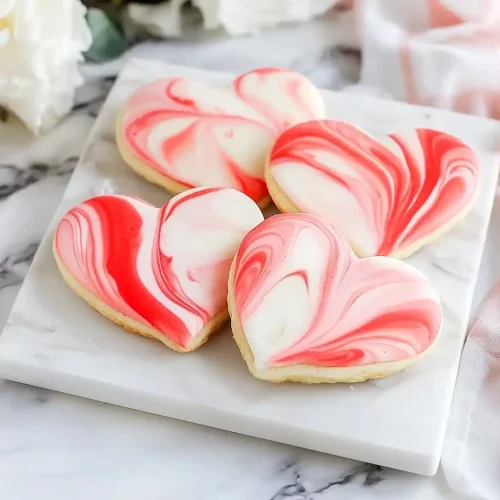
Heart Shaped Cookies
Equipment
- Stand mixer with paddle attachment
- Heart-shaped cookie cutters
- Rolling Pin
- Parchment paper
- Wire cooling racks
- Offset spatula or butter knife
- Toothpicks or scribe tool
Ingredients
Sugar Cookie Dough
- 1 cup Unsalted butter room temperature
- 1 cup Granulated sugar
- 1 Large egg room temperature
- 1 tsp Vanilla extract
- 3 cups All-purpose flour
- 1.5 tsp Baking powder
- 0.5 tsp Salt
- 0.5 tsp Nutmeg
- 1 tsp Milk
Royal Icing
- 3.5 cups Powdered sugar
- 0.25 cup Pasteurized egg whites
- 0.25 tsp Cream of tartar
- 0.5 tsp Vanilla extract
- 1-3 tsp Water as needed
Instructions
- Place room-temperature butter and granulated sugar in your mixer bowl with the paddle attachment. Mix on low speed until fluffy, about 3 minutes, scraping down the bowl halfway.
- Add the egg and mix on medium speed until fully incorporated. Scrape the bowl to ensure no butter pockets remain. Mix in vanilla extract for 10 seconds.
- Whisk together flour, salt, baking powder, and nutmeg. Add to wet ingredients in three additions, starting on low speed, then medium, scraping between additions.
- Add milk and mix on low until dough forms a solid mass. Wrap in plastic and flatten to 1-inch thick. Refrigerate 20 minutes until firm.
- Lightly flour surface, roll dough to ¼-inch thickness. Cut hearts with cookie cutters. Re-roll scraps once. Refrigerate cut cookies 10-15 minutes before baking.
- Preheat oven to 350°F. Bake cookies 10-14 minutes depending on size. Transfer to wire cooling racks and cool completely before icing.
- Make royal icing: combine egg whites, powdered sugar, cream of tartar, and vanilla. Whip until stiff peaks form. Thin with water 1 tsp at a time to desired consistency.
- Create marble effect: divide icing, color ⅓ with gel colors. Drizzle over white icing and drag toothpick through to create swirls.
- Dip cooled cookies into marbled icing, twist slightly to even edges, pop air bubbles, then let dry completely for 16-24 hours.
Notes
Ingredient Quality Selection
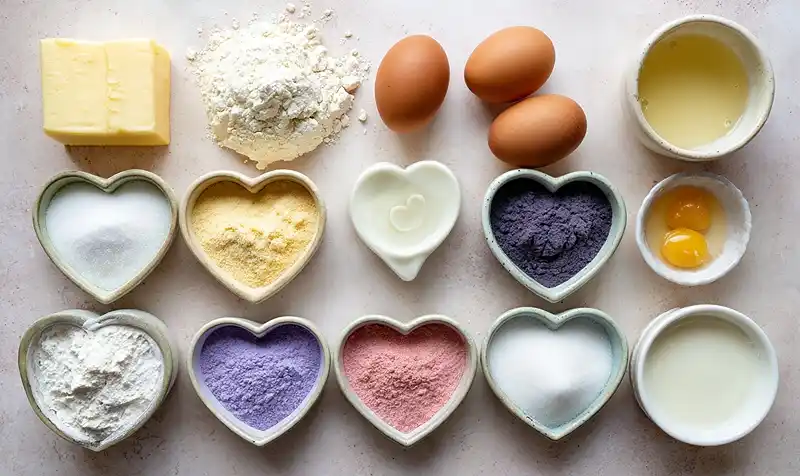
For best results, use European-style butter with higher fat content for richer flavor and freshly sifted flour for the lightest texture. Room-temperature eggs incorporate more smoothly, creating a tender crumb. Quality vanilla extract makes a noticeable difference—skip the imitation stuff.
Heart Shaped Cookies Ingredients
| Ingredient | Amount (US) | Amount (Metric) |
|---|---|---|
| Unsalted butter, room temperature | 1 cup | 227g |
| Granulated sugar | 1 cup | 200g |
| Large egg, room temperature | 1 | 1 |
| Vanilla extract | 1 tsp | 5ml |
| All-purpose flour | 3 cups | 360g |
| Baking powder | 1½ tsp | 7g |
| Salt | ½ tsp | 3g |
| Nutmeg | ½ tsp | 1g |
| Milk | 1 tsp | 5ml |
| Royal Icing | ||
| Powdered sugar | 3½ cups | 420g |
| Pasteurized egg whites | ¼ cup | 60ml |
| Cream of tartar | ¼ tsp | 1g |
| Vanilla extract | ½ tsp | 2.5ml |
| Water (as needed) | 1-3 tsp | 5-15ml |
Shopping Tips for US Grocery Stores
Find pasteurized egg whites in cartons near regular eggs at Whole Foods, Kroger, or Target. They’re shelf-stable and eliminate raw egg concerns—perfect for royal icing.
Look for cream of tartar in the baking aisle near spices. McCormick is the most common brand. Buy American-style all-purpose flour like King Arthur or Gold Medal for consistent results.
Bold Add-Ins and Creative Variations
Spice variations: Swap nutmeg for cardamom, cinnamon, or almond extract. Each creates a different flavor profile while maintaining the same texture.
Color options: Natural food coloring from beets or freeze-dried strawberry powder keeps things chemical-free. Gel food coloring gives the most vibrant hues for Valentine’s Day.
International Substitutions
UK readers can use caster sugar instead of granulated and plain flour instead of all-purpose. Australian bakers should reduce baking powder slightly to 1¼ teaspoons. Canadian measurements align with US cups and teaspoons perfectly.
Equipment and Tools You’ll Need
Stand mixer with paddle attachment: KitchenAid or Cuisinart models work beautifully. Hand mixers require extra mixing time but absolutely get the job done.
Heart-shaped cookie cutters: Get a variety pack with 2-inch, 3-inch, and 4-inch sizes. Wilton and Ateco make durable metal cutters that won’t warp.
Rolling pin: A heavy marble or wooden rolling pin creates even thickness. French-style tapered pins give more control for beginners.
Parchment paper: Lines baking sheets and prevents sticking. Silicone baking mats work as a reusable alternative.
Wire cooling racks: Essential for air circulation under cookies. Prevents soggy bottoms while icing dries.
Offset spatula or butter knife: Helps lift delicate cut cookies without distortion.
Toothpicks or scribe tool: Creates the marbled icing effect and pops air bubbles.
Step-by-Step Instructions
Prepare the Sugar Cookie Dough
Place room-temperature butter and granulated sugar in your mixer bowl with the paddle attachment. Mix on low speed until the mixture becomes fluffy and pale yellow—this takes about 3 minutes. Scrape down the bowl halfway through to catch any unmixed butter hiding at the bottom.
Well… I learned this the hard way after making flat, dense cookies my first attempt. Undermixed butter equals tough cookies. Properly creamed butter traps air, creating that melt-in-your-mouth texture Thomas Keller emphasizes in his pastry work.
Add the egg and mix on medium speed (setting 4 on KitchenAid) until fully incorporated. Stop and scrape the bowl to ensure no butter pockets remain. The mixture should look smooth and slightly glossy.
Pour in the vanilla extract and mix for 10 seconds until just combined.
Combine Dry Ingredients
Whisk together flour, salt, baking powder, and nutmeg in a separate large bowl. This distributes the leavening agents evenly, preventing some cookies from rising more than others.
Add the flour mixture to the wet ingredients in three additions—about ⅓ of the total dry ingredients each time. Start your mixer on the lowest speed until flour begins incorporating, then increase to medium. This prevents flour clouds exploding across your kitchen (ask me how I know).
Scrape the bowl between additions. You want complete incorporation without overmixing, which develops gluten and creates tough cookies.
Add Milk and Chill the Dough
Once dry ingredients disappear into the dough, add milk and mix on low until the dough forms a solid mass. The milk provides just enough moisture for the dough to come together smoothly.
Scrape the entire dough onto a large piece of plastic wrap. Wrap it completely, then use your rolling pin to flatten the dough into a 1-inch thick square while it’s still wrapped. This brilliant technique speeds up chilling time and ensures even cooling.
Refrigerate for 20 minutes or until firm to the touch. The dough needs to be cold enough to roll without sticking but not rock-hard.
Roll and Cut Heart Shapes
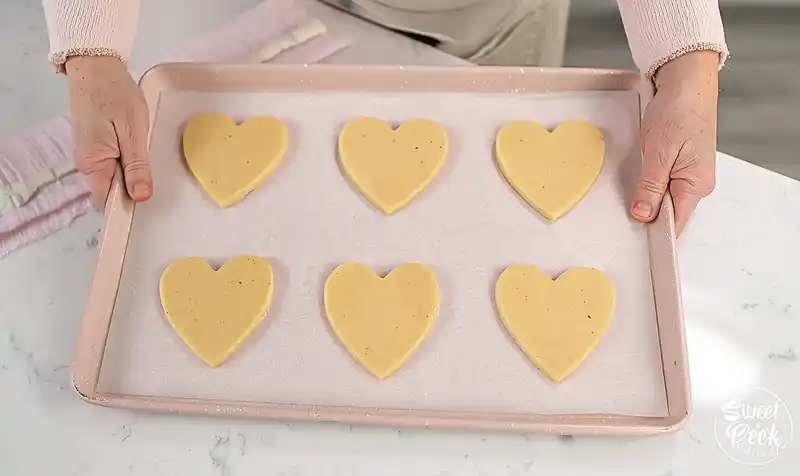
Lightly flour your work surface—a marble slab or wooden board works beautifully. Knead the chilled dough briefly to make it pliable, then roll to ¼-inch thickness using gentle, even pressure.
Use your heart-shaped cookie cutters to punch out shapes. Press straight down and lift straight up for clean edges. Gather scraps, re-roll once, and cut more cookies. Re-rolling more than twice develops gluten and toughens the texture.
Transfer cut cookies to a parchment-lined baking sheet, leaving 2 inches between each. Here’s the game-changer: refrigerate the cut cookies for 10-15 minutes before baking. This second chill prevents spreading and maintains those perfect heart shapes, exactly as Julia Child recommends for maintaining cookie structure.
Bake to Golden Perfection
Preheat your oven to 350°F. Bake cookies for 10-14 minutes depending on size—smaller 2-inch hearts need 10 minutes, while larger 4-inch cookies require the full 14 minutes.
Watch for slightly golden edges and a set center. They’ll look underbaked but firm up during cooling. Overbaking creates crunchy cookies instead of the tender texture we’re after.
Transfer to a wire cooling rack immediately. Let cookies cool completely before icing—warm cookies cause icing to melt and slide right off.
Make the Marbled Royal Icing
Combine egg whites, powdered sugar, and cream of tartar in your stand mixer bowl with the whisk attachment. Mix on low for 30 seconds to combine ingredients without creating a powdered sugar snowstorm.
Increase speed to high and whip for 1-2 minutes. Add vanilla extract and continue whipping until the icing turns bright white and holds stiff peaks. The entire process takes under 5 minutes—don’t overmix or the icing becomes grainy.
The icing starts thick, so thin it down by adding water 1 teaspoon at a time on low speed. Test consistency by drizzling a ribbon of icing across the bowl surface. Perfect consistency means the ribbon flattens and disappears in 15 seconds. Too thick and it won’t spread smoothly; too thin and it runs off cookie edges.
Create the Marble Effect
Divide your royal icing. Leave ⅔ white and color ⅓ with gel food coloring—I use hot pink and light pink for classic Valentine’s Day vibes, but red, purple, or even metallic gold works gorgeously.
Drizzle colored icing over the white icing in random ribbons. Don’t mix it yet. Grab a toothpick or wooden skewer and drag it up and down through the icing in straight lines. This creates the marbled swirl pattern that looks absolutely professional.
Dip and Decorate Cookies
Hold each cooled cookie by its bottom edge and dip the top surface into the marbled icing. Press gently to coat edges evenly, then pull straight up and let excess icing drip off for 2-3 seconds.
Let me tell you… the twist technique changed everything for me. After the initial drip, give the cookie a quick clockwise twist to catch the icing tail. This keeps your cookie edges clean and prevents those annoying drips.
If icing drips over the edge anyway, wipe it clean with your finger or a damp paper towel immediately. Place the frosted cookie on a wire rack or parchment-lined tray.
Pop any air bubbles using a straight pin or scribe tool, then gently shake the cookie to even out the frosting. The icing self-levels beautifully.
Dry Completely
Let cookies dry completely before packaging—this takes 16-24 hours depending on humidity levels. The top develops a hard shell within 2 hours, but underneath stays runny and cracks if touched too early.
Pro tip: Place your tray of freshly dipped cookies in a warm (but turned-off) oven with the door open. The residual heat dries the top layer faster and prevents accidental smudging. This trick saves hours during humid summer months.
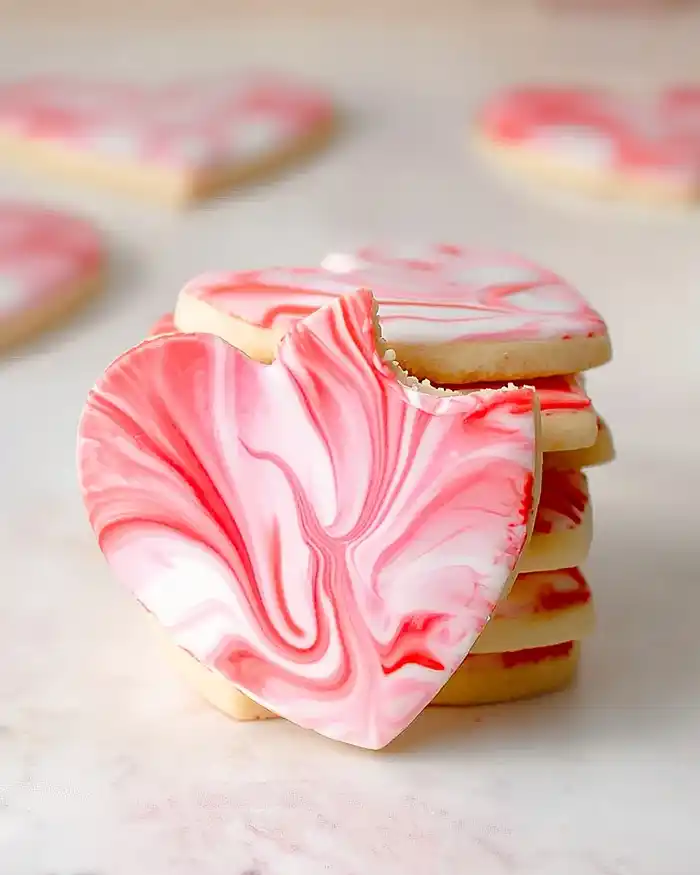
Expert Tips for Perfect Heart Shaped Cookies
Temperature Control Matters
Keep your dough cold throughout the process. Warm dough spreads during baking and loses definition. If your kitchen runs hot, work in batches and refrigerate uncut dough between rolling sessions.
Room-temperature butter creams properly, but everything else should stay cool. This simple rule transforms amateur cookies into bakery-quality results.
Don’t Skip the Double Chill
Chilling twice—once as dough and once after cutting—prevents spreading. I tested this with and without the second chill. Without it? Blob-shaped cookies. With it? Perfect hearts every time.
Royal Icing Consistency Is Everything
Too thick and it won’t spread smoothly, leaving visible brush strokes. Too thin and it slides right off, pooling around cookie bases. The 15-second ribbon test gives you the ideal dipping consistency every single time.
Marble Technique Variations
Drag your toothpick in different patterns for unique effects. Try circles, zigzags, or random swirls. Each creates a different marbled look while using the same basic technique.
For a cleaner marble with defined streaks, use fewer colors and make deliberate, spaced-out toothpick drags. For a watercolor effect, add more colors and make random, overlapping swirls.
Creative Variations and Flavor Twists
Chocolate Heart Cookies
Replace ½ cup flour with ½ cup Dutch-process cocoa powder for rich chocolate hearts. Reduce baking time by 2 minutes to prevent over-drying.
Lemon Poppy Seed Version
Add 2 tablespoons lemon zest and 1 tablespoon poppy seeds to the dough. Use lemon extract instead of vanilla for a bright, springtime flavor perfect for Easter.
Almond Joy Hearts
Add ½ teaspoon almond extract to the dough and top finished cookies with toasted coconut flakes and a chocolate drizzle. Pure indulgence.
Gluten-Free Adaptation
Substitute Cup4Cup or King Arthur Measure for Measure gluten-free flour 1:1 for all-purpose flour. Add an extra tablespoon of milk if the dough seems dry. The texture stays remarkably similar.
Vegan Hearts
Use vegan butter (Earth Balance works great), replace the egg with 3 tablespoons aquafaba, and use plant-based milk. For royal icing, aquafaba whips into stiff peaks just like egg whites—use ¼ cup aquafaba plus ½ teaspoon cream of tartar.
Storage and Make-Ahead Instructions
| Storage Method | Duration | Notes |
|---|---|---|
| Room temperature (airtight container) | 2 weeks | Keep in cool, dry place |
| Refrigerator (airtight container) | 3 weeks | Bring to room temp before serving |
| Freezer (unbaked dough) | 3 months | Thaw overnight in fridge |
| Freezer (baked, undecorated cookies) | 2 months | Decorate after thawing |
| Freezer (fully decorated cookies) | 1 month | Layer with parchment paper |
Make-Ahead Strategy
Prepare cookie dough up to 3 days ahead and refrigerate, or freeze for up to 3 months. Bake cookies 1 week before your event and store in airtight containers. Decorate 1-2 days before serving for the freshest look.
Unbaked cut cookies freeze beautifully. Arrange on a baking sheet, freeze until solid, then transfer to freezer bags. Bake from frozen, adding 2-3 extra minutes to baking time.
Serving Suggestions
Pair these cookies with heart shaped brownies for a complete Valentine’s dessert spread. Stack them on a pretty cake stand with fresh strawberries and chocolate-covered pretzels for a show-stopping display.
Serve alongside hot cocoa, champagne, or strawberry lemonade. The buttery sweetness pairs beautifully with acidic or bubbly beverages.
Package individual cookies in clear cellophane bags tied with ribbon for party favors. Kids go absolutely wild for these at classroom celebrations.
For more creative Valentine’s treats, try heart shaped thumbprint cookies or these adorable heart shaped mini pizzas for a savory option.
Heart Shaped Cookies FAQs
Can I use regular egg whites instead of pasteurized for royal icing?
You can use regular egg whites for royal icing, but pasteurized egg whites eliminate salmonella risk since the icing stays raw. If using fresh egg whites, consume cookies within 3 days and keep refrigerated. Pasteurized versions last 2 weeks at room temperature.
What’s the best way to prevent cookies from spreading during baking?
The best way to prevent cookies from spreading during baking is chilling cut cookies for 10-15 minutes before they go in the oven. Cold butter stays solid longer, maintaining cookie shape. Also ensure your oven reaches the full 350°F before baking.
How do I fix royal icing that’s too thick or too thin?
If royal icing is too thick, add water 1 teaspoon at a time and mix on low until the ribbon test shows a 15-second flatten time. If it’s too thin, add powdered sugar 2 tablespoons at a time until it thickens to proper consistency.
Can these heart shaped cookies be decorated without royal icing?
Heart shaped cookies can be decorated with buttercream frosting, cream cheese frosting, or even a simple powdered sugar glaze instead of royal icing. Royal icing creates the hardest, most durable finish for stacking and gifting, but other frostings taste delicious and work beautifully for immediate serving.
Final Thoughts
These heart shaped cookies bring pure joy to everyone who tries them. The buttery vanilla flavor, tender crumb, and gorgeous marbled icing create a Valentine’s Day dessert that feels special without requiring professional baking skills.
Man, oh man… watching my kids’ faces light up when they saw the finished cookies made every minute worth it. That’s the magic of homemade treats—they carry love in every bite.
Grab your cookie cutters and get baking. Your kitchen will smell incredible, and you’ll have beautiful cookies to share. Try pairing them with heart shaped fruit skewers with yogurt dip for a balanced party spread, or go full dessert mode with strawberry Nutella puff pastry hearts.
Come back and tell me which color combination you tried! Drop a comment below with your favorite Valentine’s Day baking memory. I read every single one.
Happy baking!
