
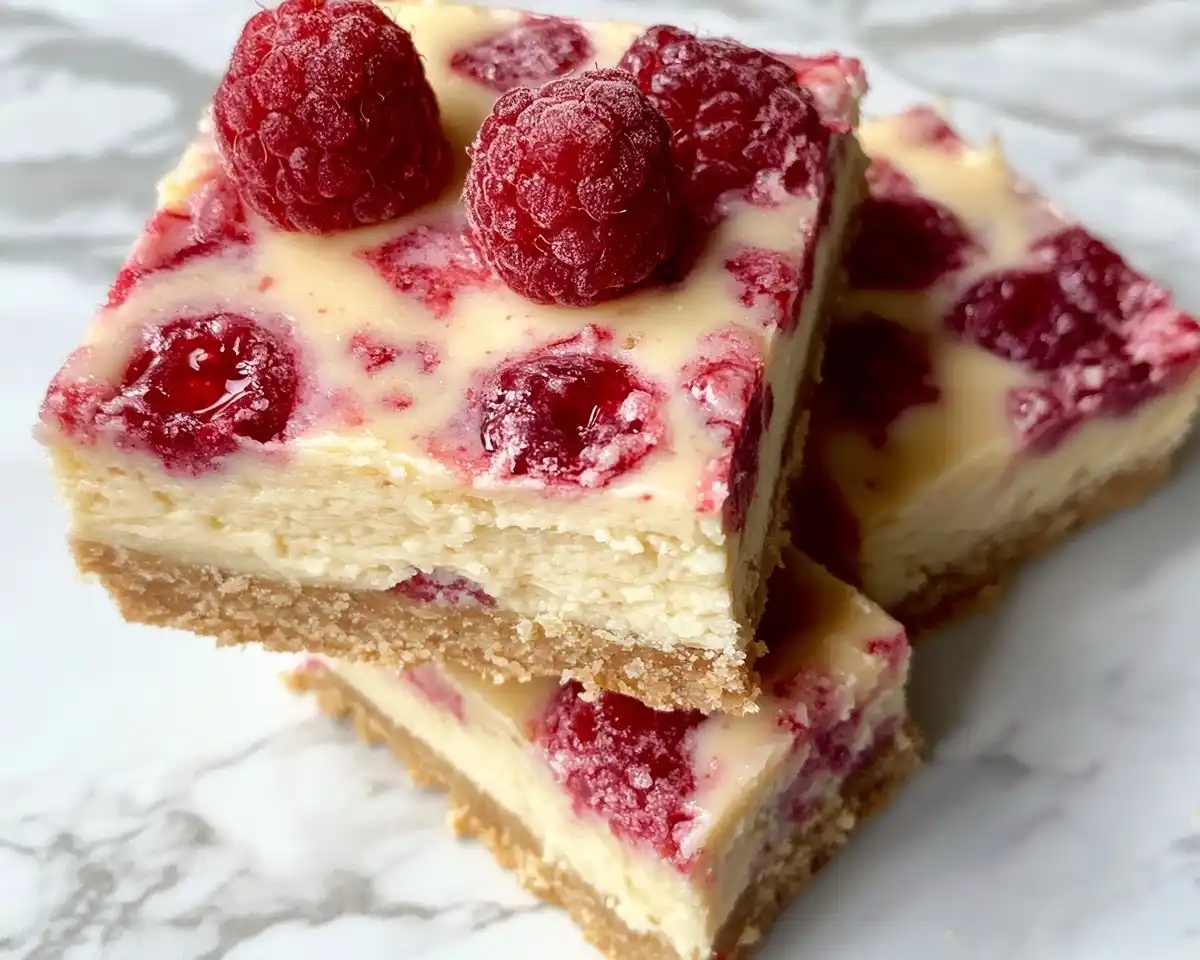
Healthy Raspberry Cheesecake Bars with Greek yogurt, cream cheese, and fresh raspberries. Lightened-up dessert ready in under an hour.
Last summer, I stood in my kitchen at midnight, staring at a cracked cheesecake disaster. My daughter’s birthday was hours away, and I’d just ruined my third attempt at a classic New York-style cheesecake.
Well… that’s when I had my breakthrough moment. What if I ditched the fussy springform pan and water bath drama? What if I made cheesecake bars instead—simple, foolproof, and actually healthy enough for a weekday treat?
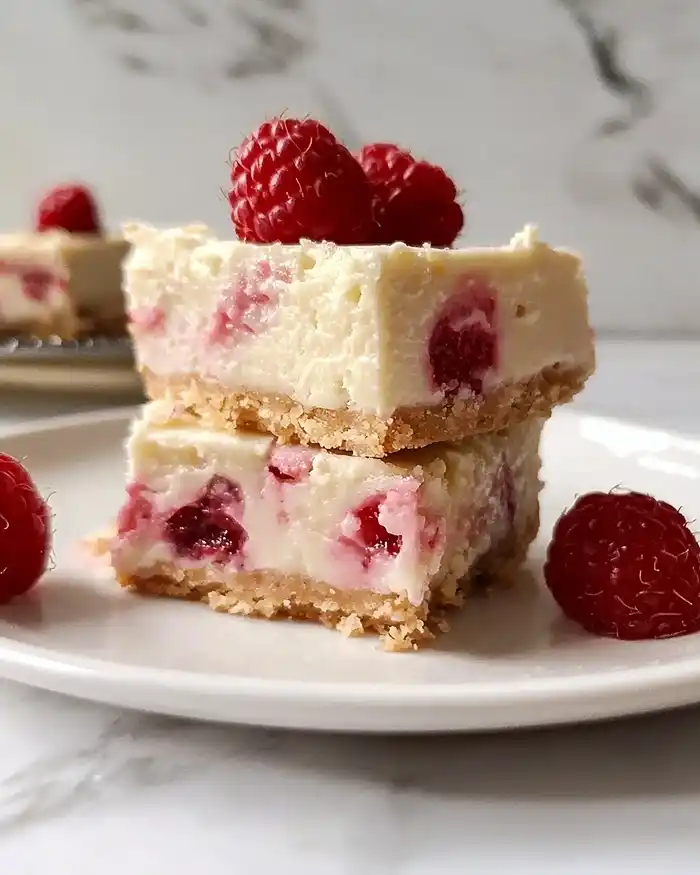
These Healthy Raspberry Cheesecake Bars were born from that late-night kitchen crisis. They’ve got the tangy cream cheese richness you crave, plus Greek yogurt for extra protein and a digestive biscuit base that comes together in minutes. No cracking, no stress, just creamy perfection with bright raspberry swirls.
I’ve tested this recipe seventeen times (yes, really), tweaking the sweetener ratio and baking temperature until every bite delivered that melt-in-your-mouth texture. The result? A refreshing dessert that tastes indulgent but won’t wreck your nutrition goals.
Tasty at Home – Where bold flavors meet everyday kitchens.
What Makes These Raspberry Cheesecake Bars Different
Traditional cheesecake recipes load up on sugar and heavy cream, packing each slice with hundreds of calories. These lightened-up cheesecake bars use Greek yogurt to cut the fat while boosting protein content significantly.
The digestive biscuit base provides structure without excessive butter. I add soy protein crisps for extra texture and nutrition, though you can easily substitute oats or additional biscuits based on what’s in your pantry.
Fresh raspberries bring natural sweetness and gorgeous color. They’re packed with antioxidants and fiber, turning this dessert into something you can feel genuinely good about serving.
Healthy Raspberry Cheesecake Bars
Equipment
- 9×9-inch baking pan
- Parchment paper
- Food processor
- Electric hand mixer
- Mixing bowl
Ingredients
Base
- 8 biscuits Digestive biscuits Graham crackers work too
- 3 tbsp Soy protein crisps Sub 1 extra biscuit or oats
- 2 tbsp Light butter Regular butter or coconut oil
- 1 tbsp Milk Any type works
Cheesecake Filling
- 8 oz Light cream cheese Room temperature
- 1.5 cups Greek yogurt Vanilla or plain
- 2 large Eggs Room temperature
- 0.5 cup Granulated sweetener Erythritol, stevia, or sugar
- 0.5 cup Vanilla protein powder Or cornstarch/flour
- 2 tsp Vanilla extract Pure extract preferred
- 1 lemon Lemon juice Freshly squeezed
- 1 lemon Lemon zest Organic preferred
- 1 cup Fresh raspberries Plus extra for topping
Instructions
- Preheat oven to 320°F (160°C) and line 9×9-inch pan with parchment paper.
- Pulse digestive biscuits and soy protein crisps in a food processor until fine. Melt butter with milk and mix into crumbs.
- Press crumb mixture into pan and bake for 10 minutes. Let cool.
- Mix cream cheese, Greek yogurt, eggs, sweetener, protein powder, vanilla, lemon juice, and zest until smooth.
- Layer one-third raspberries on base, pour half filling over, repeat layers, finishing with remaining raspberries.
- Optional: Place pan in larger roasting pan with 1-inch water for gentle water bath.
- Bake 30-40 minutes until edges set and center slightly wobbly. Cool on counter 30 minutes, then chill at least 5 hours.
- Use parchment overhang to lift bars, slice into 12 pieces, and serve cold.
Notes
Ingredients for Healthy Raspberry Cheesecake Bars
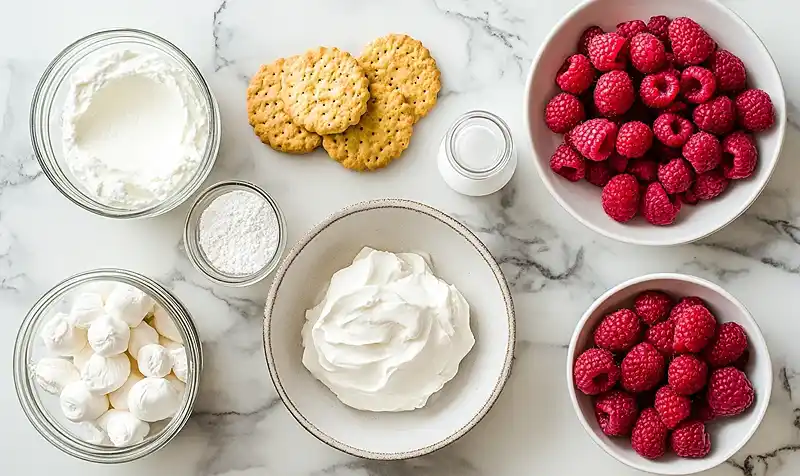
Select firm cream cheese that’s been softened to room temperature for the smoothest texture. Your Greek yogurt should be thick and creamy—avoid watery varieties that can make your bars too loose. Fresh raspberries work beautifully, but frozen berries (thawed and drained) deliver excellent results year-round.
| Ingredient | US Measure | Metric | Notes |
|---|---|---|---|
| Base | |||
| Digestive biscuits | 8 biscuits | 118g | Graham crackers work too |
| Soy protein crisps | 3 tbsp | 20g | Sub 1 extra biscuit or oats |
| Light butter | 2 tbsp | 30g | Regular butter or coconut oil |
| Milk | 1 tbsp | 15ml | Any type works |
| Cheesecake Filling | |||
| Light cream cheese | 8 oz | 250g | Room temperature |
| Greek yogurt | 1½ cups | 350g | Vanilla or plain |
| Eggs | 2 large | 100g | Room temperature |
| Granulated sweetener | ½ cup | 100g | Erythritol, stevia, or sugar |
| Vanilla protein powder | ½ cup | 60g | Or cornstarch/flour |
| Vanilla extract | 2 tsp | 10ml | Pure extract preferred |
| Lemon juice | 1 lemon | 30ml | Freshly squeezed |
| Lemon zest | 1 lemon | 1 tbsp | Organic preferred |
| Fresh raspberries | 1 cup | 150g | Plus extra for topping |
Shopping Tips for US Grocery Stores
Find digestive biscuits in the international aisle near British imports, or grab Graham crackers from the baking section as an easy substitute. Light cream cheese sits next to regular Philadelphia cream cheese in the dairy case.
Greek yogurt with 2% fat delivers the best balance of creaminess and lighter calories. Look for brands like Fage or Chobani in vanilla or plain varieties.
Zero-calorie granulated sweeteners like Swerve or Lakanto measure cup-for-cup like sugar. You’ll find them in the baking aisle or natural foods section.
Vanilla protein powder should be unflavored whey or plant-based. If you skip it, use equal parts cornstarch for thickening, though you’ll lose the protein boost.
International Substitutions
UK readers: Use your standard digestive biscuits and caster sugar instead of granulated sweetener.
Australian bakers: Lattice biscuits work perfectly for the base.
Metric measurements: All conversions are provided in the table above for precise baking.
Equipment You’ll Need
You’ll need a standard 9×9-inch brownie pan or an 8×8-inch baking dish. Line it with parchment paper for easy removal and clean slicing later.
A food processor makes quick work of crushing biscuits into fine crumbs. No processor? Place biscuits in a sealed plastic bag and crush them with a rolling pin—takes about two minutes of aggressive rolling.
An electric hand mixer ensures lump-free cheesecake filling, though a sturdy whisk and some elbow grease work just fine. I prefer hand mixing to avoid over-beating, which can create air bubbles that crack during baking.
A large roasting pan becomes your water bath if you choose that method. It’s optional but helps create extra-creamy bars by moderating oven temperature.
Step-by-Step Instructions
Step 1: Prepare Your Oven and Pan
Preheat your oven to 320°F (160°C) and position the rack in the center. Line your 9×9-inch pan with parchment paper, leaving overhang on two sides for easy lifting later.
This lower temperature prevents the cheesecake from puffing up and cracking. Thomas Keller always emphasizes gentle heat for custard-based desserts, and cheesecake follows the same principle.
Step 2: Make the Biscuit Base
Add digestive biscuits and soy protein crisps to your food processor. Pulse for 10-30 seconds until you get fine, even crumbs with no large chunks remaining.
Melt your butter in the microwave for 20 seconds. Pour it into the crumb mixture along with one tablespoon of milk, then pulse again until the mixture resembles wet sand and holds together when squeezed.
Oops! I once forgot the milk entirely and ended up with a crumbly base that fell apart when I tried to cut the bars. That tiny bit of liquid makes all the difference for binding.
Step 3: Form and Bake the Base
Pour the crumb mixture into your prepared pan. Use the back of a spoon or your clean hands to press it firmly into an even layer, paying special attention to the corners.
Bake for exactly 10 minutes until the base looks set and smells toasty. Remove it from the oven and let it cool while you prepare the filling—this prevents the base from becoming soggy.
Step 4: Mix the Cheesecake Filling
Combine cream cheese, Greek yogurt, eggs, sweetener, protein powder, vanilla extract, lemon juice, and lemon zest in a medium bowl. Make sure your cream cheese is truly softened—rock-hard cream cheese creates lumps that refuse to disappear.
Whisk by hand or use an electric mixer on low speed for 1-2 minutes until completely smooth. Stop as soon as the mixture looks uniform—over-mixing incorporates too much air, which causes cracks as Julia Child warned in her famous dessert techniques.
The filling should flow like thick pancake batter. If it’s too stiff, add a tablespoon of milk to loosen it.
Step 5: Layer Raspberries and Filling
Scatter about one-third of your raspberries across the cooled base. Pour half the cheesecake filling over them, using a spatula to spread it evenly.
Add another third of the raspberries, then pour the remaining filling on top. Finish by pressing the last raspberries gently into the surface—they’ll create beautiful bursts of color.
This layering technique distributes fruit throughout the bars instead of having it all sink to the bottom. You’ll get raspberries in every single bite.
Step 6: Optional Water Bath Setup
Place your filled pan inside a larger roasting pan. Carefully pour hot water into the outer pan until it reaches about one inch up the sides of your cheesecake pan.
This water bath creates gentle, even heat that produces ultra-creamy texture. It’s totally optional—I skip it half the time when I’m in a hurry, and the bars still turn out fantastic.
Step 7: Bake to Perfection
Bake for 30-40 minutes, depending on your preferred texture. At 30 minutes, you’ll get softer, creamier bars with a slight jiggle in the center. At 40 minutes, expect firmer, more sliceable bars.
The edges should look set while the center still wobbles slightly when you gently shake the pan. They’ll firm up considerably during chilling, so don’t overbake.
Man, oh man, the smell that fills your kitchen during this step is absolutely incredible—tangy lemon, sweet vanilla, and those caramelizing raspberries.
Step 8: Cool and Chill
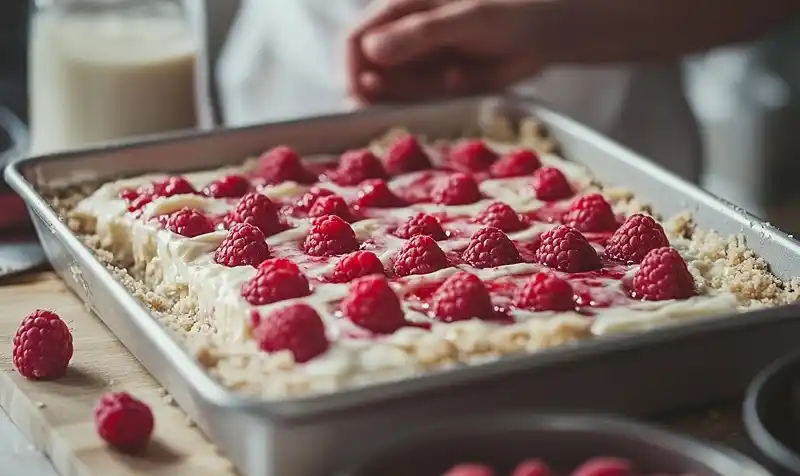
Remove the pan from the oven and let it cool on the counter for 30 minutes. Transfer to the refrigerator and chill for at least five hours, though overnight is ideal.
This extended chilling time allows the flavors to meld and the texture to firm up. Cutting too early results in messy, sticky bars that don’t hold their shape.
Step 9: Slice and Serve
Use the parchment paper overhang to lift the entire cheesecake block out of the pan. Set it on a cutting board and wipe your knife clean between each cut for professional-looking edges.
Slice into 12 equal bars. Serve them cold, straight from the fridge, where they’ll keep beautifully for up to five days.
Expert Tips for Perfect Cheesecake Bars
Bring all dairy ingredients to room temperature before mixing. Cold cream cheese creates lumps that are nearly impossible to smooth out, even with vigorous whisking.
Don’t skip the lemon juice and zest. They cut through the richness and add brightness that prevents these bars from tasting heavy or one-dimensional.
If using frozen raspberries, thaw them completely and drain excess liquid before adding. Too much moisture makes the filling watery and extends baking time unpredictably.
Check your oven temperature with an oven thermometer. Many home ovens run 25 degrees hot or cold, which dramatically affects cheesecake texture.
Creative Variations to Try
Berry Medley Cheesecake Bars
Swap raspberries for a mix of blueberries, strawberries, and blackberries. You’ll get different bursts of flavor in every bite, plus gorgeous color variation.
Chocolate Swirl Version
Melt 2 ounces of dark chocolate and drizzle it over the filling before baking. Use a knife to create swirls—it looks stunning and tastes like raspberry chocolate truffle.
Lemon-Only Bars
Skip the raspberries entirely and double the lemon zest for intensely citrusy cheesecake bars. Top with a light dusting of powdered sweetener before serving.
Holiday Cranberry Twist
Replace raspberries with fresh cranberries during Thanksgiving season. The tart cranberries pair beautifully with the sweet filling and add festive red color.
Peanut Butter Base
Mix 2 tablespoons of peanut butter into your biscuit base for nutty richness. This variation pairs exceptionally well with the raspberry topping.
Storage and Make-Ahead Instructions
Store these bars in an airtight container in the refrigerator for up to five days. Place parchment paper between layers if stacking to prevent them from sticking together.
Freeze individual bars wrapped tightly in plastic wrap, then placed in a freezer bag for up to three months. Thaw overnight in the refrigerator before serving.
Make the base up to two days ahead and store it covered at room temperature. Prepare and bake the filling on the day you plan to serve.
| Storage Method | Timeline | Quality Notes |
|---|---|---|
| Refrigerator | 5 days | Best texture days 2-3 |
| Freezer | 3 months | Thaw in fridge overnight |
| Room temperature | Not recommended | Dairy filling needs chilling |
| Make-ahead base | 2 days | Cover tightly |
Perfect Pairings and Serving Suggestions
Serve these Healthy Raspberry Cheesecake Bars with a dollop of whipped coconut cream for extra indulgence without dairy overload. Fresh mint leaves add a bright, elegant garnish.
They pair beautifully with hot black coffee or Earl Grey tea. The bergamot in Earl Grey complements the lemon notes perfectly.
For a complete dessert board, arrange them alongside these healthy chocolate chip oatmeal bars and this silky Greek yogurt chocolate mousse. Your guests will rave about the variety.
Consider serving them at summer barbecues as a refreshing dessert alternative to heavy pies. They’re sturdy enough to travel in a cooler and sophisticated enough for special occasions.
Healthy Raspberry Cheesecake Bars FAQs
Can I use regular cream cheese instead of light cream cheese for this recipe?
Yes, absolutely—full-fat cream cheese works perfectly and creates an even richer, more traditional cheesecake flavor. The bars will have slightly more calories and fat, but the texture will be luxuriously smooth. Just maintain the same 250g measurement and ensure it’s fully softened before mixing.
What’s the best substitute for vanilla protein powder in these cheesecake bars?
Cornstarch or all-purpose flour works excellently as a substitute, using the same 60g measurement. Cornstarch creates a silkier texture, while flour provides slightly more structure. You’ll lose the protein boost, but the bars will still set beautifully and taste delicious. Another option is using 3 tablespoons of tapioca starch for a gluten-free alternative.
How do I prevent my cheesecake bars from cracking during baking?
Avoid over-mixing your filling, as excess air creates bubbles that expand and crack when heated. Bake at the lower 320°F temperature and don’t open the oven door during cooking, which causes temperature fluctuations. Let the bars cool gradually at room temperature instead of moving them directly to the refrigerator—sudden temperature changes cause surface cracks.
Can I make these raspberry cheesecake bars dairy-free?
Yes, substitute the cream cheese with dairy-free cream cheese (Kite Hill or Miyoko’s brands work well) and use coconut yogurt instead of Greek yogurt. Replace butter with coconut oil in the base. The texture will be slightly different—a bit softer—but still delicious. Make sure your dairy-free alternatives are thick, not watery
Final Thoughts
These Healthy Raspberry Cheesecake Bars prove you don’t need to sacrifice flavor for nutrition. They’re creamy, tangy, and naturally sweet—everything you want in a cheesecake without the guilt or complicated technique.
Remember that midnight cheesecake disaster I mentioned? My daughter said these bars were better than any fancy bakery version. Sometimes the best recipes come from our biggest kitchen failures.
Try pairing them with these festive healthy pumpkin truffles for your next holiday dessert spread. The combination of creamy cheesecake and chocolate-covered pumpkin creates an unforgettable finale.
Ready to make the easiest, healthiest cheesecake of your life? Share your raspberry cheesecake bar photos in the comments below—I can’t wait to see your creations!
Whether you’re meal-prepping desserts for the week or impressing guests at your next gathering, these bars deliver consistent results every single time. Give them a try this weekend.
