
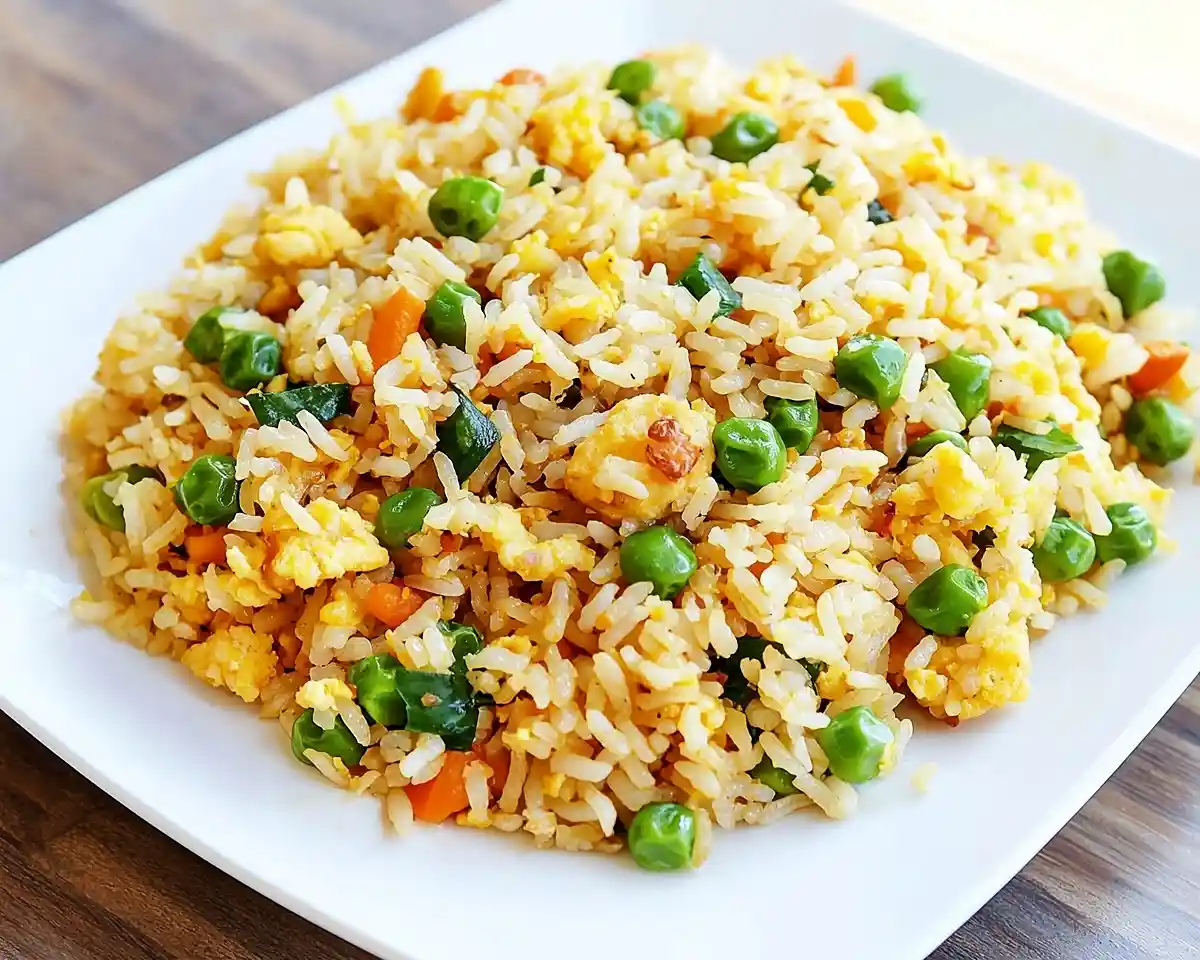
Healthy Air Fryer Fried Rice Recipe transforms leftover rice into restaurant-quality takeout. Quick rice air fryer method with better texture, less oil.
Hey, I’m Linda! Welcome to Tasty at Home, where bold flavors meet everyday kitchens.
Last Tuesday night, I stood staring at a container of leftover rice, debating between ordering takeout or making another boring scrambled egg dinner. Then I remembered my air fryer sitting on the counter, and something clicked. What if I could recreate that crispy-edged, perfectly seasoned fried rice without standing over a smoking wok?
Well… that experiment changed everything. The air fryer gave me restaurant-quality fried rice with half the oil and none of the splatter. Each grain separated beautifully, with those coveted crispy bits you normally only get from high-heat wok cooking.
I’ve tested this healthy air fryer fried rice recipe seventeen times now, adjusting temperatures and cooking times until it became absolutely foolproof. The result? A fifteen-minute dinner that tastes like you spent an hour at the stove.
Tasty at Home – Where bold flavors meet everyday kitchens.
Table of Contents
Why This Air Fryer Method Works Better
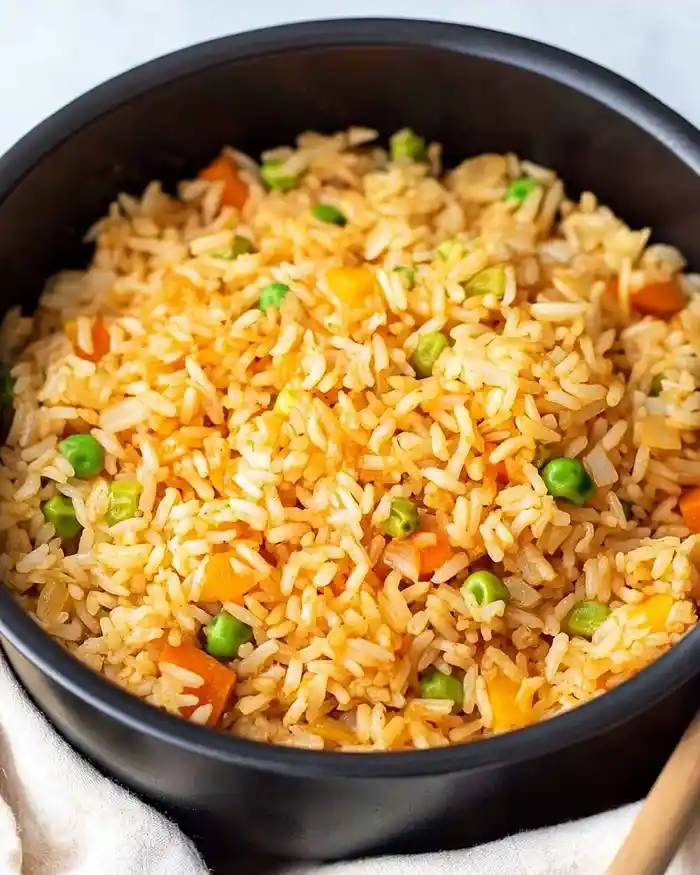
This recipe breaks every rule about traditional fried rice, and that’s exactly why it succeeds. The circulating hot air creates an even cooking environment that browns vegetables and crisps rice simultaneously. No more crowded pans where half the ingredients steam while the other half burns.
The secret lies in using cold rice straight from the refrigerator. Chilled grains have dried out slightly, which prevents mushiness and encourages that signature crispy texture. I learned this technique after studying Kenji López-Alt’s food science approach to Asian cooking.
Your air fryer essentially becomes a compact convection oven that replicates wok hei—that smoky, charred flavor from high-heat cooking. The best part? You can walk away and let the machine work while you prep tomorrow’s lunch.
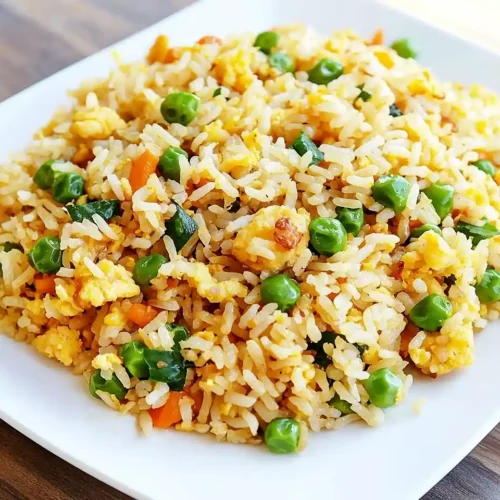
Healthy Air Fryer Fried Rice
Equipment
- Air Fryer
- Oven-safe pan
- Silicone spatula
- Mixing bowl
Ingredients
Fried Rice Base
- 2 tbsp Unsalted butter melted
- 2 Large eggs scrambled and lightly cooked
- 1 cup Frozen mixed vegetables no thawing needed
- 1 Small onion diced
- 3 cloves Garlic minced
- 3 cups Cooked rice chilled, day-old preferred
- 2 tbsp Low-sodium soy sauce
- 1 tbsp Oyster sauce
- 1 tsp Sesame oil toasted
- Green onions optional, for garnish
Instructions
- Preheat the air fryer to 350°F for 3–5 minutes to ensure even cooking.
- Add melted butter to an oven-safe pan, then mix in scrambled eggs, frozen vegetables, onion, garlic, chilled rice, soy sauce, oyster sauce, and sesame oil until evenly combined.
- Place the pan in the air fryer and cook for 5 minutes. Remove and stir thoroughly to redistribute ingredients.
- Return the pan to the air fryer and cook for another 5 minutes, stirring once more halfway through.
- For extra crispiness, cook an additional 2–5 minutes if desired. Rest for 1 minute, garnish with green onions, and serve.
Notes
Ingredients That Make This Recipe Extraordinary
The foundation of exceptional fried rice starts with quality ingredients selected for maximum flavor impact. I recommend using day-old jasmine rice for its slightly floral aroma and firm texture, though any long-grain variety works beautifully. Fresh garlic and real butter elevate this from simple leftovers to something memorable.
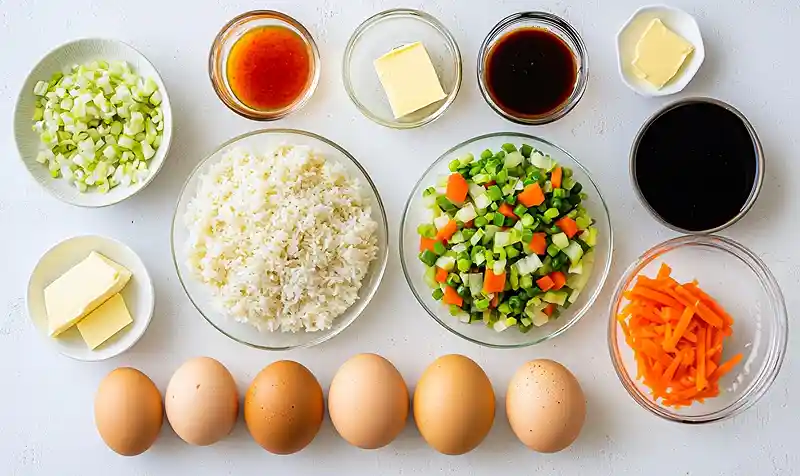
Main Ingredients Table
| Ingredient | US Measurement | Metric | Notes |
|---|---|---|---|
| Unsalted butter, melted | 2 tbsp | 28g | Use real butter, not margarine |
| Large eggs, scrambled | 2 | 2 | Cook separately until just set |
| Frozen mixed vegetables | 1 cup | 140g | No thawing needed |
| Small onion, diced | 1 | 150g | Yellow or white onion |
| Garlic cloves, minced | 3 | 9g | Fresh only, not jarred |
| Cooked chilled rice | 3 cups | 450g | White or brown, day-old preferred |
| Low sodium soy sauce | 2 tbsp | 30ml | Reduces sodium by 40% |
| Oyster sauce | 1 tbsp | 15ml | Adds umami depth |
| Sesame oil | 1 tsp | 5ml | Toasted for best flavor |
| Green onions for garnish | Optional | – | Adds fresh brightness |
Shopping Tips for Best Results
Hit the Asian aisle at your local grocery store for authentic soy sauce and oyster sauce brands. Lee Kum Kee and Kikkoman deliver the most balanced flavors without overwhelming saltiness. Trader Joe’s frozen vegetable medley works perfectly here, or grab the classic peas-carrots-corn mix from any supermarket.
Look for rice that feels slightly firm when you press the container—this indicates proper refrigeration and ideal moisture levels. Fresh garlic should be firm with tight, papery skin, not soft or sprouting.
Ingredient Groups and Variations
Essential Base: The butter, eggs, and rice form your foundation. These three ingredients create the rich, satisfying texture that makes this dish irresistible. Don’t skimp on real butter—the dairy fat carries flavors better than oils.
Umami Boosters: Soy sauce and oyster sauce provide that savory depth associated with authentic Chinese takeout. The combination mimics the complex seasoning of professional kitchens. For a gluten-free version, substitute tamari and check that your oyster sauce is gluten-free.
Aromatic Trio: Onion, garlic, and sesame oil create the aromatic base that perfumes your entire kitchen. This trinity appears in countless Asian recipes because it builds incredible flavor complexity. If you have fresh ginger, add a teaspoon of minced ginger alongside the garlic.
Bold Add-ins for Creative Cooks: Consider stirring in cooked shrimp, diced ham, or crumbled bacon for protein variety. A tablespoon of sriracha or chili garlic sauce transforms this into spicy fried rice. Pineapple chunks add unexpected sweetness that pairs beautifully with the savory base.
International Substitutions
For UK readers: Use caster sugar instead of granulated if adding sweetness, and swap spring onions for green onions.
For Australian cooks: Grab your capsicum instead of bell peppers for variations, and use light soy sauce readily available at Coles or Woolworths.
For European kitchens: Basmati rice works wonderfully as a substitute, though you’ll need slightly less liquid during initial cooking.
Equipment You Need (Plus Kitchen Hacks)
The beauty of this new air fryer recipes approach lies in its simplicity. You need surprisingly little equipment to achieve restaurant-quality results. An 8-inch round cake pan fits most air fryer baskets perfectly and provides enough space for proper heat circulation.
Essential Tools
Air Fryer (3.5-quart minimum): The compact size concentrates heat effectively. Larger models work fine but may require adjusted cooking times. I use a 5-quart Cosori, though any reliable brand delivers consistent results.
Oven-Safe Pan (8 x 3 inches): Metal cake pans work best for heat transfer and browning. Glass dishes insulate too much and prevent crisping. If you don’t have the right size, any metal pan that fits your air fryer basket with at least one inch of clearance works.
Silicone Spatula: Heat-resistant silicone won’t scratch your pan while stirring. This matters because you’ll stir multiple times during cooking. A wooden spoon also works perfectly.
Small Bowl for Mixing: Combine your sauces before adding them to ensure even distribution. This prevents flavor pockets where one bite tastes salty and another bland.
DIY Alternatives for Missing Tools
No oven-safe pan? Oops! I’ve been there. Use a disposable aluminum pan from the dollar store—they’re lightweight and conduct heat beautifully. Just avoid thin foil pans that might warp.
Missing an air fryer basket? This recipe adapts to regular ovens at 400°F, though you’ll lose some of that signature crispiness. Spread everything on a sheet pan and roast, stirring every seven minutes.
Can’t find a silicone spatula? A metal spoon works, though be gentle to avoid scratching non-stick surfaces. I once used a rubber spatula and watched it melt slightly—learn from my mistakes.
Step-by-Step Instructions for Perfect Results
Step 1: Preheat Your Air Fryer to 350°F
Start by preheating your air fryer for three to five minutes. This ensures even cooking from the moment you add ingredients. Most air fryers have a preheat function, but if yours doesn’t, simply run it empty at temperature.
The preheating step matters more than you might think. Cold baskets cause ingredients to steam initially rather than sear, which prevents proper browning. Thomas Keller emphasizes this principle in his French Laundry cookbook—starting with a hot cooking surface is non-negotiable for achieving restaurant-quality results.
While preheating happens, gather your remaining ingredients. This mise en place approach (a fancy French term meaning “everything in place”) prevents scrambling later. Trust me, you don’t want to be mincing garlic when your timer beeps.
Step 2: Combine All Ingredients in Your Pan
Add the melted butter to your 8-inch cake pan first—it coats the bottom and prevents sticking. Next, add your pre-scrambled eggs, breaking up any large chunks with your spatula. The eggs should be cooked but still soft, as they’ll continue cooking in the air fryer.
Dump in your frozen mixed vegetables straight from the bag. No thawing needed here, folks. The frozen vegetables actually help keep the rice from drying out too much during cooking. Add your diced onion and minced garlic, distributing them evenly across the pan.
Now add your cold rice, breaking up any clumps with your hands before adding. This prevents dense rice balls that won’t heat through properly. Drizzle the soy sauce, oyster sauce, and sesame oil over everything.
Use your spatula to mix thoroughly, ensuring every grain gets coated with sauce. You know you’re ready when the rice looks evenly colored and you can’t see any dry white patches. The mixture should smell incredible at this point—garlicky, buttery, and rich.
Step 3: First Cook and Stir (5 Minutes)
Carefully place your pan in the preheated air fryer basket. Set your timer for five minutes and let the magic begin. During this initial cook, the butter melts completely and starts coating every ingredient while the air fryer’s circulation begins crisping the rice.
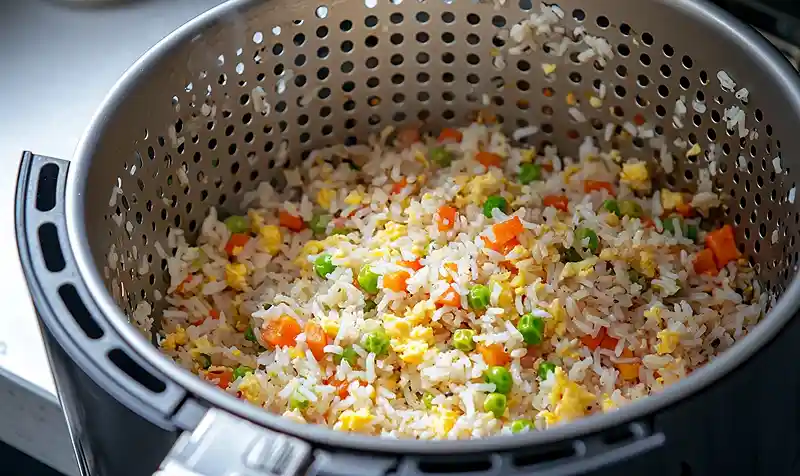
When your timer beeps, pull out the basket and stir everything thoroughly. You want to bring the bottom layer (which browns fastest) to the top and push the top layer down for even cooking. I use a folding motion rather than just stirring—this ensures better mixing.
Check your vegetables at this point. The frozen peas should be starting to thaw, and your onions should smell fragrant. If anything looks dry, drizzle a tiny bit of water (like a teaspoon) over the top—but usually, the butter and sauces provide enough moisture.
Step 4: Second Cook and Stir (5 Minutes)
Return the pan to the air fryer for another five-minute interval. This second cooking period develops those crispy edges that make fried rice so addictive. The high heat continues evaporating excess moisture while the Maillard reaction (that’s the fancy chemistry term for browning) creates complex, nutty flavors.
After five minutes, pull the basket out again and give everything another thorough stir. You should start seeing golden-brown bits forming on some rice grains—that’s exactly what you want. The vegetables should be tender now, and everything should smell like your favorite Chinese restaurant.
This is where you can adjust cooking time based on your texture preference. Like softer rice? You might be done. Want maximum crispiness? Continue to the final step.
Step 5: Final Cook and Finishing (0-5 Minutes)
For most air fryers, your rice is ready after ten minutes total cooking time. However, if you prefer extra-crispy rice or your vegetables still seem undercooked, continue for another three to five minutes. Every air fryer runs slightly differently—mine tends to run hot, so I usually stop at twelve minutes.
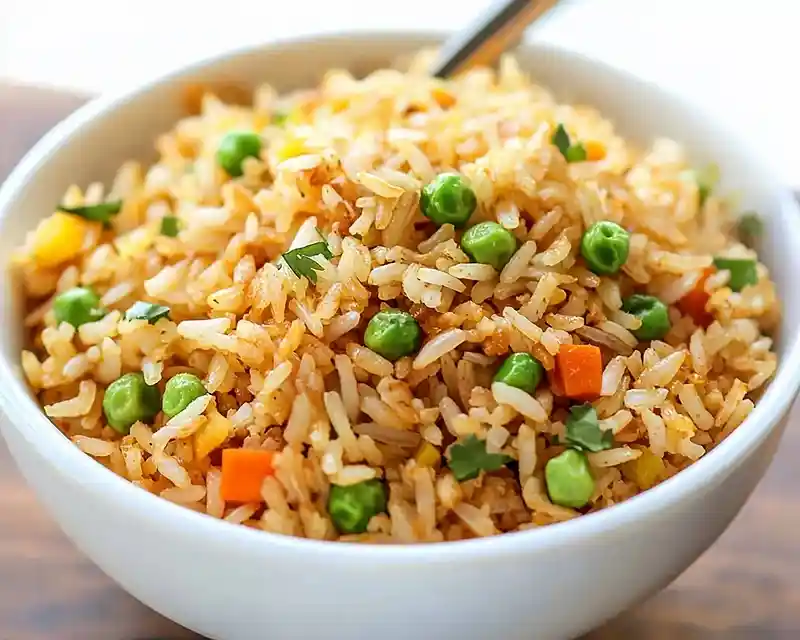
You’ll know your healthy air fryer fried rice is done when the rice grains separate easily, the vegetables are tender, and you see those beautiful golden-brown crispy bits throughout. The mixture should smell toasted and nutty, not bland or steamed.
Remove the pan carefully—it’s scorching hot. Let it sit for one minute before serving, which allows the flavors to settle and makes portioning easier. Garnish with sliced green onions if using, which add a fresh, bright contrast to the rich, savory rice.
Common Mistake I Made (So You Don’t Have To)
Man, oh man, let me tell you about my first attempt. I added the rice while it was still warm from the rice cooker, thinking it would save time. Wrong. The warm rice turned into a mushy, clumpy mess that never crisped properly. Always use cold, day-old rice that’s been refrigerated overnight—this is the single most important factor for success.
Expert Tips for Restaurant-Quality Results
Achieve Maximum Crispiness
The crispiest fried rice comes from spreading ingredients in a single layer rather than piling them high. If you’re doubling the recipe, use two pans and cook in batches. Overcrowding prevents air circulation and causes steaming instead of crisping.
Consider adding a tiny pat of butter during your final stir. This extra fat encourages more browning and adds incredible richness. Julia Child always said you can never have too much butter, and she was right.
Balance Your Flavors Perfectly
Taste your rice after cooking and adjust seasonings as needed. If it tastes flat, add another splash of soy sauce or a pinch of salt. Too salty? Squeeze fresh lime juice over the top—the acidity balances saltiness beautifully while adding brightness.
A dash of white pepper (not black) adds authentic restaurant flavor without visible specks. Chinese restaurants almost always use white pepper in fried rice, and it makes a noticeable difference.
Prevent Sticking and Burning
If your rice tends to stick, spray your pan with cooking spray before adding butter. The combination creates a nearly non-stick surface. Alternatively, use a well-seasoned cast iron pan if it fits your air fryer—nothing beats cast iron for even heat distribution.
Troubleshooting Texture Issues
Rice too dry? Add a tablespoon of chicken broth or water during your second stir. Rice too wet? Increase temperature to 375°F for your final cooking interval to evaporate excess moisture faster.
Creative Variations to Keep Things Exciting
Regional American Twists
Southern-Style Cajun Fried Rice: Add one tablespoon of Cajun seasoning, diced andouille sausage, and bell peppers. The spicy, smoky flavors pair beautifully with the buttery rice. This variation became my Super Bowl party favorite.
California-Style Veggie Rice: Load up with fresh vegetables—snap peas, edamame, shredded carrots, and diced zucchini. Finish with sliced avocado and a squeeze of lime. It’s lighter and packed with nutrients.
Hawaiian Pineapple Fried Rice: Stir in one cup of diced pineapple and cooked diced ham during your final cook. The sweet-savory combination tastes like vacation. Garnish with toasted macadamia nuts for extra island vibes.
Dietary Adaptations
Protein-Packed Version: Add one cup of cooked chicken, shrimp, or tofu during your first stir. This transforms your side dish into a complete meal. Leftover rotisserie chicken works perfectly here—just shred and add.
Low-Carb Cauliflower Rice Alternative: Can you make rice in an air fryer using cauliflower? Absolutely. Replace half the rice with riced cauliflower for fewer carbs while maintaining volume. The cauliflower crisps beautifully and absorbs all those savory flavors.
Vegan-Friendly Version: Swap butter for coconut oil or vegan butter, omit eggs, and add extra vegetables or tofu. Use mushroom-based oyster sauce (available at most Asian markets) instead of traditional oyster sauce.
Holiday and Seasonal Variations
Thanksgiving Leftover Rice: Stir in diced turkey, cranberries, and a pinch of sage. This creative use for leftovers beats another turkey sandwich any day.
Spring Vegetable Rice: Add fresh asparagus, peas, and mint during the final five minutes. Light and fresh, it’s perfect for warmer weather.
Storage, Make-Ahead, and Reheating Guide
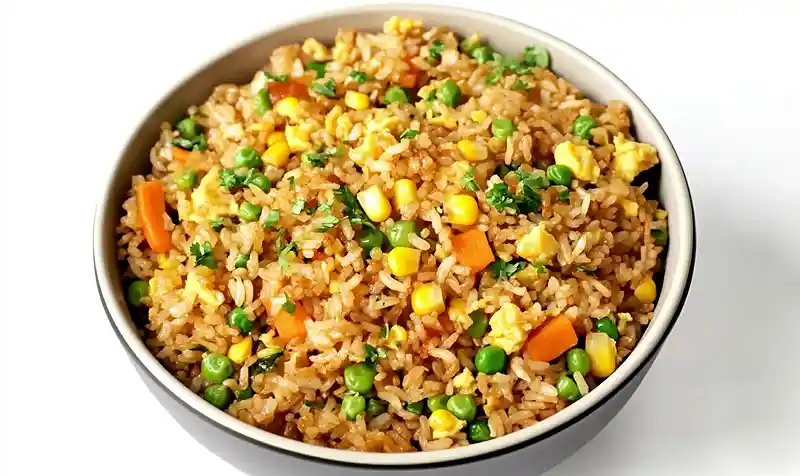
This rice air fryer method produces leftovers that reheat beautifully. Store cooled rice in an airtight container in the refrigerator for up to four days. The flavors actually improve overnight as everything melds together.
Storage and Freezing Table
| Storage Method | Duration | Best Practice |
|---|---|---|
| Refrigerator (sealed container) | 4 days | Cool completely before sealing |
| Freezer (freezer bag) | 3 months | Flatten bag for quick thawing |
| Room temperature | Not recommended | Rice spoils quickly at room temp |
| Meal prep containers | 4 days | Portion into single servings |
Make-Ahead Strategy
Cook your rice the day before and refrigerate overnight—this actually improves the final texture. Prep all vegetables and aromatics, storing them separately in the fridge. When you’re ready to cook, everything comes together in minutes.
You can fully prepare this dish and freeze in individual portions. Thaw overnight in the refrigerator, then reheat in the air fryer at 325°F for eight to ten minutes, stirring once halfway through.
Reheating for Best Results
Air fryer reheating maintains that crispy texture better than microwaves. Heat at 350°F for five to seven minutes, stirring once. Add a tiny splash of water if the rice seems dry.
Alternatively, reheat in a skillet over medium heat with a tablespoon of butter or oil. Stir frequently until heated through and slightly crispy on the bottom.
Perfect Pairings and Serving Suggestions
This healthy air fryer fried rice shines as a versatile side dish or stands alone as a satisfying main course. The rich, savory flavors pair beautifully with lighter proteins and fresh vegetables.
Serve alongside air fryer orange chicken for a complete Chinese takeout experience at home. The sweet-tangy chicken sauce complements the savory rice perfectly.
For lighter pairings, serve with steamed edamame and a simple cucumber salad dressed with rice vinegar. The fresh vegetables balance the rich, buttery rice. A pot of hot green tea completes the meal beautifully.
Planning an Asian-inspired feast? This rice works wonderfully with air fryer teriyaki chicken or air fryer loaded mini meatloaf for fusion comfort food. The rice soaks up any extra sauce and adds satisfying bulk to your plate.
For breakfast, top cold leftover rice with a fried egg and hot sauce. It transforms into a hearty morning meal. I’ve also served it alongside vanilla chai protein shake for a balanced start to busy days.
Consider offering with pickled vegetables (tsukemono) from the refrigerated section of Asian markets. The tangy crunch provides textural contrast and palate-cleansing brightness between bites.
Healthy Air Fryer Fried Rice FAQs
Can you make rice in an air fryer from raw?
No, raw rice requires water and steam to cook properly, which air fryers don’t provide effectively. Always use pre-cooked rice that’s been chilled overnight. The air fryer excels at crisping and reheating cooked rice, not cooking it from scratch.
What type of rice works best for air fryer fried rice?
Long-grain white rice like jasmine or basmati provides the best texture because individual grains separate easily and crisp beautifully. Brown rice also works wonderfully and adds nutty flavor plus extra fiber. Short-grain rice tends to clump more but still delivers delicious results.
How do I prevent my rice from drying out in the air fryer?
The butter and sauces provide necessary moisture, but adding frozen vegetables helps tremendously because they release water as they cook. If your rice looks dry during cooking, add one tablespoon of water or chicken broth during stirring.
How do I prevent my rice from drying out in the air fryer?
Fresh rice contains too much moisture and will turn mushy rather than crispy in the air fryer. If you must use fresh rice, spread it on a baking sheet and refrigerate for two hours before using. This removes excess moisture and firms up the grains.
Your New Go-To Weeknight Dinner
This healthy air fryer fried rice recipe solves the eternal “what’s for dinner” question with minimal effort and maximum flavor. You’ve learned professional techniques for achieving restaurant-quality results without the grease, splatter, or time commitment of traditional wok cooking.
The beauty of this method lies in its flexibility. Start with the basic recipe until you’ve mastered the technique, then branch out into creative variations. Each batch teaches you something new about your specific air fryer and personal taste preferences.
Serve this alongside air fryer orange chicken or French toast casserole for complete meal solutions. The rice pairs beautifully with virtually any protein and countless vegetables. You’ll find yourself making it several times weekly once you experience how effortlessly it comes together.
Let me know in the comments which variation you tried first! Did you go classic, or did you experiment with pineapple or Cajun spices? I love hearing how you make this recipe your own.
Now grab that container of leftover rice from your fridge and transform it into something extraordinary. Your air fryer is waiting, and dinner is just fifteen minutes away. This recipe might just become your most-requested dish—it certainly became mine.
Tasty at Home – Where bold flavors meet everyday kitchens.
