
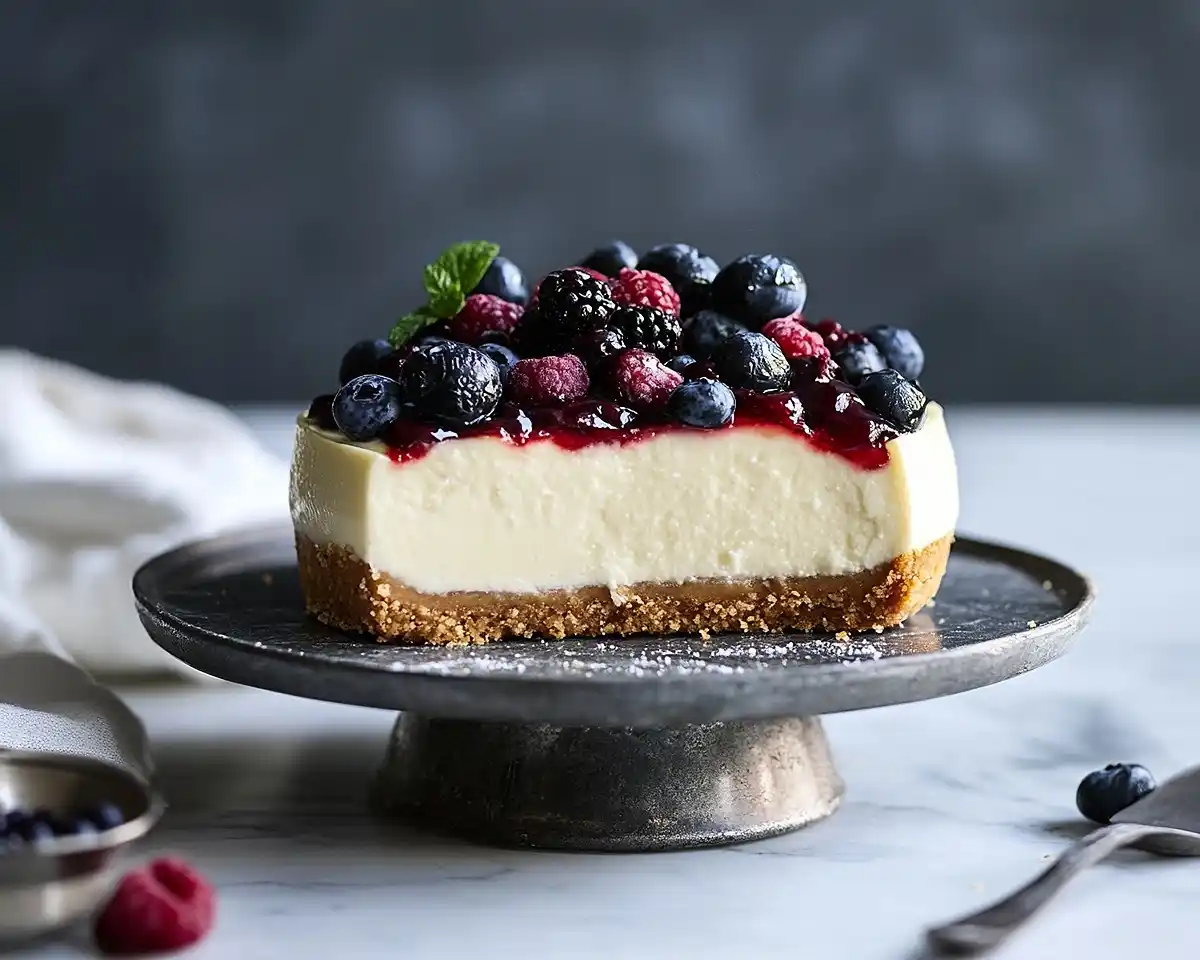
Greek yogurt cheesecake delivers tangy, creamy perfection with less guilt. Master this lighter yogurt cheesecake with our foolproof technique today.
Picture this: I’m staring at a classic New York cheesecake recipe, and my stomach’s already protesting. Too rich. Too heavy. Too much regret the next morning.
So I did what any stubborn home cook would do—I grabbed the Greek yogurt from my fridge and thought, “What if?” That single swap changed everything. The result? A cheesecake so creamy and tangy it made my traditional recipe taste one-dimensional.
Now, I’ve tested this greek yogurt cheesecake seventeen times. Yes, seventeen. My family thinks I’ve lost it, but honestly? They haven’t complained once while devouring slice after slice. The tanginess from the yogurt balances the sweetness perfectly, and the texture stays silky without that brick-like heaviness.
Tasty at Home – Where bold flavors meet everyday kitchens.
Table of Contents
What Makes This Greek Yogurt Cheesecake Extraordinary
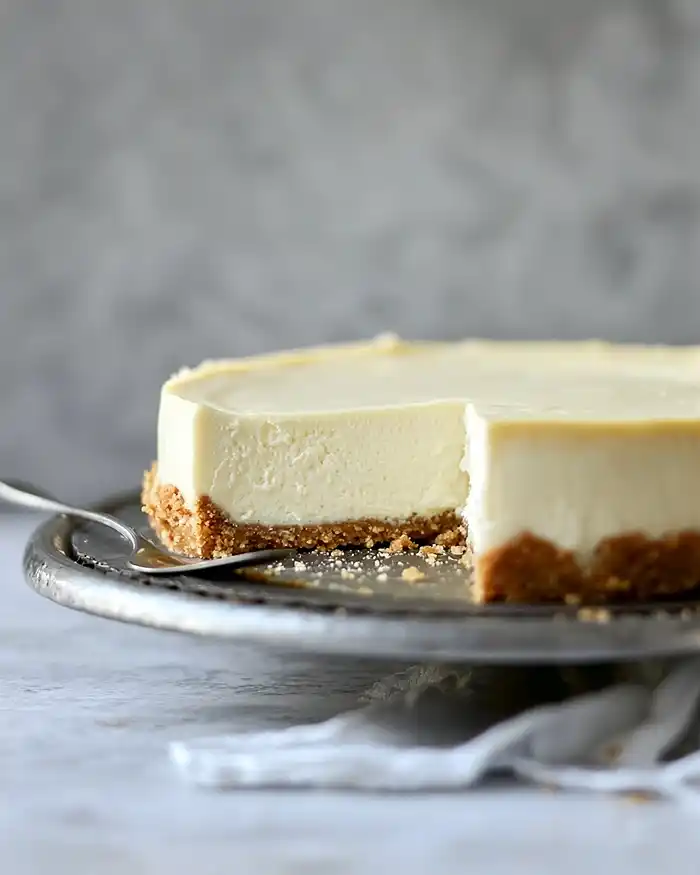
This isn’t your average cheesecake, folks. By incorporating Greek yogurt into the filling, you’re cutting calories without sacrificing that signature velvety texture. The yogurt adds protein, reduces the fat content, and introduces a subtle tang that keeps each bite interesting.
I’ve baked this for everything from casual Tuesday dinners to Thanksgiving gatherings. Every single time, someone asks for the recipe. The secret lies in the balance—enough cream cheese for richness, enough Greek yogurt for lightness.
The water bath method ensures even baking. No cracks, no dry edges, just perfect consistency throughout. This technique, championed by pastry chefs across America, creates gentle, uniform heat that protects your cheesecake from temperature shock.
Ultimate Greek Yogurt Cheesecake
Equipment
- 9-inch springform pan
- aluminum foil
- Roasting pan
- mixing bowls
- stand mixer or hand mixer
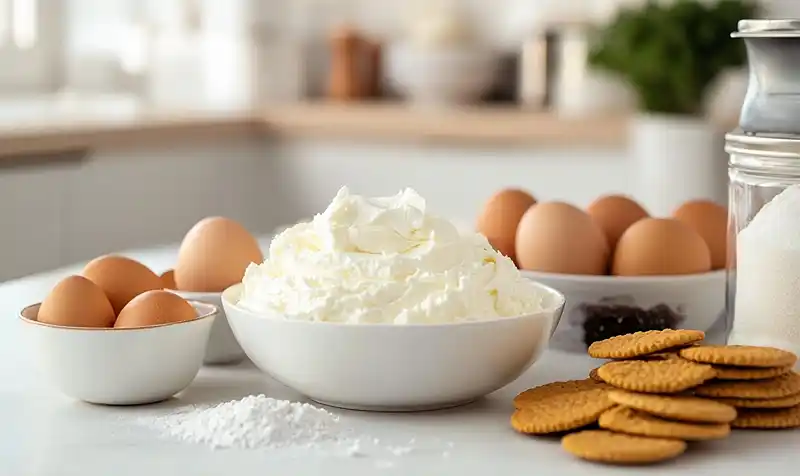
Ingredients
Crust
- 1.5 cups Graham cracker crumbs Use gluten-free if needed
- 5 tablespoons Unsalted butter, melted Room temperature works too
- 1 tablespoon Granulated sugar Adds sweetness to crust
Filling
- 16 ounces Cream cheese Room temperature essential
- 1.75 cups Plain Greek yogurt 2% preferred for texture
- 0.667 cup Granulated sugar Adjust for sweetness preference
- 3 Large eggs Room temperature
- 1 teaspoon Vanilla extract Pure, not imitation
- 2 teaspoons Lemon juice Fresh squeezed best
Berry Compote
- 1.5 cups Mixed berries Strawberries, blueberries, raspberries
- 2 tablespoons Lemon juice Brightens berry flavor
- 0.5 tablespoon Chia seeds Optional thickener
Instructions
- Preheat oven to 350°F and boil water for water bath. Wrap 9-inch springform pan with heavy-duty aluminum foil.
- Combine graham cracker crumbs, melted butter, and sugar. Press into pan and bake for 8 minutes. Cool 5 minutes.
- Beat cream cheese alone 2 minutes until smooth. Add sugar, Greek yogurt, vanilla, and lemon juice. Mix until silky. Add eggs one at a time, mixing gently.
- Pour filling over crust. Place pan in roasting pan with 1-inch water bath. Bake at 325°F for 45-55 minutes until edges set and center jiggles slightly.
- Cool cheesecake in oven for 1 hour, remove from water bath, then refrigerate at least 8 hours or overnight.
- Cook mixed berries with lemon juice 10-15 minutes until thickened. Stir in chia seeds if desired. Cool and refrigerate until serving.
Notes
Ingredients: Your Complete Shopping Guide
For the best results, choose full-fat cream cheese and 2% Greek yogurt. Don’t skimp on quality here—these are your foundation ingredients. Fresh eggs at room temperature incorporate more smoothly, and real vanilla extract (not imitation) makes a noticeable difference.
When selecting Greek yogurt, look for brands with minimal ingredients. Plain, unsweetened varieties work best. Fage and Chobani are reliable grocery store options that deliver consistent results.
| Ingredient | US Measurement | Metric | Notes |
|---|---|---|---|
| For the Crust | |||
| Graham cracker crumbs | 1½ cups | 150g | Use gluten-free if needed |
| Unsalted butter, melted | 5 tablespoons | 70g | Room temperature works too |
| Granulated sugar | 1 tablespoon | 12g | Adds sweetness to crust |
| For the Filling | |||
| Cream cheese | 16 ounces (2 blocks) | 450g | Room temperature essential |
| Plain Greek yogurt | 1¾ cups | 420g | 2% preferred for texture |
| Granulated sugar | ⅔ cup | 130g | Adjust for sweetness preference |
| Large eggs | 3 | 3 | Room temperature |
| Vanilla extract | 1 teaspoon | 5ml | Pure, not imitation |
| Lemon juice | 2 teaspoons | 10ml | Fresh squeezed best |
| For Berry Compote | |||
| Mixed berries | 1½ cups | 225g | Strawberries, blueberries, raspberries |
| Lemon juice | 2 tablespoons | 30ml | Brightens berry flavor |
| Chia seeds | ½ tablespoon | 5g | Optional thickener |
Smart Substitutions & Shopping Tips
Can’t find Greek yogurt? Regular plain yogurt works, but strain it through cheesecloth for 2 hours first to remove excess moisture. This concentrates the flavor and prevents a watery filling.
For a lighter crust, substitute crushed vanilla wafers or digestive biscuits. International readers often prefer digestive biscuits—they’re less sweet and add a subtle malt flavor. Gluten-free graham crackers are widely available at Target, Whole Foods, and most major grocery chains.
If you’re dairy-sensitive, try combining dairy-free cream cheese with coconut yogurt. The texture won’t be identical, but it’s a delicious alternative. Just ensure both ingredients are at room temperature before mixing.
Essential Equipment & Step-by-Step Instructions
You’ll need a 9-inch springform pan, aluminum foil, a roasting pan for the water bath, mixing bowls, and either a stand mixer or hand mixer. Don’t have a springform pan? A regular 9-inch cake pan works—just line it with parchment paper for easy removal.
The foil wrap is critical. It prevents water from seeping into your cheesecake during the water bath. Wrap the bottom and sides completely, using two layers if your foil tears easily.
Step 1: Prepare Your Oven and Pan
Preheat your oven to 350°F. Fill a kettle with water and bring it to a boil—you’ll need this for your water bath later. Wrap your 9-inch springform pan tightly with heavy-duty aluminum foil, covering the bottom and extending up the sides.
This double-protection method prevents any water from sneaking in during baking. Trust me, I learned this the hard way when my first attempt resulted in a soggy-bottomed disaster.
Step 2: Build the Perfect Graham Cracker Crust
Combine graham cracker crumbs, melted butter, and sugar in a medium bowl. Stir until the mixture resembles wet sand—every crumb should be coated. Press this mixture firmly into the bottom of your prepared springform pan.
Use the flat bottom of a measuring cup or glass to create an even, compact layer. This prevents crumbling when you slice later. Bake for 8 minutes until lightly golden and fragrant.
Remove from the oven and let cool for 5 minutes. The crust will firm up as it cools. Reduce your oven temperature to 325°F while you prepare the filling.
Step 3: Create the Silky Yogurt Cheesecake Filling
Using a stand mixer with the paddle attachment or hand mixer, beat the cream cheese alone for 2 full minutes. This step is non-negotiable—it eliminates lumps before you add other ingredients. The cream cheese should look fluffy and completely smooth.
Add the sugar, Greek yogurt, vanilla extract, and lemon juice. Beat on medium speed until thoroughly combined and silky, about 1-2 minutes. Scrape down the sides of the bowl to ensure everything incorporates evenly.
Now add the eggs one at a time, mixing on low-medium speed after each addition. Here’s where many people mess up—overmixing at this stage incorporates too much air, which causes cracks. Stop mixing the moment the last egg disappears into the batter.
The filling should be smooth, pale, and slightly thick. If you see any cream cheese chunks, gently fold them in with a spatula rather than continuing to beat.
Step 4: Assemble and Create the Water Bath
Pour the cheesecake filling over your pre-baked, cooled crust. Tap the pan gently on the counter 2-3 times to release any air bubbles. Smooth the top with an offset spatula or the back of a spoon.
Place the foil-wrapped springform pan inside a larger roasting pan. Carefully transfer both to your oven rack (this is easier than filling the water bath on the counter). Pour the hot water from your kettle into the roasting pan until it reaches about 1 inch up the sides of the springform pan.
This water bath, or “bain-marie” as Julia Child called it, creates a humid environment that prevents the top from drying out and cracking. The gentle, indirect heat cooks the cheesecake evenly from edge to center.
Step 5: Bake to Creamy Perfection
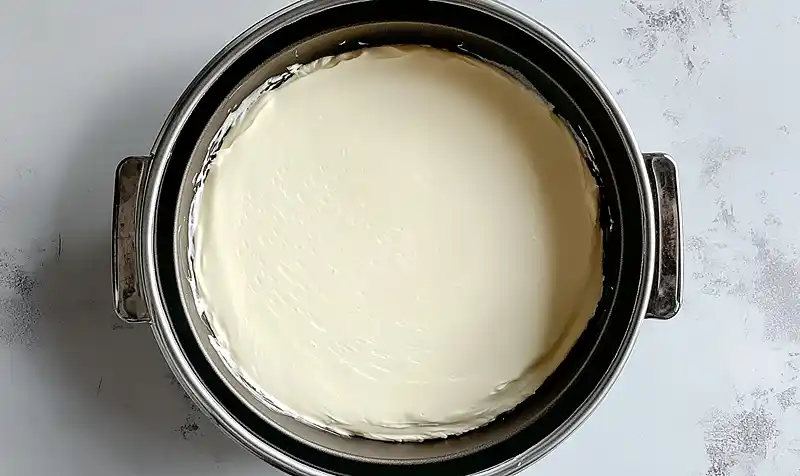
Bake at 325°F for 45-55 minutes. You’re looking for a specific visual cue here—the edges should look set and slightly puffed, while the center (about a 3-inch diameter circle) should jiggle like Jell-O when you gently shake the pan.
The cheesecake will continue cooking as it cools, so slightly underdone is better than overbaked. An instant-read thermometer should register 150-155°F in the center if you want to be precise.
Oops! My third attempt, I baked it until completely firm. The result? A dry, cracked top that tasted more like a hockey puck than cheesecake. Learn from my mistake—embrace the jiggle.
Step 6: The Critical Cooling Process
Turn off the oven completely. Crack the oven door open about 1 inch (I prop mine with a wooden spoon). Let the cheesecake cool inside the oven for exactly 1 hour.
This gradual temperature change prevents the dreaded crack-across-the-top situation. Rapid cooling causes the cheesecake to contract too quickly, splitting the surface. Patience here equals perfection.
After the oven cool-down, remove the cheesecake and the water bath carefully. Remove the foil wrap (watch out for any residual hot water). Cover the springform pan loosely with plastic wrap and refrigerate for at least 8 hours, preferably overnight.
Step 7: Prepare the Simple Berry Compote
While your cheesecake chills, make the berry topping. Combine your mixed berries and lemon juice in a small saucepan over medium heat. Bring to a gentle simmer, stirring occasionally.
Cook for 10-15 minutes until the berries break down and release their juices. The mixture should reduce by about one-third and thicken slightly. Remove from heat and stir in chia seeds if you want a thicker, jam-like consistency.
Let the compote cool to room temperature, then refrigerate until serving. The chia seeds will continue absorbing liquid as it chills, creating a beautiful, glossy topping.
Expert Tips for Cheesecake Success
Always bring cream cheese and Greek yogurt to room temperature before mixing. Cold ingredients don’t blend smoothly, creating lumps that ruin the texture. I leave mine on the counter for 1-2 hours before starting.
Don’t skip the water bath. I know it seems fussy, but this single step separates amateur cheesecakes from bakery-quality results. The moisture prevents surface cracks and ensures even cooking throughout.
For the cleanest slices, wipe your knife with a hot, damp cloth between each cut. Dip the knife in hot water, wipe it dry, then slice. This prevents the creamy filling from dragging and creating messy edges.
Creative Variations Worth Trying
Lemon Blueberry Version: Add 2 tablespoons lemon zest to the filling and top with blueberry compote only. The bright citrus flavor pairs beautifully with the yogurt’s tang. Perfect for spring brunches or Mother’s Day celebrations.
Chocolate Swirl: Melt 4 ounces of dark chocolate and swirl it through the filling before baking. Use a knife to create marble patterns. This turns your lighter cheesecake into an elegant dinner party dessert.
Honey Almond: Swap graham crackers for crushed amaretti cookies in the crust. Drizzle finished cheesecake with honey and sprinkle with toasted sliced almonds. This Mediterranean-inspired version works wonderfully for holiday gatherings.
Pumpkin Spice: Mix ½ cup pumpkin puree and 1 teaspoon pumpkin pie spice into the filling. Top with candied pecans instead of berries. I make this version every Thanksgiving, and it disappears faster than traditional pumpkin pie.
No-Bake Mini Versions: Divide the filling among individual mason jars over unbaked graham cracker bases. Refrigerate for 4 hours instead of baking. These portable treats are fantastic for picnics and potlucks.
Storage, Make-Ahead, and Freezing Guidelines
This yogurt cheesecake keeps beautifully in the refrigerator for up to 5 days when properly covered. I store mine in the springform pan with plastic wrap pressed directly against the surface to prevent drying.
You can make this completely ahead. Bake up to 3 days before serving—the flavors actually improve as they meld. Add the berry compote just before serving to maintain the best texture contrast.
| Storage Method | Duration | Best Practices |
|---|---|---|
| Refrigerator (whole) | 5 days | Cover tightly with plastic wrap |
| Refrigerator (sliced) | 3 days | Wrap individual slices in plastic |
| Freezer (whole) | 2 months | Wrap in plastic, then foil |
| Freezer (sliced) | 1 month | Wrap individually, freeze on tray first |
| Berry compote | 1 week | Separate airtight container |
To freeze, wrap the cooled cheesecake (without topping) in two layers of plastic wrap, then aluminum foil. Thaw overnight in the refrigerator before serving. The texture remains remarkably similar to fresh.
Perfect Pairings and Serving Suggestions
Serve this greek yogurt cheesecake with fresh whipped cream for added richness. The light, airy cream balances the dense, tangy filling perfectly. A strong cup of coffee or espresso cuts through the sweetness beautifully.
For a complete dessert spread, pair with thesedecadent layered brownies for chocolate lovers. The contrast between rich chocolate and tangy cheesecake creates an impressive dessert table.
Try serving alongside festive decorated cookies for special occasions. The variety in textures and flavors keeps guests coming back for seconds.
For winter gatherings, complement with easy no-bake truffles that require no oven space. This combination works perfectly for holiday parties when oven real estate is precious.
Consider pairing with simple frozen treats for summer cookouts. The temperature contrast between cold ice cream and chilled cheesecake refreshes beautifully on hot days.
Greek Yogurt Cheesecake FAQs
Can I make greek yogurt cheesecake without a water bath?
Yes, but expect potential cracks and drier edges. Bake at 300°F for 60-70 minutes instead, and place a pan of water on the lower oven rack to create humidity. The results won’t match the water bath method’s consistency, but it’s workable when you’re short on equipment.
What causes cheesecake to crack on top?
Rapid temperature changes create cracks as the cheesecake contracts. Overmixing incorporates too much air, which expands during baking and creates fissures. Overbaking dries out the surface, causing it to split. Always cool gradually in the oven, mix gently, and remove when the center still jiggles slightly.
How do I know when yogurt cheesecake is done baking?
The edges should look set and slightly puffed, while the center (about 3 inches across) jiggles like Jell-O when gently shaken. An instant-read thermometer should register 150-155°F in the center. The cheesecake continues cooking during the cooling process, so slightly underdone beats overbaked every time.
Best way to prevent lumps in cheesecake filling?
Always start with room-temperature cream cheese and Greek yogurt—cold ingredients refuse to blend smoothly. Beat the cream cheese alone for 2 full minutes before adding anything else. This pre-mixing eliminates stubborn lumps that won’t disappear once other ingredients join the party.
Your New Go-To Lighter Cheesecake
Well… this greek yogurt cheesecake proves you don’t need to sacrifice flavor for a lighter dessert. The tangy yogurt adds complexity that traditional recipes lack, and the creamy texture rivals any bakery version.
Will you try the classic berry topping first, or jump straight to one of the creative variations? Either way, you’re about to discover your new favorite make-ahead dessert.
Grab that springform pan and get baking. Your family’s about to wonder why you didn’t make this sooner. And hey, when they ask for the recipe? Send them our way.
Tasty at Home – Where bold flavors meet everyday kitchens.
For more expert baking techniques and ingredient sourcing tips, check out professional resources from the Culinary Institute of America and King Arthur Baking Company for detailed guides on achieving bakery-quality results at home.