
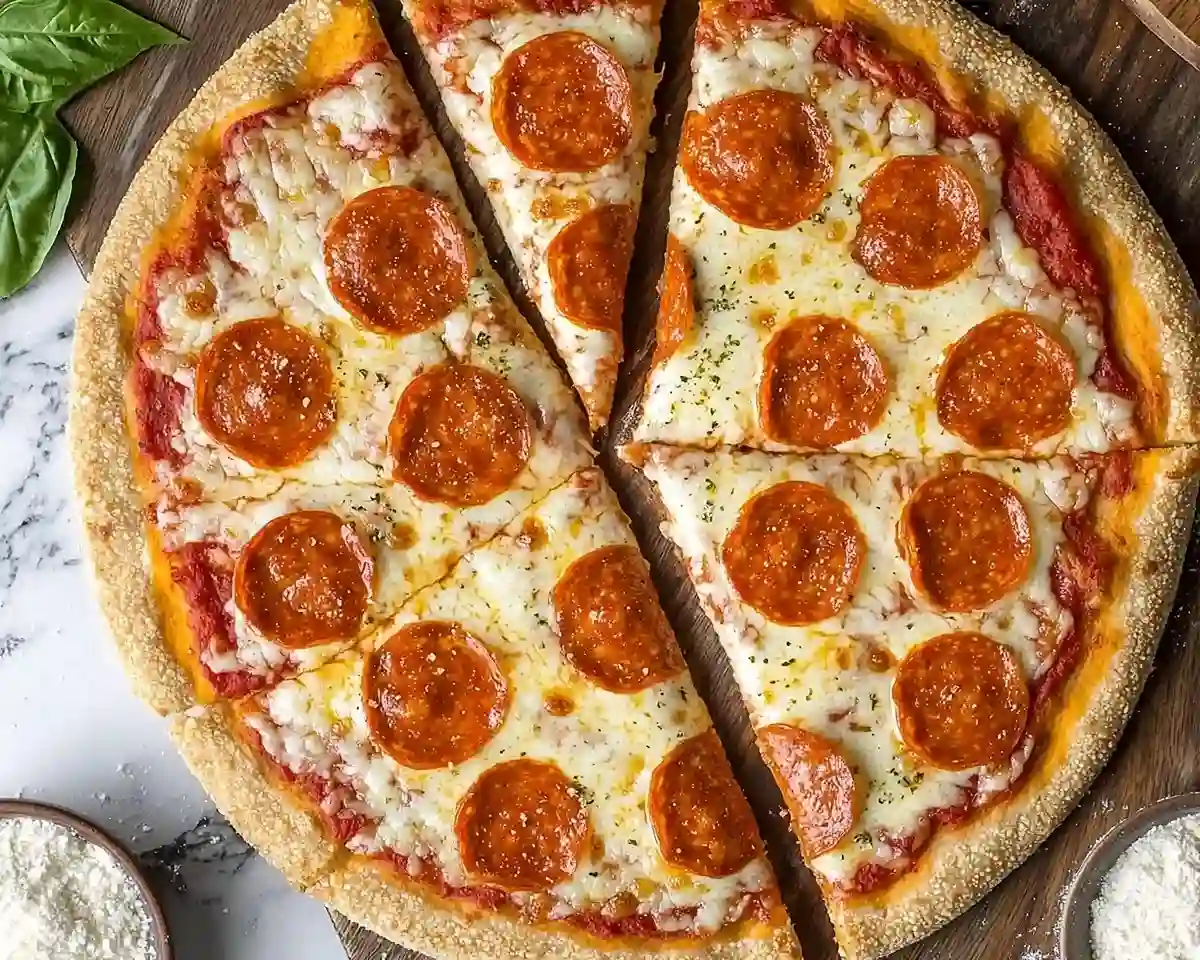
Gluten free pizza crust recipe with almond flour and psyllium husk. Crispy edges, chewy center—easy gluten free pizza dough anyone can master today.
Hey, I’m Sofia! Welcome to Tasty at Home, where cooking is supposed to be fun, not scary.
Last summer, my celiac diagnosis hit like a thunderclap. No more Friday night pizza runs with my kids. Well… I wasn’t about to let gluten win that battle.
After seventeen failed attempts (yes, I counted), I finally cracked the code on this gluten free pizza crust recipe. The secret? Psyllium husk powder and a double-rise technique that creates those gorgeous air pockets you thought were gone forever. Now my kitchen smells like a Brooklyn pizzeria every weekend, and nobody—not even my gluten-loving husband—can tell the difference.
This isn’t cardboard disguised as pizza. It’s crispy on the edges, chewy in the center, and holds toppings like a champ.
Table of Contents
About the Recipe & What Makes It Special
This gluten free pizza dough delivers authentic pizzeria texture without wheat flour. The combination of measure-for-measure gluten-free flour and almond flour creates structure, while psyllium husk powder mimics gluten’s elasticity. You’ll get that satisfying chew and golden-brown crust you’ve been missing.
Most gluten-free crusts crumble or taste like cardboard. This one doesn’t. The double-rise method develops flavor and creates air pockets, just like traditional pizza dough.
For the base ingredients, use fresh psyllium husk powder—stale powder won’t bind properly. Choose a high-quality gluten-free flour blend with xanthan gum already included (Bob’s Red Mill or King Arthur work beautifully). For the almond flour, blanched and finely ground varieties create the smoothest texture.

Gluten Free Pizza Crust
Equipment
- Stand mixer with paddle attachment
- 12-inch round pizza pan
- pizza steel or stone
- Parchment paper
- Kitchen thermometer
- Rubber spatula
- cooking spray
Ingredients
Yeast Mixture
- 1 cup Warm water 110°F exactly
- 1 tablespoon Sugar Feeds the yeast
- 1½ teaspoons Instant yeast Fresh for best rise
Dry Ingredients
- 1½ cups Gluten-free flour Measure-for-measure blend
- ¼ cup Almond flour Blanched, finely ground
- 1 tablespoon Psyllium husk powder Not whole husks
- 1 teaspoon Baking powder Aluminum-free preferred
- ¾ teaspoon Salt Fine sea salt
- 2 tablespoons Olive oil Extra virgin for flavor
Instructions
- Combine warm water, sugar, and yeast in a glass measuring cup. Whisk until dissolved and let sit 5-10 minutes until foamy.
- Add gluten-free flour, almond flour, psyllium husk powder, baking powder, and salt to a stand mixer bowl. Mix on low for 30 seconds.
- Pour in the yeast mixture and olive oil. Mix on medium-high speed for 5 minutes until the dough resembles thick cookie batter.
- Scrape down the sides of the bowl with a rubber spatula and mix for another 30 seconds until fully combined.
- Transfer dough to prepared 12-inch pan, smooth the top, cover with oiled plastic wrap, and let rise 45-60 minutes.
- Preheat oven to 425°F with pizza steel or stone in the middle rack. Line pizza pan with parchment and spray with cooking spray.
- Press dough into the pan, reaching edges. Let rest 10 minutes while oven preheats.
- Par-bake the crust for 15-20 minutes until set and lightly golden.
- Add toppings and bake on preheated steel for 10-15 minutes until cheese bubbles and edges are golden.
- Let pizza rest 5 minutes before slicing and serving.
Notes
Ingredients Table
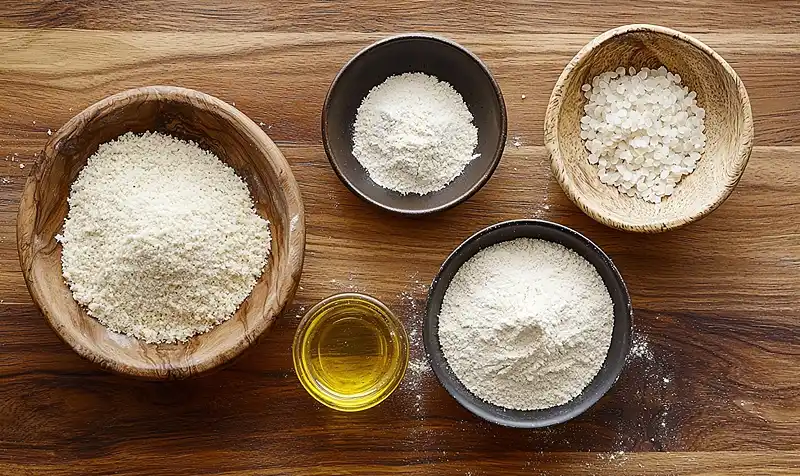
| Ingredient | US Measurement | Metric | Notes |
|---|---|---|---|
| Yeast Mixture | |||
| Warm water | 1 cup | 240ml | 110°F exactly |
| Sugar | 1 tablespoon | 12g | Feeds the yeast |
| Instant yeast | 1½ teaspoons | 5g | Fresh for best rise |
| Dry Ingredients | |||
| Gluten-free flour | 1½ cups | 225g | Measure-for-measure blend |
| Almond flour | ¼ cup | 28g | Blanched, finely ground |
| Psyllium husk powder | 1 tablespoon | 7g | Not whole husks |
| Baking powder | 1 teaspoon | 5g | Aluminum-free preferred |
| Salt | ¾ teaspoon | 4g | Fine sea salt |
| Olive oil | 2 tablespoons | 30ml | Extra virgin for flavor |
Shopping Tips for US Grocery Stores
Find psyllium husk powder in the supplements aisle at Whole Foods, Target, or Walmart. Gluten-free flour blends live in the baking aisle near specialty flours. Almond flour hangs out in the same section—grab Bob’s Red Mill or Trader Joe’s brand for consistent results.
Instant yeast beats active dry for this recipe. Look for Fleischmann’s or Red Star in the refrigerated section near butter. Don’t substitute active dry without adjusting rising times.
Bold Add-ins and Variations
Transform your easy gluten free pizza recipe with Italian herbs. Mix 1 teaspoon each of dried oregano, basil, and garlic powder into the dry ingredients.
Want a crispier bottom? Brush the parchment with garlic-infused olive oil before pressing the dough. Cheese lovers can work ¼ cup grated Parmesan directly into the dough for extra flavor.
Substitutions for Different Needs
Replace almond flour with oat flour (certified gluten-free) for nut allergies. The texture stays similar. Swap olive oil for melted butter if dairy isn’t an issue—it adds richness.
Can’t find psyllium husk powder? Ground flaxseed works in a pinch, though the texture won’t be quite as chewy. Use the same measurement and expect slightly denser results.
Equipment & Preparation Steps
Essential Equipment
You’ll need a stand mixer with paddle attachment, 12-inch round pizza pan, pizza steel or stone, and parchment paper. No stand mixer? A hand mixer and serious arm strength work too—just mix for an extra 2 minutes.
A kitchen thermometer ensures your water hits exactly 110°F. Too hot kills yeast; too cool won’t activate it. A rubber spatula and cooking spray complete your toolkit.
Step 1: Activate the Yeast
In a glass measuring cup, combine warm water, sugar, and yeast. Whisk until dissolved. Let it sit for 5-10 minutes until foamy and fragrant—it should smell like fresh bread and look like cappuccino foam.
If nothing happens after 10 minutes, your yeast is dead. Start over with fresh yeast and check your water temperature.
Step 2: Combine Dry Ingredients
Add gluten-free flour, almond flour, psyllium husk powder, baking powder, and salt to your stand mixer bowl. Use the paddle attachment, not the dough hook—gluten free pizza dough needs gentle mixing, not kneading.
Run the mixer on low for 30 seconds to distribute ingredients evenly. This prevents clumps in your final dough.
Step 3: Mix the Dough

With the mixer on low, pour in the yeast mixture and olive oil. Increase speed to medium-high and mix for exactly 5 minutes. Set a timer—this step develops structure since we don’t have gluten to do the work.
The dough will look like thick cookie batter, not traditional pizza dough. That’s perfect. As Julia Child always emphasized, trust the process even when it looks wrong.
Step 4: Scrape and Rest
Oops! I forgot this step my first three attempts, and the dough rose unevenly. Use an oiled rubber spatula to scrape every bit of dough from the bowl’s bottom and sides. Mix again for 30 seconds until completely combined.
This ensures even hydration. Psyllium husk continues absorbing liquid as it sits, so thorough mixing matters.
Step 5: First Rise
Transfer dough to your prepared 12-inch pan. Smooth the top with wet hands—water prevents sticking better than flour. Cover with oiled plastic wrap and place in a warm spot for 45-60 minutes.
Your oven with the light on creates the perfect rising environment. The dough should puff slightly but won’t double like wheat-based dough.
Step 6: Preheat and Prepare
Place your pizza steel or stone on the middle oven rack. Preheat to 425°F for at least 30 minutes—this step is non-negotiable for crispy crust. Line your pizza pan with parchment and spray generously with cooking spray.
The preheated steel mimics a pizza oven’s intense bottom heat. Thomas Keller swears by this technique for professional results at home.
Step 7: Shape the Crust
Press the dough into the pan with oiled or wet hands. Push it all the way to the edges—it shrinks during baking, so thin is better than thick. Let it rest another 10 minutes while the oven finishes preheating.
This second rise relaxes the dough and creates those chewy air pockets. Don’t skip it.
Step 8: Par-Bake the Crust
Bake the naked crust for 15-20 minutes until set and lightly golden around edges. The center should look dry, not wet. Remove from the oven and add your toppings quickly while it’s hot.
Par-baking prevents the soggy-center disaster that ruins most gluten-free pizza attempts. This is the best gluten-free pizza crust secret professionals use.
Step 9: Final Bake
Slide the topped pizza (still on parchment) directly onto your preheated steel. Bake 10-15 minutes until cheese bubbles and edges turn deep golden brown. The parchment protects your hands while the steel crisps the bottom.
Watch through the oven window—gluten-free crusts can go from perfect to burnt quickly. Pull it when the edges look like your favorite pizzeria’s pies.
Step 10: Cool and Serve
Let the pizza rest 5 minutes before slicing. This isn’t torture—it lets the structure set so slices hold together. Cut with a sharp pizza wheel or chef’s knife using a rocking motion.
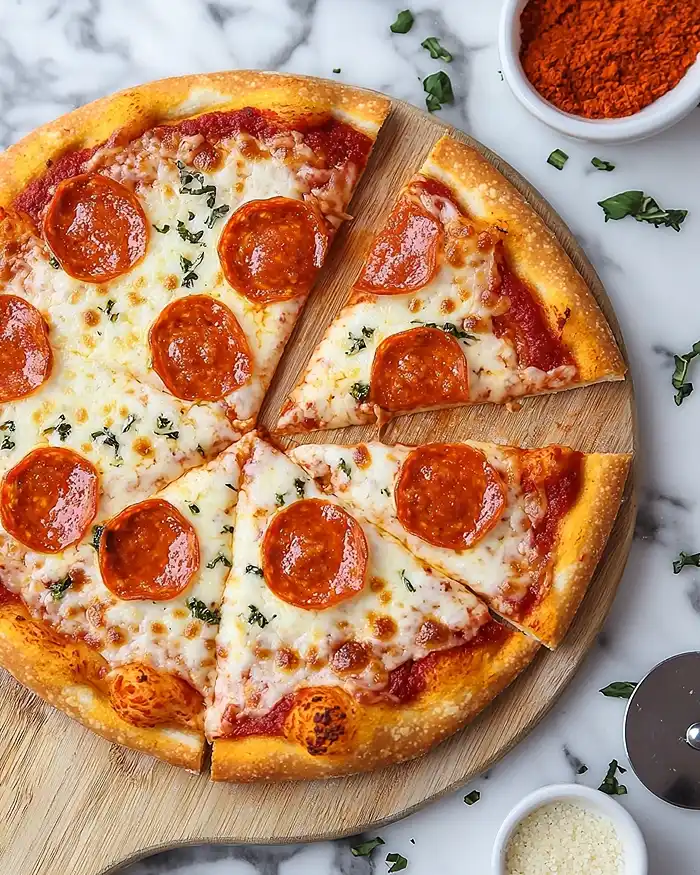
Serve immediately while the crust is still crackly on the outside and tender inside. That’s when the texture peaks.
Tips, Variations, and Serving Suggestions
Expert Tips for Best Results
Weigh your gluten-free flour for accuracy. Cup measurements vary wildly with these blends, leading to dry or wet dough.
Use a pizza steel instead of a stone if possible. Steel conducts heat 20 times faster than ceramic, creating restaurant-quality crust at home. Lodge makes an affordable 14-inch version.
Don’t over-top your pizza. Gluten-free crust handles less weight than wheat crust. Stick to ¾ cup sauce and 1 cup cheese for a 12-inch pizza.
Creative Variations
Margherita Style: Brush par-baked crust with garlic oil, add fresh mozzarella slices, halved cherry tomatoes, and fresh basil. Finish with olive oil drizzle and sea salt flakes.
BBQ Chicken: Swap pizza sauce for barbecue sauce, add rotisserie chicken, red onion, and smoked gouda. Finish with cilantro and ranch drizzle. Perfect for summer cookouts.
Breakfast Pizza: Top par-baked crust with scrambled eggs, crumbled breakfast sausage, shredded cheddar, and diced bell peppers. Add hot sauce before serving. Game-changer for lazy Sunday mornings.
Mediterranean Veggie: Spread hummus instead of sauce, top with roasted red peppers, artichoke hearts, kalamata olives, feta, and spinach. This variation pairs beautifully with crispy roasted chickpeas as a side.
White Pizza: Skip tomato sauce entirely. Brush with garlic butter, add ricotta dollops, mozzarella, parmesan, and finish with arugula after baking.
Storage and Make-Ahead Magic
Refrigerate unbaked dough in an airtight container for up to 24 hours. Let it sit at room temperature 30 minutes before shaping. The flavor actually improves overnight as ingredients meld.
Par-baked crusts freeze beautifully for 3 months. Wrap individually in plastic, then foil. Thaw at room temperature, add toppings, and bake from step 9.
Leftover pizza reheats best in a skillet. Heat over medium for 3-4 minutes until the bottom crisps and cheese melts. Microwave makes it soggy—avoid that mistake.
Storage Times and Freezing Instructions
| Storage Method | Duration | Best Use |
|---|---|---|
| Room temperature dough | 2 hours | Same-day baking |
| Refrigerated dough | 24 hours | Next-day pizza |
| Frozen par-baked crust | 3 months | Quick weeknight dinners |
| Refrigerated cooked pizza | 3-4 days | Lunch leftovers |
| Frozen cooked pizza | 2 months | Emergency meals |
Perfect Pairings
Serve this easy gluten free pizza recipe with a crisp Caesar salad and garlic knots. Homemade snack bars make excellent appetizers while guests wait for pizza.
Italian red wines like Chianti or Montepulciano complement tomato-based pizzas. For white pizza, try Pinot Grigio. Root beer floats keep things family-friendly for kids.
Man, oh man, this pairs well with dark chocolate dessert bars for a complete Italian-American feast experience.
gluten free pizza crust recipe FAQs
Can you freeze gluten free pizza dough before baking?
Yes, freeze the mixed dough in an oiled freezer bag for up to 2 months. Thaw overnight in the fridge, then let it sit at room temperature for 45 minutes before shaping. The texture stays remarkably similar to fresh dough.
What makes this the best gluten-free pizza crust compared to store-bought?
Store-bought crusts often contain excessive starches and lack the protein from almond flour that creates chewiness. This recipe’s psyllium husk and double-rise method develop authentic texture and flavor that pre-made versions can’t match at any price point.
How do you prevent gluten free pizza dough from being gummy?
Par-baking the naked crust for 15-20 minutes removes excess moisture before adding toppings. Also, using a preheated pizza steel creates intense bottom heat that crisps the base. Never skip these steps or you’ll get that characteristic gluten-free gumminess nobody wants.
Best way to make gluten free pizza dough crispy on the bottom?
Preheat your pizza steel or stone for 30 full minutes at 425°F before baking. Slide the pizza directly onto the steel after par-baking (not on the pan). The extreme heat creates the crispy, golden bottom that rivals traditional pizzerias.
Conclusion
You know what? Living gluten-free doesn’t mean settling for sad, cardboard pizza anymore. This gluten free pizza crust recipe proves you can have authentic texture, real flavor, and family pizza nights without compromise.
The psyllium husk trick, the double rise, the pizza steel—these aren’t just fancy techniques. They’re your ticket back to pizza joy. My kids now request this over delivery every single Friday.
Ready to reclaim pizza night? Grab that gluten-free flour blend and let’s make magic happen in your kitchen. And hey, when you pull that first perfect pie from your oven, snap a photo and tag us—I want to celebrate with you.
What toppings are calling your name for your first gluten-free masterpiece?
Tasty at Home – Where bold flavors meet everyday kitchens.