
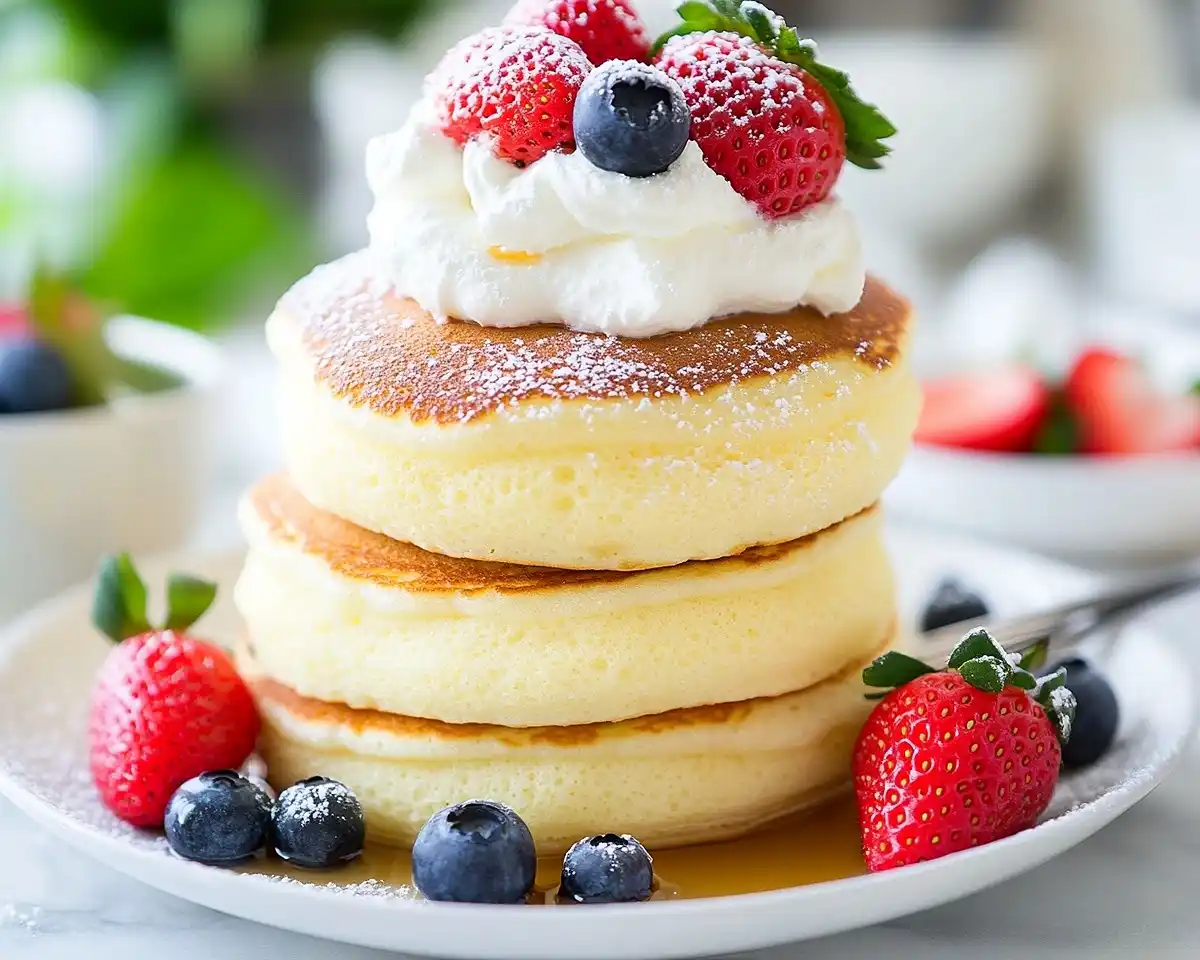
Discover how to make the most Fluffy Japanese Pancakes (Soufflé Style) right in your own kitchen — tall, jiggly, and honestly almost too pretty to eat.
The first time I saw a plate of Japanese soufflé pancakes wobble like little clouds, I nearly lost my mind. I had to figure out how to make them at home, and after a lot of failed meringues and one very flat batch, I finally cracked the code.
These beauties are worth every single step. Trust me on this one.
Table of Contents
What Makes These Japanese Pancakes So Special?
We’re talking about ultra-thick, cloud-like pancakes that have that iconic jiggle when you shake the plate. They’re soft on the outside, custardy in the middle, and nothing like the flat pancakes you grew up with.
The secret is a stiff meringue folded into the yolk batter — it’s the air in those egg whites that gives these Fluffy Japanese Soufflé Pancakes their signature height and bounce.
Top them with fresh whipped cream, berries, and a dusting of powdered sugar, and you’ve basically made breakfast into a dessert. No complaints here.
Fluffy Japanese Pancakes (Soufflé Style)
Equipment
- Nonstick frying pan with lid
- mixing bowls
- Hand mixer or stand mixer
- Whisk
- spatula
Ingredients
Batter Base
- 2 large eggs separated
- 1.5 Tbsp whole milk
- 0.25 tsp vanilla extract
- 0.25 cup cake flour
- 0.5 tsp baking powder
- 2 Tbsp sugar
Cooking
- 1 Tbsp neutral oil for greasing
- 2 Tbsp water for steaming
Whipped Cream (optional)
- 0.5 cup heavy cream
- 1.5 Tbsp sugar
Toppings
- 1 Tbsp confectioners’ sugar
- fresh berries as desired
- maple syrup as desired
Instructions
- Prepare whipped cream if using by whisking cold heavy cream and sugar over an ice bath until medium to firm peaks form. Refrigerate until ready.
- Separate eggs and place egg whites in the freezer for 15 minutes to chill.
- Whisk egg yolks with milk and vanilla until thick. Sift in cake flour and baking powder, then mix until smooth.
- Beat chilled egg whites until frothy, then gradually add sugar. Continue beating until stiff peaks form.
- Mix one-third of the meringue into the yolk batter to lighten it. Gently fold in the remaining meringue in two additions.
- Heat a greased nonstick pan to low heat (about 150°C). Spoon batter into tall stacks for each pancake.
- Add water to the pan, cover with a lid, and cook for 6–7 minutes, adding more batter layers as needed.
- Gently flip pancakes once bottoms release easily. Add more water, cover, and cook for another 4–5 minutes.
- Serve immediately with whipped cream, berries, powdered sugar, and maple syrup.
Notes
Ingredients You’ll Need
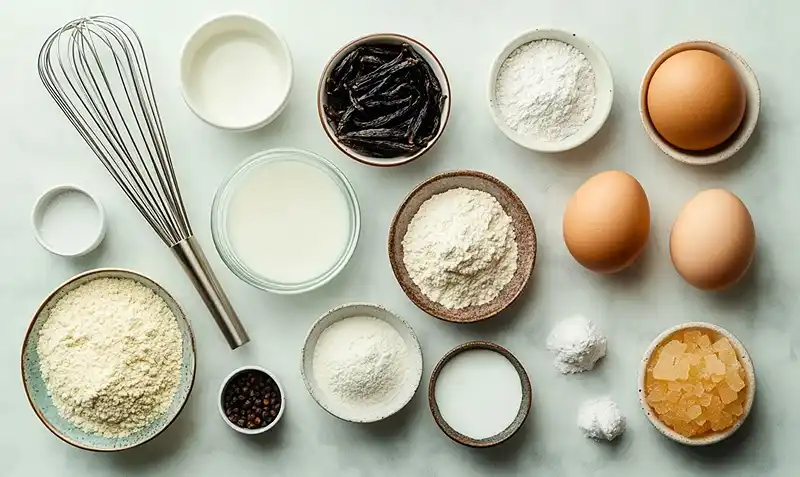
Here’s everything laid out for you. This recipe makes 3 gorgeous soufflé pancakes — the perfect amount for one hungry person or two people willing to share nicely.
| Category | Ingredient | Amount |
|---|---|---|
| Batter Base | Large eggs (50 g w/o shell) | 2 |
| Batter Base | Whole milk | 1½ Tbsp |
| Batter Base | Pure vanilla extract | ¼ tsp |
| Batter Base | Cake flour | ¼ cup |
| Batter Base | Baking powder | ½ tsp |
| Batter Base | Sugar | 2 Tbsp |
| Cooking | Neutral oil (for greasing) | 1 Tbsp |
| Cooking | Water (for steaming) | 2 Tbsp |
| Whipped Cream (optional) | Heavy (whipping) cream | ½ cup |
| Whipped Cream (optional) | Sugar | 1½ Tbsp |
| Toppings | Confectioners’ sugar | 1 Tbsp |
| Toppings | Fresh berries (strawberries, blueberries) | As desired |
| Toppings | Maple syrup | As desired |
One important note: please use whole milk only for this recipe. Reduced-fat or plant-based milks make the batter too thin and your pancakes won’t puff up properly.
How to Make Fluffy Japanese Soufflé Pancakes Step by Step
Before You Start: Get Set Up Right
Gather all your ingredients first — this recipe moves fast once the meringue is whipped, so you don’t want to be scrambling for the baking powder mid-batter.
You’ll need a 12-inch nonstick frying pan with a lid. That size is key — you need room for 3 pancakes side by side. An infrared thermometer to check pan temperature is a helpful bonus too.
One more thing: mix and cook only one batch of batter at a time. If the batter sits too long, it deflates and your pancakes come out sad and flat. If you’re making multiple servings, use separate pans at the same time.
Make the Whipped Cream First (Optional but Highly Recommended)
If you’re going the whipped cream route — and you should — make it before anything else. Set up an ice bath: fill a large bowl with ice and water, then place a smaller bowl on top.
Add ½ cup heavy cream and 1½ Tbsp sugar to the cold bowl. Whisk on high until you get medium to firm peaks — it should be soft and fluffy, not runny. Keep it chilled until pancake time.
Mix the Egg Yolk Batter
Separate your 2 eggs into two different bowls. Here’s the trick most people skip: put the bowl of egg whites in the freezer for 15 minutes.
Cold egg whites whip up into a much more stable meringue. This is one of those little tips that makes a huge difference.
While you wait, whisk the egg yolks with 1½ Tbsp whole milk and ¼ tsp vanilla extract until thick and frothy. Then sift in ¼ cup cake flour and ½ tsp baking powder, and whisk to combine. Don’t overmix — just until smooth. Set it aside.
Whip the Meringue to Stiff Peaks
After 15 minutes, pull those egg whites out of the freezer — they should be half-frozen around the edges. Start beating them with a hand mixer.
Once they turn frothy and opaque, gradually add 2 Tbsp sugar, about one-third at a time. Crank the mixer up to high and beat until you hit stiff peaks — that means the meringue holds a point straight up when you lift the beaters. This takes about 2 minutes at high speed.
Tip: If you’re using a stand mixer, pause when the meringue is almost done. Hand-mix the looser egg whites near the bowl edges into the stiffer center, then resume beating. This gives you an even texture throughout.
Be careful not to overbeat. Overbeaten meringue gets grainy and stiff — it won’t fold into the batter properly and your Japanese soufflé pancakes will suffer for it.
Fold the Meringue into the Batter
Now for the most delicate part of the whole operation. Start heating your nonstick pan to 300°F (150°C) on the lowest heat. Brush it with 1 Tbsp neutral oil and blot off any excess with a paper towel — too much oil makes spotty pancakes.
Take one-third of the meringue and add it to the egg yolk mixture. Whisk it in — it’s okay to be a little rough here, this first addition is just to lighten the batter.
Next, fold in half of the remaining meringue very gently with a whisk. Then pour the yolk mixture into the bowl with the last of the meringue and fold everything together with a light hand.
The goal is to keep as much air in the batter as possible. Think slow, sweeping folds — not stirring. The final batter should be airy, light, and homogenous.
Cook the Pancakes Low and Slow
Keep your pan at a steady 300°F (150°C) on the lowest heat setting throughout cooking. Use a small ladle or large serving spoon (about 2–3 Tbsp capacity) to scoop the batter.
For each pancake, place one scoop in the pan and stack another scoop on top — build tall, not wide. Do this for all three pancakes. By the time you’ve done the third one, the surface of the first is slightly dry, so go back and add a third scoop to each.
Add 1 Tbsp water to empty spaces in the pan and cover with the lid. Set a timer for 6–7 minutes. The steam is what keeps these soufflé pancakes moist while they cook through from the inside.
After about 2 minutes, open the lid and add one final scoop of batter to each pancake, stacking it high. If the water’s evaporated, add a splash more. Cover again and let them cook.
The Flip — Handle with Love
After 6–7 minutes total, very gently test the bottom with an offset spatula. If a pancake feels stuck, do not force it. Give it another minute or two — forcing it will crack the middle.
When they release easily, use a gentle rolling motion to flip them. Pull the pancake slightly to one side to create space, then roll it over rather than straight-flipping it.
Add another 1 Tbsp water to the pan, cover, and cook the second side on the lowest heat for 4–5 more minutes. Once both sides are golden brown, transfer to serving plates immediately.
Serve and Enjoy
This is the fun part. Add a big dollop of fresh whipped cream, scatter some berries on top, dust generously with confectioners’ sugar, and drizzle with maple syrup.
Your Fluffy Japanese Pancakes (Soufflé Style) are ready. Give the plate a gentle shake and watch them wobble. It never gets old.
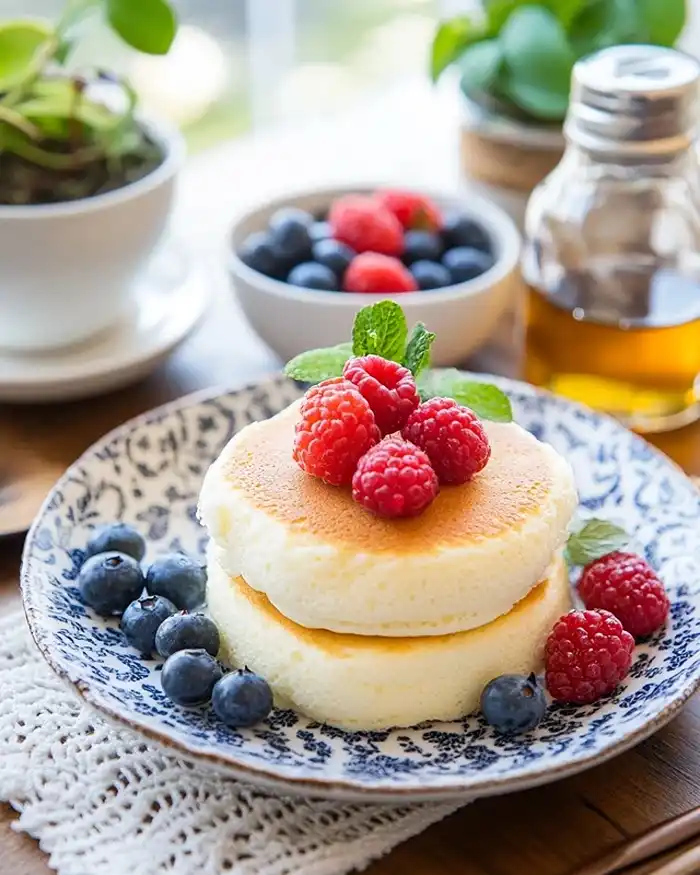
Expert Tips for the Fluffiest Japanese Pancakes Every Time
Nail the Meringue
The meringue is everything in this soufflé pancake recipe. Underbeating leaves it weak and runny. Overbeating makes it dry and grainy. You want stiff, glossy peaks — the sweet spot that holds air beautifully.
Make sure your egg white bowl is completely clean and dry. Even a trace of yolk or grease will prevent proper whipping. When in doubt, wipe the bowl with a little lemon juice or white vinegar first.
Temperature Control Is Everything
Low and slow is the only way to cook these Japanese pancakes without burning the outside before the inside sets. If your pan gets too hot, the bottoms will scorch while the centers stay raw.
An infrared thermometer is your best friend here. Aim for a consistent 300°F (150°C) throughout the whole cook time.
Weigh Your Flour
For the most consistent results, use a kitchen scale to measure your cake flour. Volume measurements can vary wildly depending on how you scoop. Too much flour makes a dense batter that won’t rise properly.
If you don’t have a scale, use the fluff and sprinkle method — loosen the flour in the bag, spoon it into the measuring cup, and level off with a straight edge. Never scoop directly from the bag.
Variations to Try
Matcha Soufflé Pancakes
Add 1 tsp of high-quality matcha powder to the egg yolk batter for an earthy, slightly bitter twist. It pairs beautifully with sweet red bean paste or white chocolate drizzle as toppings.
Chocolate Soufflé Pancakes
Swap 1 Tbsp of the cake flour for 1 Tbsp unsweetened cocoa powder. The result is a rich, fudgy pancake that’s completely over the top in the best way possible.
Citrus Zest Twist
Add a teaspoon of fresh lemon or orange zest to the yolk mixture for a bright, fresh flavor. It cuts through the richness and makes the pancakes feel a little lighter.
Troubleshooting Your Soufflé Pancakes
Why Did My Pancakes Collapse?
This is the most common heartbreak with this fluffy Japanese soufflé pancakes recipe. It almost always comes down to two things: improper meringue or undercooking.
If the inside isn’t fully cooked, there’s no structure holding the pancake up. Once the temperature drops, it deflates. Always cook on low heat long enough that the inside sets completely before you take it off the pan.
Why Are My Pancakes Flat?
Flat pancakes usually mean the batter deflated before it hit the pan. This can happen if you overmixed when folding in the meringue, or if the batter sat too long before cooking.
Move quickly once the meringue is ready — fold, scoop, and cook without delay. Treat that batter like it’s precious, because honestly, it is.
Why Are the Bottoms Burning?
Your pan is too hot. These Japanese pancakes need the lowest possible heat setting. Even if it feels like nothing is happening, trust the process and keep the heat low.
Storage and Reheating
| Storage Method | Container | Duration |
|---|---|---|
| Refrigerator | Airtight container | Up to 2 days |
| Freezer | Not recommended | Texture suffers |
Honestly? These soufflé pancakes are best eaten immediately. The fluffiness is at its absolute peak right off the pan, and it does fade over time. If you have leftovers, refrigerate them in an airtight container.
To reheat, use a covered nonstick pan on the lowest heat with a tiny splash of water for steam — about 3–4 minutes. This revives some of the softness. Avoid the microwave if you can; it tends to make them rubbery.
No-Waste Kitchen Ideas
If the pancakes deflate before you get to eat them, don’t toss them. Crumble them up, layer with whipped cream and berries in a glass, and call it a trifle. Problem solved, dessert upgraded.
Leftover whipped cream keeps in the fridge for up to 24 hours. Spoon it over hot cocoa, fresh fruit, or classic French toast the next morning.
Fluffy Japanese Pancakes FAQs
Can I make these fluffy Japanese pancakes without a lid?
The lid is really important because it traps steam, which helps the pancakes cook through evenly and stay moist. Without it, the outside will set before the inside cooks, and they’ll likely collapse. If you don’t have a lid that fits your pan, a large sheet of foil tented over the top can work in a pinch.
Can I use all-purpose flour instead of cake flour?
Cake flour has a lower protein content, which gives the pancakes their delicate, tender crumb. All-purpose flour will work in a pinch, but the texture will be slightly denser and chewier. For the best results with this soufflé pancake recipe, stick to cake flour or make your own by replacing 2 Tbsp of every cup of all-purpose flour with cornstarch.
Why did my meringue turn grainy?
Grainy meringue is a sign of overbeating — you’ve pushed past stiff peaks into dry and broken territory. Unfortunately, there’s no saving it at that point, and you’ll need to start over with fresh egg whites. Watch your meringue closely in those last 30 seconds of beating and stop as soon as you hit firm, glossy peaks.
Can I double the recipe?
You can double the ingredients, but mix and cook only one batch of batter at a time. If the meringue batter sits and waits while another batch cooks, it will deflate. The best approach is to have two pans going on the stove simultaneously so you can cook both batches at once.
Do I really need a kitchen scale for this recipe?
For the best and most consistent results with these Japanese soufflé pancakes, a scale genuinely makes a difference — especially for the flour. Volume measurements can vary a lot depending on how you scoop, and even a small amount of extra flour can make the batter too heavy to rise properly. That said, if you’re careful with the fluff-and-level method, it can still work.
Ready to Make the Fluffiest Pancakes of Your Life?
If you’ve made it this far, you have everything you need to pull off a stunning plate of Fluffy Japanese Pancakes (Soufflé Style) at home. Yes, they take a little practice and patience — but that first perfect wobble makes it all worth it.
Give this soufflé pancake recipe a try this weekend, and let me know how it went in the comments below. Did they come out tall and jiggly? Did you try a fun variation?
And if you loved them, please share this recipe on Pinterest so other pancake lovers can find it too! Your saves and shares genuinely help this little corner of the internet grow.