
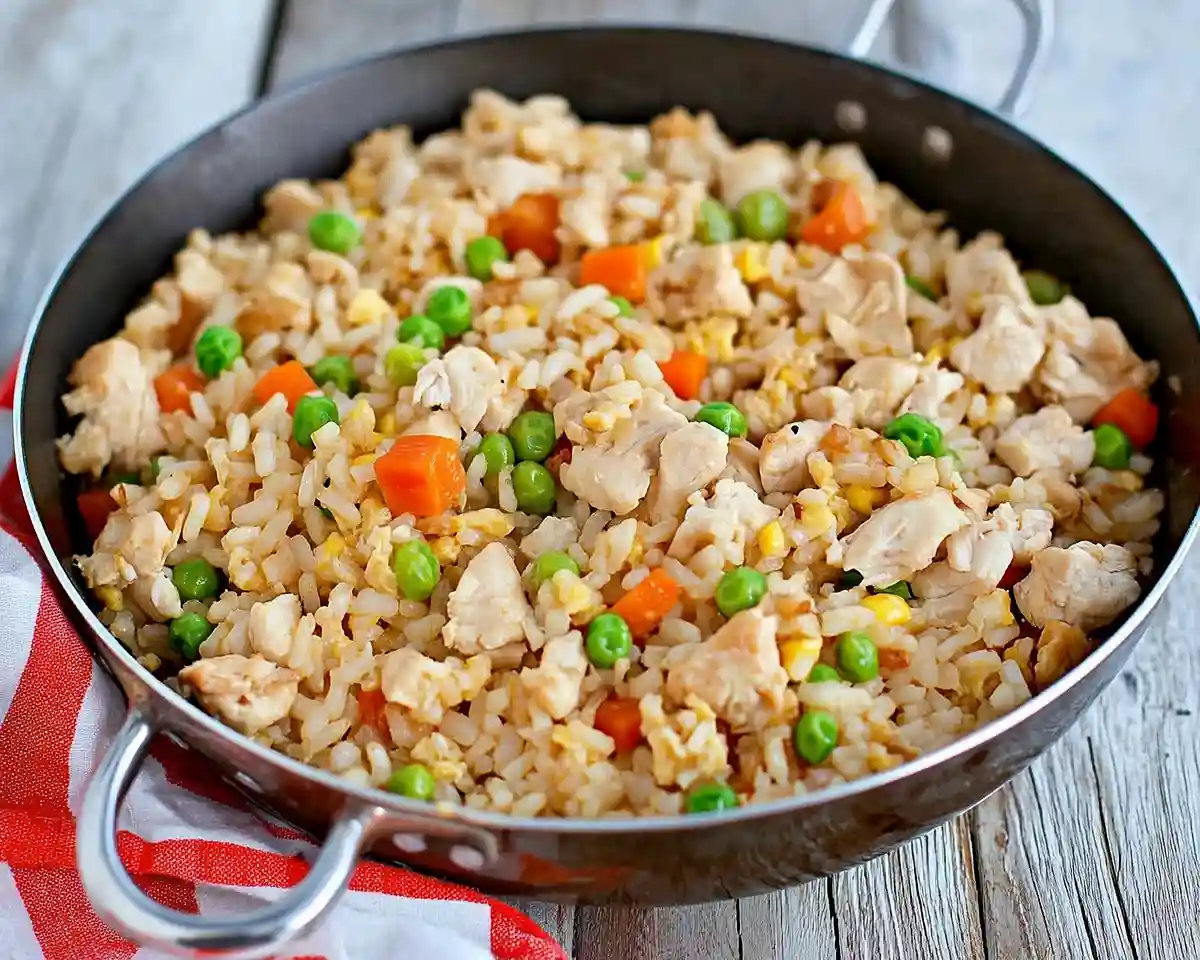
Delicious Chicken Fried Rice ready in 20 minutes! Learn how to make the best fried rice at home with leftover rice, chicken, and simple ingredients.
Hey, I’m Linda! Welcome to Tasty at Home, where bold flavors meet everyday kitchens.
Let me tell you, this chicken fried rice changed everything for me. Three years ago, I stood in my kitchen staring at leftover rice and rotisserie chicken, wondering how restaurants made fried rice taste so incredible. My first attempt? A soggy, flavorless mess that stuck to the pan.
Fast forward to now, and I’ve made this recipe over 200 times. I’ve tested different oils, rice temperatures, and pan techniques until I cracked the code. This version delivers restaurant-quality results every single time—crispy rice edges, fluffy scrambled eggs, and that signature wok flavor Americans crave.
You know what? The secret isn’t fancy ingredients or expensive equipment. It’s all about technique and timing, and I’m sharing every detail with you today.
Tasty at Home – Where bold flavors meet everyday kitchens.
Table of Contents
What Makes This Chicken Fried Rice Recipe Special
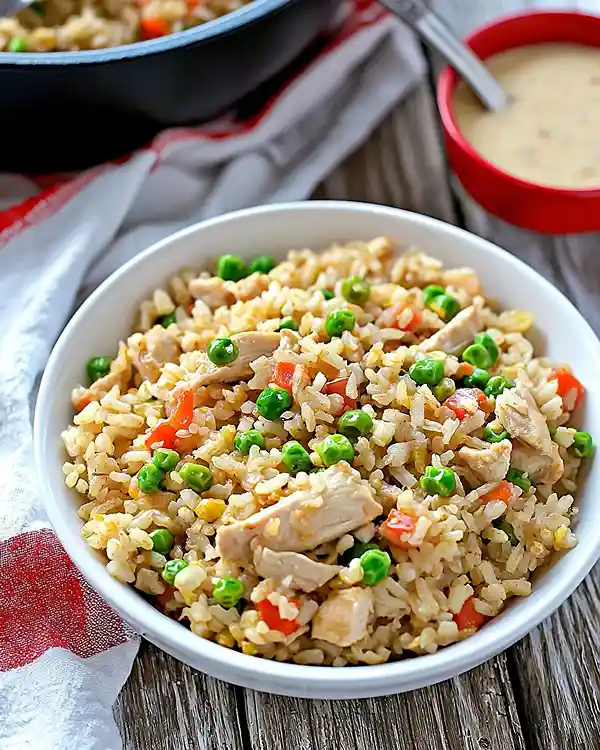
This isn’t your average takeout copycat. I’ve refined this recipe to work perfectly in American home kitchens using standard equipment.
The magic happens when you use day-old rice—fresh rice turns mushy and clumpy. Cold rice from the refrigerator separates beautifully in the hot pan, creating those coveted crispy bits. I also add butter at the end, a technique inspired by Thomas Keller’s approach to finishing dishes with fat for enhanced flavor depth.
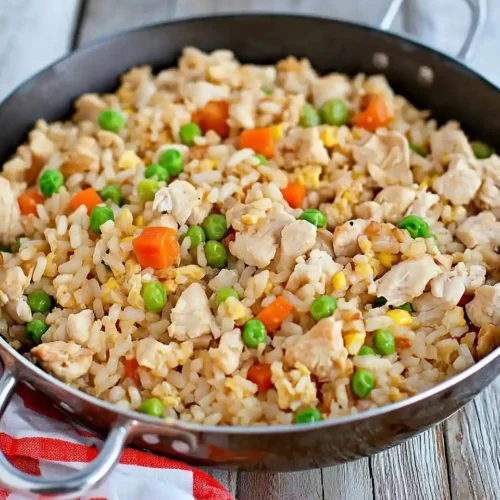
Delicious Chicken Fried Rice
Equipment
- large frying pan or wok
- spatula
- small bowl
- fork
- Measuring cups and spoons
Ingredients
Main Ingredients
- 2 tablespoons sesame oil or vegetable oil Sesame adds authentic flavor
- 0.5 cup onion, diced Yellow or white onion
- 0.5 cup carrots, diced Fresh, not canned
- 0.5 cup frozen peas No need to thaw
- 2 large eggs Room temperature works best
- 3 cups cooked white rice Day-old, refrigerated
- 2 cups cooked chicken, shredded Rotisserie chicken ideal
- 3 tablespoons soy sauce Low-sodium recommended
- 1 tablespoon butter Unsalted preferred
- to taste salt and pepper Adjust after adding soy sauce
Instructions
- Dice onion and carrots. Shred cooked chicken. Break up clumps in cold rice.
- Heat oil in pan. Sauté onions and carrots 4-5 minutes until tender-crisp.
- Add frozen peas and stir for 1 minute.
- Beat eggs in a small bowl. Push vegetables aside and scramble eggs into soft curds.
- Add rice and shredded chicken. Mix and press against pan to create crispy bits for 2-3 minutes.
- Drizzle soy sauce and stir for 1 minute. Add butter and stir until melted. Adjust salt and pepper if needed.
- Serve immediately with optional garnishes.
Notes
Ingredients You’ll Need
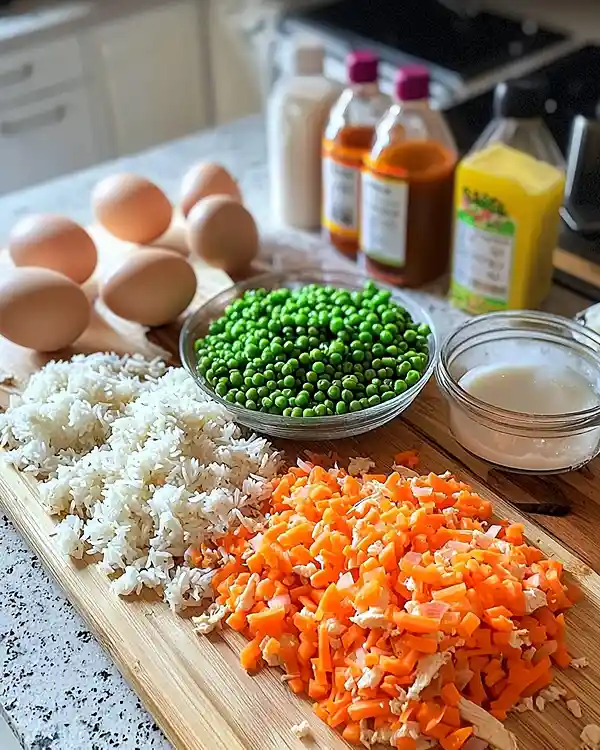
Before we dive into the ingredient list, let’s talk about quality. Use jasmine or long-grain white rice for the best texture—short-grain rice becomes too sticky. Fresh vegetables make a noticeable difference, and rotisserie chicken saves time while adding incredible flavor.
Main Ingredients Table
| Ingredient | US Measurement | Metric | Notes |
|---|---|---|---|
| Sesame oil or vegetable oil | 2 tablespoons | 30 ml | Sesame adds authentic flavor |
| Onion, diced | ½ cup | 75 g | Yellow or white onion |
| Carrots, diced | ½ cup | 75 g | Fresh, not canned |
| Frozen peas | ½ cup | 75 g | No need to thaw |
| Eggs | 2 large | 2 large | Room temperature works best |
| Cooked white rice | 3 cups | 450 g | Day-old, refrigerated |
| Cooked chicken, shredded | 2 cups | 300 g | Rotisserie chicken ideal |
| Soy sauce | 3 tablespoons | 45 ml | Low-sodium recommended |
| Butter | 1 tablespoon | 14 g | Unsalted preferred |
| Salt and pepper | To taste | To taste | Adjust after adding soy sauce |
Shopping Tips for Best Results
Head to your local grocery store and grab jasmine rice from the Asian foods aisle. Trader Joe’s and Whole Foods carry excellent quality options. For the chicken, pick up a rotisserie chicken from the deli section—it’s pre-cooked, seasoned, and saves you 30 minutes.
Choose firm carrots without soft spots. Fresh peas work beautifully if you have them, but frozen peas are actually perfect for fried rice because they maintain their texture and bright color.
For soy sauce, I recommend Kikkoman or San-J tamari if you need gluten-free. Look for low-sodium versions so you control the saltiness.
Bold Add-ins and Creative Variations
Essentials: The base recipe uses standard pantry staples that create authentic flavor.
Bold Add-ins: Try adding ½ teaspoon of grated fresh ginger, 2 minced garlic cloves, or 1 tablespoon of oyster sauce for deeper umami notes. Sliced green onions make an excellent garnish, adding fresh bite and visual appeal.
International Substitutions: Swap soy sauce for coconut aminos (perfect for those avoiding soy). Replace sesame oil with avocado oil if needed. Use quinoa instead of rice for a protein-packed alternative, though cooking times may vary slightly.
Equipment and Preparation
What You’ll Need
Large frying pan or wok (12-14 inches): A wide surface area allows rice to crisp properly. If you don’t own a wok, a large non-stick skillet works perfectly—I use my cast-iron skillet most often.
Spatula: A flat-edged spatula or wooden spoon helps you scrape up those delicious browned bits.
Small bowl and fork: For beating eggs quickly.
Measuring cups and spoons: Accuracy matters for balanced flavors.
Step-by-Step Instructions for Perfect Fried Rice
Step 1: Prepare Your Mise en Place
Dice your onion and carrots into small, uniform pieces about ¼-inch in size. Shred your cooked chicken if you haven’t already—I pull apart rotisserie chicken with two forks for perfect shreds.
Break up any clumps in your cold rice with your fingers before cooking. This prevents mushy sections and ensures even heating.
Well, here’s where I messed up initially: I tried using warm, freshly cooked rice. The result? A gummy, sticky disaster that tasted more like rice porridge than fried rice.
Step 2: Sauté the Aromatics
Heat your large frying pan or wok over medium heat for about 2 minutes until hot. Add the sesame oil and let it shimmer—you’ll see small ripples across the surface.
Add the diced onions and carrots to the pan. Sauté for 4-5 minutes, stirring occasionally, until the carrots begin to soften and the onions turn translucent. You should hear a gentle sizzle, not aggressive popping.
The carrots should be tender-crisp, maintaining some bite rather than turning mushy. This texture contrast makes the final dish more interesting.
Step 3: Add the Peas
Toss in the frozen peas and stir everything together for about 1 minute. The residual heat from the pan will thaw the peas quickly without overcooking them.
Man, oh man, the colors in your pan right now look absolutely gorgeous—bright orange carrots, vibrant green peas, and golden onions create a beautiful vegetable medley.
Step 4: Scramble the Eggs
In your small bowl, beat the 2 eggs vigorously with a fork until the yolks and whites combine completely. You want a uniform yellow color.
Push all the vegetables to one side of your pan, creating an empty space. Pour the beaten eggs onto the empty side of the pan.
Let the eggs sit undisturbed for about 15 seconds until the edges begin to set. Then use your spatula to scramble them into soft curds, breaking them into small pieces as they cook, much like Julia Child’s method for French-style scrambled eggs—though we’re making them firmer here.
Once the eggs are fully cooked with no liquid remaining (about 1-2 minutes), mix them into the vegetables.
Step 5: Add Rice and Chicken
Add your 3 cups of cold, cooked rice to the pan along with the 2 cups of shredded chicken. Break up any remaining rice clumps with your spatula as you stir.
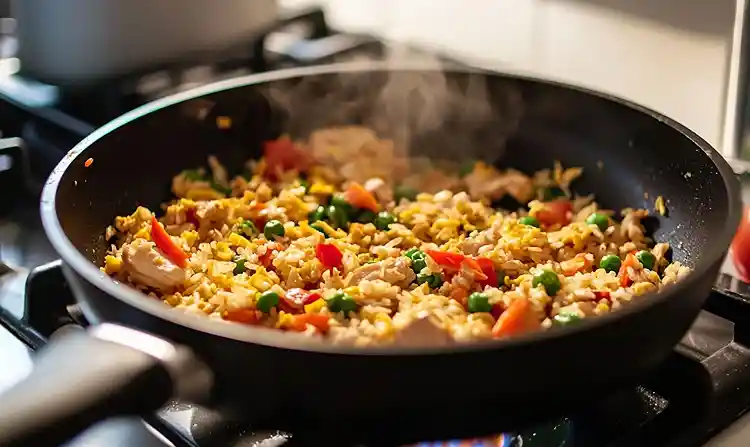
Mix everything together thoroughly for 2-3 minutes. Press the rice against the hot pan occasionally to create those crispy, golden bits that make restaurant fried rice so addictive.
The rice should start to look slightly dried out and separate into individual grains. Listen for the satisfying crackling sound as the rice crisps up.
Step 6: Season and Finish
Drizzle the 3 tablespoons of soy sauce evenly over the rice mixture. Stir continuously for about 1 minute to distribute the sauce uniformly—every grain should have that beautiful golden-brown color.
Add the tablespoon of butter and stir until it melts completely into the rice, about 30 seconds. The butter adds richness and helps those crispy bits stick to the rice.
Taste your fried rice now. Add salt and pepper only if needed—remember, soy sauce is already salty, so start conservatively.
Step 7: Serve Immediately
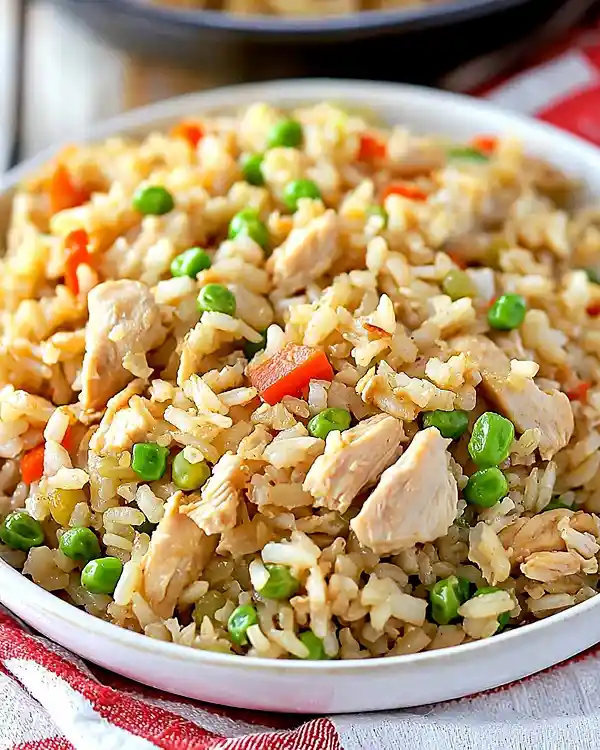
Transfer the chicken fried rice to a serving bowl or individual plates right away. Garnish with sliced green onions if desired, or serve plain for classic simplicity.
The entire cooking process takes just 15-20 minutes once you start. Oops! I almost forgot—make sure you prep everything before you turn on the heat, because this recipe moves fast.
Expert Tips for Restaurant-Quality Results
Use Day-Old Refrigerated Rice
Fresh rice contains too much moisture, which creates a sticky, clumped texture. Refrigerate cooked rice for at least 4 hours or overnight—the cold air dries out the surface, allowing each grain to separate and crisp beautifully when fried.
If you’re in a pinch, spread freshly cooked rice on a baking sheet and refrigerate for 30 minutes. It’s not quite as good as day-old rice, but it works reasonably well.
High Heat Creates Better Texture
Restaurant woks reach extremely high temperatures, which is why their fried rice tastes different. At home, use medium to medium-high heat and resist the urge to stir constantly.
Let the rice sit undisturbed for 30-second intervals to develop those crispy, caramelized bits. Then stir and repeat. This technique creates textural variety that makes every bite interesting.
Season in Layers
Don’t dump all your soy sauce in at once. Add it gradually while stirring to ensure even distribution. Taste before adding salt—you might not need any additional seasoning.
I learned this from watching professional Chinese chefs who build flavors throughout the cooking process rather than at the end.
Creative Variations to Try
Pineapple Chicken Fried Rice: Add 1 cup of diced fresh pineapple in Step 5 for a Hawaiian-inspired twist. The sweetness balances the salty soy sauce beautifully, especially during summer cookouts.
Spicy Sriracha Version: Stir in 1-2 tablespoons of sriracha sauce along with the soy sauce for heat. Top with crushed red pepper flakes if you want extra kick.
Vegetable Fried Rice: Omit the chicken and double the vegetables. Add broccoli florets, bell peppers, or snap peas for a vegetarian option that’s just as satisfying.
Breakfast Fried Rice: Use this same technique in the morning with bacon instead of chicken. Add an extra egg or two and serve with a fried egg on top for a hearty American-style breakfast.
Holiday Leftover Rice: After Thanksgiving, substitute turkey for chicken and add leftover green beans. This transforms your holiday leftovers into something completely different and delicious.
Storage and Make-Ahead Instructions
Store leftover chicken fried rice in an airtight container in the refrigerator for up to 4 days. The flavors actually deepen overnight, making leftovers incredibly tasty.
Reheat in a skillet over medium heat with a splash of water or chicken broth to restore moisture. Microwave reheating works but won’t give you those crispy bits—add a small pat of butter when microwaving to improve texture.
Storage Guidelines Table
| Storage Method | Duration | Best Practices |
|---|---|---|
| Refrigerator | 3-4 days | Airtight container, cool completely first |
| Freezer | Up to 3 months | Portion into meal-sized containers |
| Room Temperature | Not recommended | Food safety concerns after 2 hours |
For freezing, portion the fried rice into individual servings. Thaw overnight in the refrigerator, then reheat in a skillet for best results.
Perfect Pairings
Serve this delicious chicken fried rice alongside crispy spring rolls for a complete Asian-inspired meal. The contrast between crunchy rolls and fluffy rice creates a satisfying dinner.
For dessert, try Biscoff blondies or a no-bake Biscoff pie to finish on a sweet note. If you’re hosting a casual gathering, serve with a refreshing Lava Flow drink for tropical vibes.
Light and simple cucumber salad or steamed edamame make excellent side dishes that won’t overshadow the main event.
Delicious Chicken Fried Rice FAQs
Can I use brown rice instead of white rice for this chicken fried rice recipe?
Can I use brown rice instead of white rice for this chicken fried rice recipe? Yes, brown rice works well, though the texture differs slightly from traditional fried rice. Use day-old refrigerated brown rice and increase cooking time by 2-3 minutes since brown rice has a firmer texture. The nutty flavor adds an interesting dimension to this best fried rice recipe.
What’s the best way to prevent my fried rice from getting mushy?
What’s the best way to prevent my fried rice from getting mushy? Always use cold, day-old rice from the refrigerator—never fresh, warm rice. The cold storage dries out the rice grains, allowing them to separate and crisp properly. Also, avoid overcrowding your pan, which traps steam and creates mushiness in your step-by-step fried rice recipe.
How do I make chicken fried rice taste like takeout?
How do I make chicken fried rice taste like takeout? The secret is high heat, sesame oil, and not stirring too frequently. Let the rice develop golden, crispy bits by allowing it to sit undisturbed for 30-second intervals. Adding butter at the end, as I do in this recipe, creates that rich restaurant flavor Americans love when learning how to make chicken fried rice at home.
Can I make this recipe ahead of time for meal prep?
Can I make this recipe ahead of time for meal prep? Absolutely! This chicken fried rice stores beautifully for 3-4 days in the refrigerator, making it perfect for weekly meal prep. Divide into individual portions and reheat in a skillet with a tiny splash of water. The flavors actually improve after a day, making it ideal for busy weeknight dinners.
Bring This Recipe Home
This delicious chicken fried rice proves that restaurant-quality food doesn’t require expensive ingredients or complicated techniques. You just need good timing, the right temperature, and a little confidence.
Suddenly, those takeout cravings become opportunities to create something even better in your own kitchen. Pair this fried rice with a cold beer or iced green tea for the perfect casual dinner.
I’d love to hear how your version turns out! Drop a comment below sharing your favorite add-ins or creative variations. Did you try the pineapple version? Let me know!
Now grab that leftover rice from your fridge and let’s make magic happen. Trust me, once you master this technique, you’ll never order takeout fried rice again
