
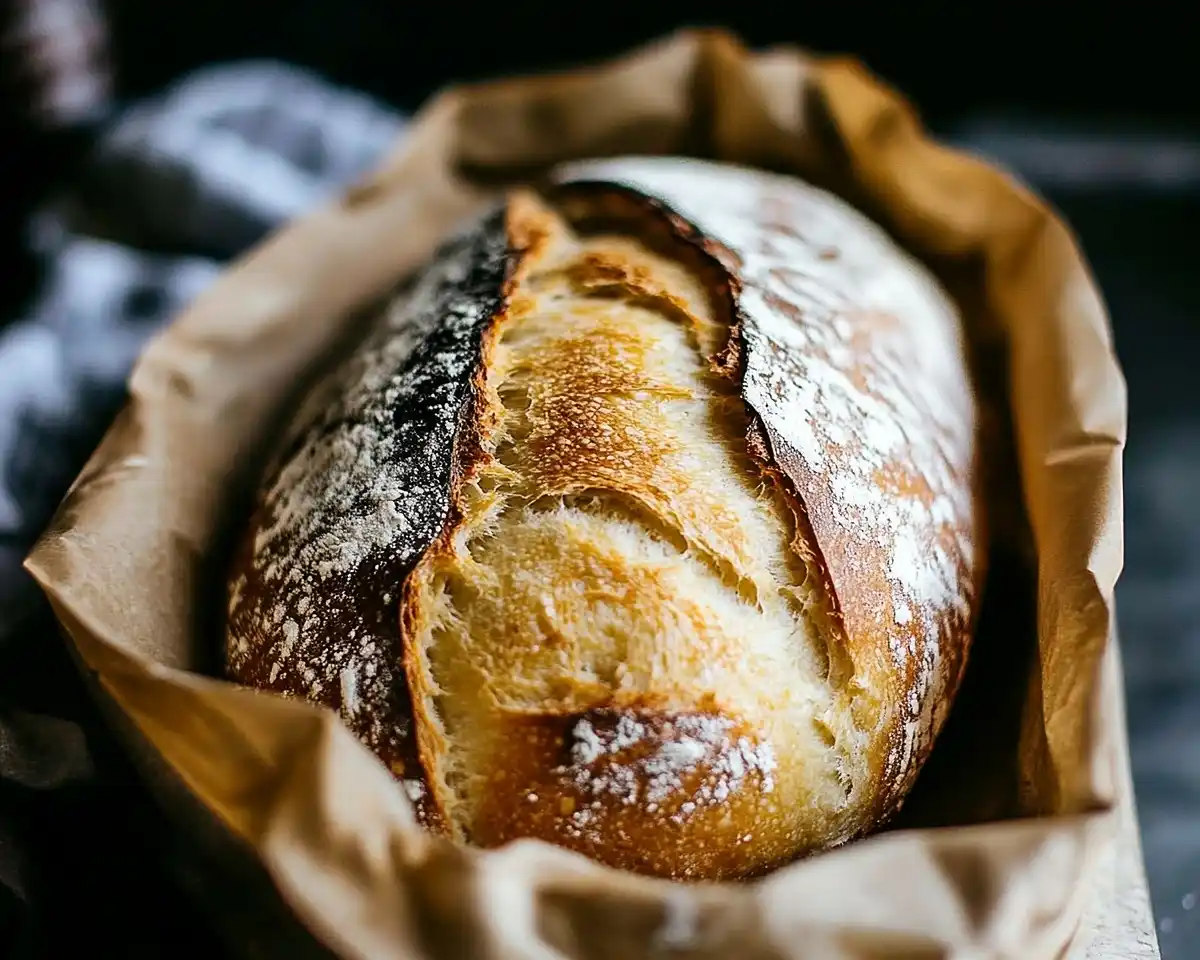
Craving bakery-style bread without the bakery price tag? This easy crusty French bread recipe is here to save the day — and your wallet. Just 5 ingredients, zero kneading, and you’ll have a gorgeous golden loaf that’ll make your whole kitchen smell like Paris.
I made this for the first time on a rainy Sunday afternoon, mostly because I was too lazy to go to the store. Turns out, laziness is the mother of invention — and also of really good bread.
Table of Contents
Why You’ll Love This Recipe
This is a true 5 ingredient French bread — yeast, sugar, water, salt, and flour. That’s it. No fancy equipment required beyond a Dutch oven, which honestly earns its keep with this recipe alone.
It’s the kind of easy crusty bread recipe that feels impressive but is genuinely forgiving. The dough is a bit shaggy and sticky at first, and that’s completely fine. Trust the process and the oven does the heavy lifting.
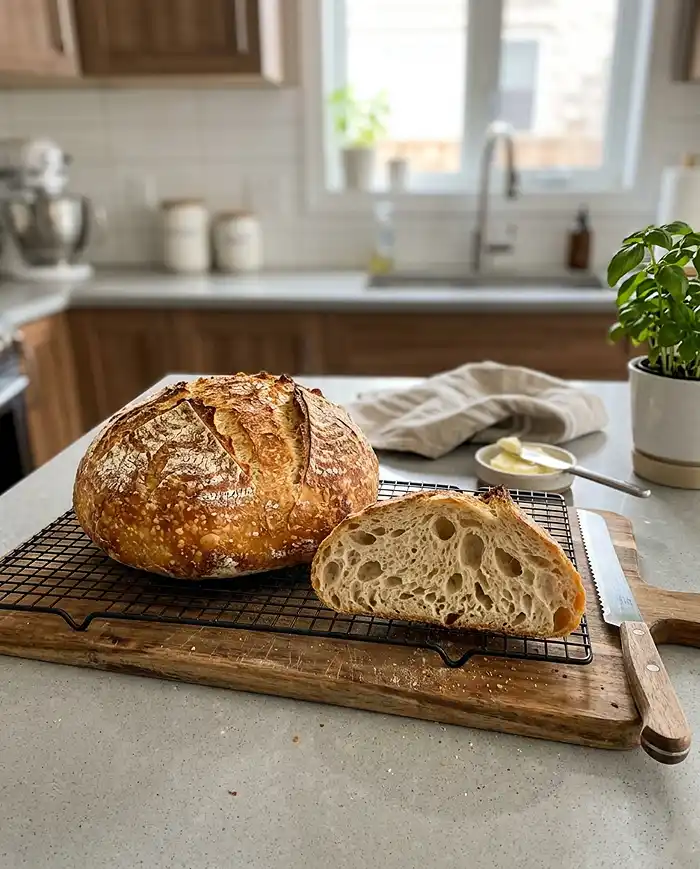
What you get at the end is a rustic, crackly crust with a chewy, airy crumb inside. Basically everything you want from an artisan bread simple enough to make on a weeknight.
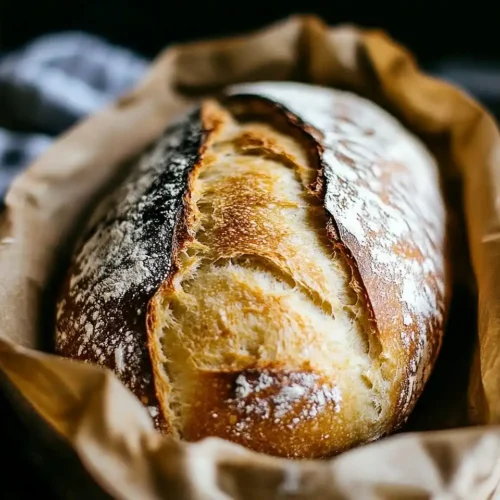
Easy Crusty French Bread
Equipment
- Dutch oven
- Mixing bowl
- spatula
- Proofing basket or bowl
- Parchment paper
Ingredients
Ingredients
- 2 ¼ tsp active dry yeast one packet
- 1 tsp sugar or honey
- 1 ¼ cups warm water
- 1 ¼ tsp kosher salt
- 2 ½ to 3 ½ cups all-purpose flour plus extra for dusting
Instructions
- Mix yeast, sugar, and warm water in a bowl. Let sit for 5 minutes until foamy.
- Add flour and mix, then add salt and continue mixing until no dry bits remain. Dough will be sticky.
- Cover and let rise for 1 hour until doubled in size.
- Turn dough onto floured surface without punching down. Fold edges toward center and shape into a round.
- Place in floured bowl or basket seam-side down. Cover and let rise for 30 minutes.
- Preheat oven to 460°F with Dutch oven inside for at least 30 minutes.
- Transfer dough onto parchment paper seam-side up. Carefully place into hot Dutch oven.
- Bake covered for 30 minutes, then uncovered for 10–15 minutes until golden brown.
- Remove and cool on rack for at least 30 minutes before slicing.
Notes
Ingredients You’ll Need
Here’s a quick look at everything that goes into this beautiful loaf. Simple pantry staples, nothing wild.
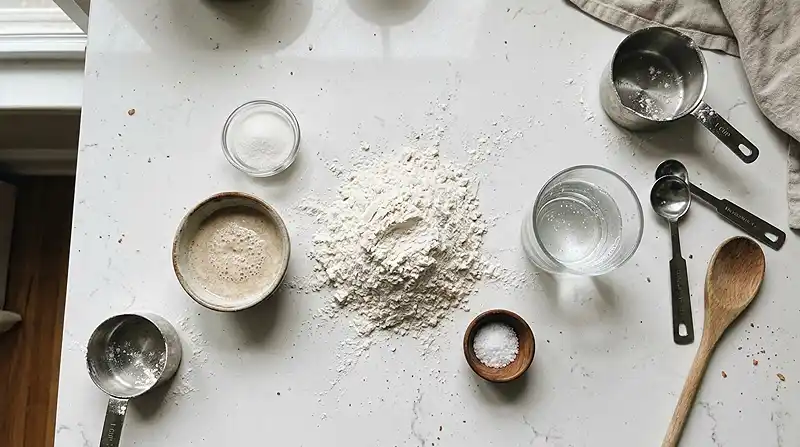
| Ingredient | Amount | Notes |
|---|---|---|
| Active dry yeast | 2 1/4 tsp (9g) | One standard packet works perfectly |
| Sugar | 1 tsp (4g) | Honey works great as a swap |
| Warm water | 1 1/4 cups (300g) | Should feel like warm bathwater |
| Kosher salt | 1 1/4 tsp (8g) | Don’t skip — flavor matters |
| All-purpose flour | 2 1/2 to 3 1/2 cups (400g) | Plus extra for dusting |
A quick note on the flour: start with the lower end of the range and add more as needed. Different brands absorb water differently, so don’t stress if your dough looks a little different from mine.
How to Make Easy Crusty French Bread
Ready to bake? Let’s walk through this step by step. The whole process takes about 2 hours — mostly hands-off rising time, so grab a coffee and relax.
Step 1: Mix the Dough and First Rise (1 Hour)
Combine your yeast, sugar, and warm water in a large mixing bowl. Give it a quick stir and let it sit for about 5 minutes until it gets foamy and bubbly. That foam means your yeast is alive and ready to party.
Add your flour to the bowl and mix with a sturdy spatula until the dough comes together. Then add the salt and keep mixing until everything is fully incorporated with no dry bits left.
The dough will look shaggy and feel sticky — that is totally normal! This is a slack (wet) dough, and it becomes smooth and elastic as it rises. Don’t add too much extra flour at this stage.
Cover the bowl with a clean tea towel and let it rise on your counter for about 1 hour, until it’s roughly doubled in size. Walk away. Go watch an episode of something. You’ve earned it.
Step 2: Shape the Dough and Final Rise (30 Min)
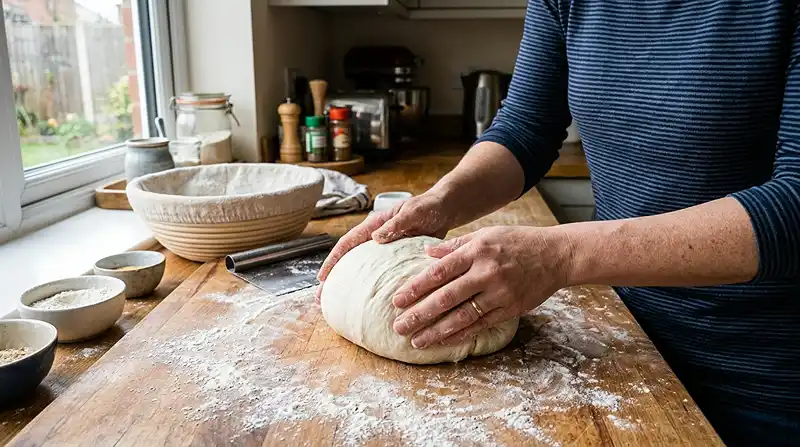
Once the dough has risen, lightly flour a large cutting board. Gently tip the dough out — and here’s a key tip: do not punch the dough down. All those bubbles you see? They’re the secret to a light, airy loaf. Protect them.
To shape it, pull each corner of the dough toward the center like you’re folding an envelope. Repeat until the dough feels tight and starts resisting. Flip it over and gently pull it into a round shape.
Flour a proofing basket or a medium bowl (lining it with a clean linen napkin helps a ton with cleanup). Place your shaped loaf in seam-side down. Cover and let rise another 30 minutes while you preheat the oven.
Step 3: Heat the Oven
Place an empty Dutch oven with its lid on into your oven and crank the heat to 460°F. Yes, that hot. The Dutch oven traps steam as the bread bakes, which is what gives you that gorgeous, crackly artisan crust.
Let it preheat for at least 30 minutes so the pot gets screaming hot. A cold Dutch oven will not give you the same results — patience here is key.
Step 4: Bake Your Bread
When the oven is ready, use oven mitts to carefully pull out the Dutch oven and remove the lid. Lay a piece of parchment paper on your counter — this makes transferring the bread so much easier.
Tip your dough gently out of the proofing basket onto the parchment, seam-side up this time. Those seams will open up into beautiful cracks on top as the bread bakes.
Use the sides of the parchment to lift the bread and lower it into the hot Dutch oven. Put the lid back on and slide it into the oven. Bake covered for 30 minutes.
After 30 minutes, remove the lid. The bread should look taller, pale, and just starting to color. Continue baking uncovered for another 10–15 minutes until the crust is a deep golden brown. Your kitchen should smell absolutely incredible right now.
Step 5: Cool and Slice
Use oven mitts to pull the Dutch oven out. Lift the bread out using the parchment paper or a long spatula and set it on a cooling rack. This is the hardest part: wait at least 30 minutes before cutting in.
Cutting too soon can make the inside gummy — the bread is still finishing up its bake internally. Thirty minutes of patience = a perfect crumb. Then slice, slather with butter, and enjoy every single bite.
Expert Tips for Perfect Results
Getting the Yeast Right
Make sure your water is warm but not hot — aim for around 100–110°F. Too hot and it kills the yeast. Too cold and it won’t activate. The foamy bubble stage after 5 minutes is your green light to proceed.
Shaping Without Stress
If the dough is sticking to the bowl during transfer, wet your hand with a little cold water and gently ease it out. This no knead French bread method is designed to be low-effort — don’t fight the dough, just coax it.
Dutch Oven Alternatives
No Dutch oven? You can use a cast iron skillet covered with an oven-safe bowl, or a covered casserole dish that can handle high heat. The goal is just to trap steam in those first 30 minutes of baking.
Flavor Variations to Try
Once you’ve nailed the base recipe, get creative! Fold in a handful of rosemary and roasted garlic before shaping. Or try adding some shredded parmesan for a cheesy twist on this classic easy crusty French bread.
Want something a little sweeter? Swap the sugar for honey as listed in the ingredients — it adds a subtle depth and helps the crust brown more beautifully.
Storage Instructions
Homemade bread doesn’t have preservatives, so here’s how to keep it fresh as long as possible.
| Storage Method | How Long | Best Practice |
|---|---|---|
| Room temperature | 2–3 days | Wrap cut side in beeswax wrap or place cut-side-down on a board |
| Freezer (whole loaf) | Up to 3 months | Wrap tightly in plastic wrap, then a freezer bag |
| Freezer (sliced) | Up to 3 months | Layer slices with parchment between them for easy grab-and-go |
Reheating Tips
To revive a day-old loaf, wrap it loosely in foil and pop it in a 350°F oven for about 10 minutes. Remove the foil for the last 2 minutes to crisp up the crust again. It’ll taste almost freshly baked.
For frozen bread, thaw at room temperature, then reheat as above. Slices can go straight in the toaster from frozen — toast twice if needed for that crispy finish.
No-Waste Kitchen Ideas
Stale bread is a blessing in disguise. Cube it and toast into croutons for salads — it pairs beautifully as a side next to something like this loaded baked potato salad.
Tear it up and blend into breadcrumbs for coating chicken or fish. Or make a classic bread pudding — rustic bread is actually the best kind for that. Nothing goes to waste here.
What to Serve with This Bread
Honestly, the answer is: everything. But here are some pairings that work especially well. A classic spread with butter and sea salt is obviously non-negotiable first.
Try it alongside a big summer spread — it’s incredible next to classic American macaroni salad at your next cookout. Or use thick slices as a base for bruschetta with fresh tomatoes.
For something lighter, pair this bread with a low-calorie zucchini smoothie for a balanced snack or light lunch. The contrast between the hearty bread and the fresh smoothie is surprisingly satisfying.
Heading to a barbecue? This loaf makes a stunning table addition alongside red, white, and blue deviled potatoes — two crowd-pleasers at once.
Easy Crusty French Bread FAQs
Can I make this bread without a Dutch oven?
Yes, you can! Use a heavy oven-safe pot with a lid, or a cast iron skillet covered with a large oven-safe bowl. The key is creating a steamy environment in the first 30 minutes of baking. Without steam, your crust won’t be as crackly — but the bread will still taste great.
Why is my bread dense instead of airy?
The most common culprit is over-handling the dough after it rises. Remember: no punching down! Also make sure your yeast was properly activated (foamy after 5 minutes) and that you gave the dough enough time to fully double during the first rise. Rushing the rise = denser bread.
Can I use bread flour instead of all-purpose?
Absolutely — bread flour has a higher protein content which actually makes for an even chewier, more structured crumb. Use the same amount and follow the recipe exactly. Your loaf might rise a little taller and have slightly more bite to it, which is a lovely bonus.
How do I know when the bread is fully baked?
The crust should be a deep golden brown, and when you tap the bottom of the loaf it should sound hollow — like a drum. An internal thermometer reading between 200–210°F is the most reliable way to confirm it’s done. The 10–15 minute uncovered baking time is where most of that gorgeous color develops.
Can I make this dough ahead of time?
Yes! After mixing the dough, cover the bowl and refrigerate it overnight instead of doing the 1-hour counter rise. Cold-fermented dough actually develops even more flavor. The next day, let it come to room temperature for about 30 minutes, then proceed with shaping and the final rise as usual.
Ready to Bake?
There’s something truly special about pulling a golden, crackly loaf of easy crusty French bread out of your own oven. It’s the kind of recipe that makes you feel like a total kitchen rockstar — even if it only took 5 ingredients and most of the time was just waiting around.
This artisan bread simple method is perfect for beginners and seasoned bakers alike. Once you make it once, you’ll be making it every weekend. Fair warning.
If you try this recipe, I’d love to hear how it turned out! Drop a comment below and let me know your favorite way to serve it. And if you loved it, please save it to Pinterest so other bread lovers can find it too — sharing is caring, especially when bread is involved.
Looking for more crowd-pleasing recipes to go alongside your fresh loaf? Check out these key lime pie cookies for a sweet finish to any meal. Your guests will thank you.