
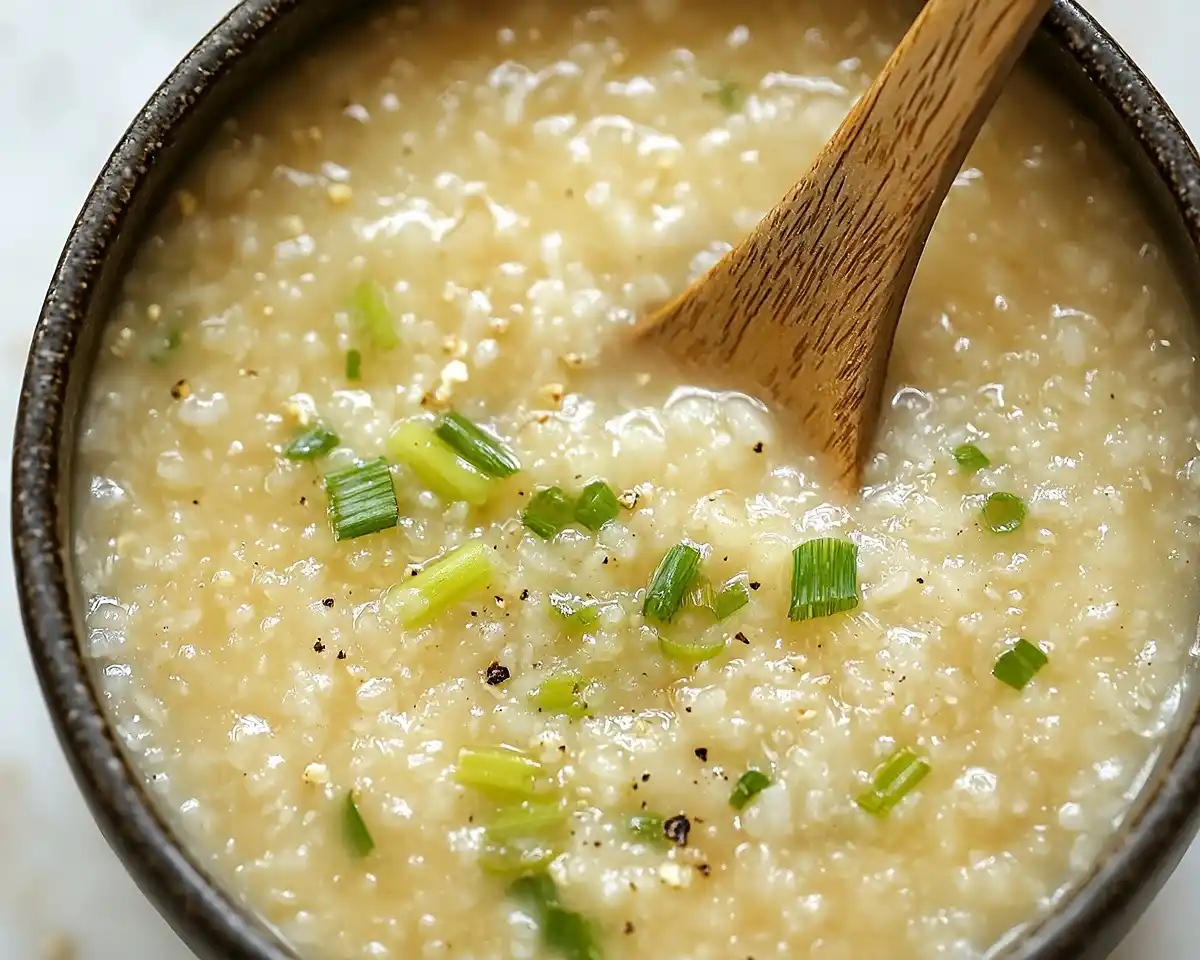
Master this authentic congee recipe with foolproof techniques. Learn to make silky Chinese rice porridge (粥) with simple pantry ingredients.
Hey, I’m Sofia! Welcome to Tasty at Home, where cooking is supposed to be fun, not scary.
My first bowl of congee? Complete accident. I was nursing a cold at 2 AM, rummaging through the pantry with zero energy. Rice, water, ginger—that’s all I had. What emerged from my saucepot 40 minutes later changed everything.
This silky, soul-warming Chinese rice porridge became my comfort food obsession. The way the rice breaks down into creamy, cloud-like spoonfuls? Pure magic. Now I make it weekly, sick or not.
Tasty at Home – Where bold flavors meet everyday kitchens.
Table of Contents
Why This Congee Recipe Works Every Time
Let me tell you, authentic congee isn’t complicated. This basic congee recipe relies on one simple principle: time and gentle heat transform ordinary rice into extraordinary comfort food.
I’ve tested this Chinese rice porridge recipe seventeen times. Each batch taught me something new about texture, seasoning, and timing. The result? A foolproof method that works with standard grocery store rice.
What makes this version special is the aromatic trio: ginger, garlic, and scallions. These ingredients infuse the porridge with depth while maintaining that signature silky texture. According to traditional Cantonese cooking methods, this balance creates the perfect 粥 (congee) foundation.
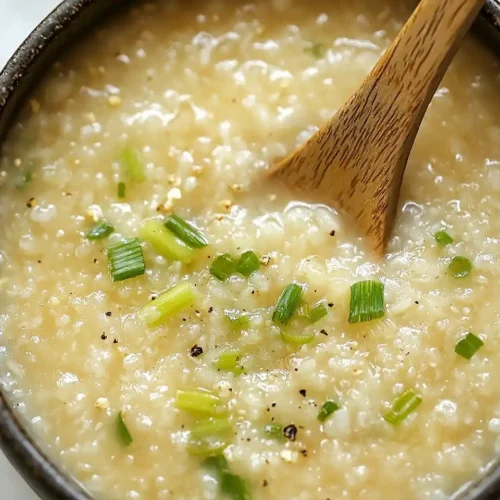
Ultimate Chinese Congee
Equipment
- large saucepan or Dutch oven
- Fine-mesh strainer
- wooden spoon
Ingredients
Essential Base Ingredients
- 1 cup white rice medium or long-grain, jasmine works perfectly
- 8 cups water use filtered for best flavor
- 1 inch piece fresh ginger peel and slice thin
- 3 cloves garlic fresh only, no powder
- 2 medium scallions separate white and green parts
Bold Flavor Enhancers
- 1 tbsp soy sauce or tamari for umami depth
- 1.5 tsp kosher salt season to taste
- 1 tsp + drizzle toasted sesame oil nutty richness
- 0.5 tsp ground white pepper subtle heat
Instructions
- Rinse the rice thoroughly in a fine-mesh strainer until water runs mostly clear. Transfer to a large saucepan and add water.
- Bring the rice and water to a full rolling boil over medium-high heat, about 8-10 minutes.
- Prepare aromatics: thinly slice ginger and garlic; slice scallions, keeping white and green parts separate.
- Reduce heat to a brisk simmer. Add ginger, garlic, and scallion whites. Stir frequently and cook for 30 minutes.
- Season with soy sauce, salt, sesame oil, and white pepper. Stir to combine. Serve immediately, garnished with scallion greens and a drizzle of sesame oil.
Notes
Ingredient Quality Guide
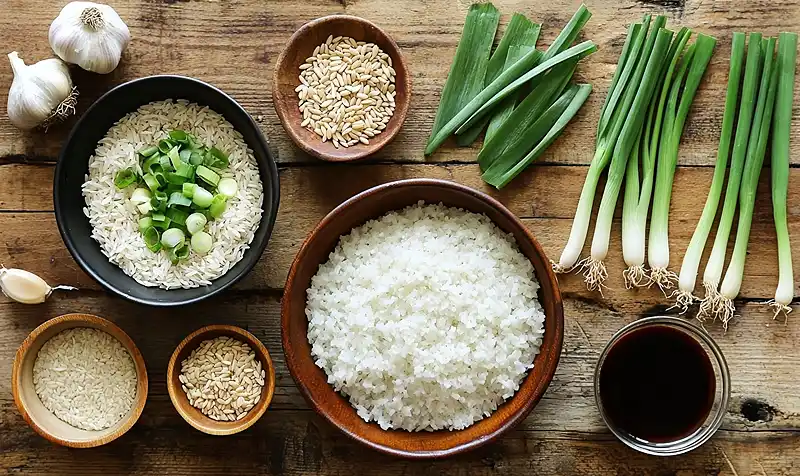
For the aromatic base, fresh ginger is non-negotiable. Choose firm, smooth-skinned pieces with no wrinkles. Quality toasted sesame oil makes a massive difference—look for brands from Asian grocery stores rather than generic supermarket versions.
The rice matters too. Medium or long-grain white rice works beautifully. Jasmine rice adds a subtle floral note, while standard white rice delivers classic results. Skip the short-grain varieties—they create a stickier, less authentic texture.
Complete Ingredient Breakdown
Essential Base Ingredients
| Ingredient | US Measurement | Metric | Notes |
|---|---|---|---|
| White rice (medium/long-grain) | 1 cup | 200g | Jasmine works perfectly |
| Water | 8 cups | 1.9L | Use filtered for best flavor |
| Fresh ginger | 1-inch piece | 15g | Peel and slice thin |
| Garlic cloves | 3 medium | 15g | Fresh only, no powder |
| Scallions | 2 medium | 30g | Separate white and green parts |
Bold Flavor Enhancers
| Ingredient | US Measurement | Metric | Purpose |
|---|---|---|---|
| Soy sauce or tamari | 1 tablespoon | 15ml | Umami depth |
| Kosher salt | 1½ teaspoons | 9g | Season to taste |
| Toasted sesame oil | 1 teaspoon + drizzle | 5ml + extra | Nutty richness |
| Ground white pepper | ½ teaspoon | 2g | Subtle heat |
Shopping Tips for US Grocery Stores
Most standard supermarkets carry everything you need. Find jasmine rice in the international aisle or rice section. Toasted sesame oil lives near soy sauce, but Asian markets offer superior quality at better prices.
Fresh ginger sits in the produce section, usually near garlic. Choose pieces without soft spots or mold. For scallions, select bunches with vibrant green tops and firm white bases.
White pepper might require a trip to the spice aisle. It tastes different from black pepper—more earthy and less sharp. Don’t substitute black pepper here.
Smart Substitutions
For gluten-free needs: Use tamari instead of regular soy sauce. The flavor stays authentic and rich.
No white pepper? Use a tiny pinch of black pepper, but reduce the amount by half. The flavor profile shifts slightly, but the dish still works.
Vegetable broth swap: Replace up to 4 cups of water with low-sodium vegetable broth for deeper flavor. This creates a more complex base without extra work.
International readers: If using metric measurements exclusively, note that 1 cup rice equals approximately 200g. Eight cups of water translates to roughly 1.9 liters.
Essential Equipment and Preparation
You need surprisingly little equipment for perfect congee. A large saucepan or Dutch oven (at least 4-quart capacity) works best. The wide base allows proper evaporation and prevents scorching.
Grab a fine-mesh strainer for rinsing rice. This step removes excess starch and prevents gummy texture. A wooden spoon for stirring protects your pan’s surface and feels better in hand during long stirring sessions.
DIY alternative: No fine-mesh strainer? Use a regular colander lined with cheesecloth or a clean kitchen towel. It takes slightly longer but works perfectly.
Step 1: Rinse the Rice Thoroughly
Place your rice in a fine-mesh strainer. Run cold water over it, swishing gently with your fingers. Keep rinsing until the water runs mostly clear—this usually takes 60 to 90 seconds.
Transfer the rinsed rice to a large saucepan. Add all 8 cups of water at once. This ratio creates the ideal creamy-but-pourable consistency.
Pro tip: Cold water works better than warm for rinsing. It prevents the rice from absorbing water prematurely, which would throw off your final texture.
Step 2: Start the Boil
Place your saucepan over medium-high heat. Bring the mixture to a full, rolling boil. This takes about 8 to 10 minutes depending on your stove.
While waiting, prep your aromatics. This timing saves precious minutes and keeps everything organized. As Julia Child always emphasized, mise en place transforms cooking from chaos to confidence.
Step 3: Prepare Your Aromatics
Peel your ginger using the edge of a spoon—it’s easier than a peeler and wastes less. Slice it into thin coins, about ⅛-inch thick. These release maximum flavor without overpowering the delicate porridge.
Slice your garlic cloves thinly. Paper-thin slices melt into the congee, while thicker cuts provide occasional bursts of garlicky goodness. Choose your preferred texture.
For scallions, slice them on a slight diagonal. Keep white and green parts completely separate. The whites cook down and add savory depth. The greens stay raw and provide fresh contrast.
My biggest mistake: I once dumped everything in at the start. The scallion greens turned gray and musty. Now I always reserve them for garnish. Learn from my error.
Step 4: Simmer Low and Slow
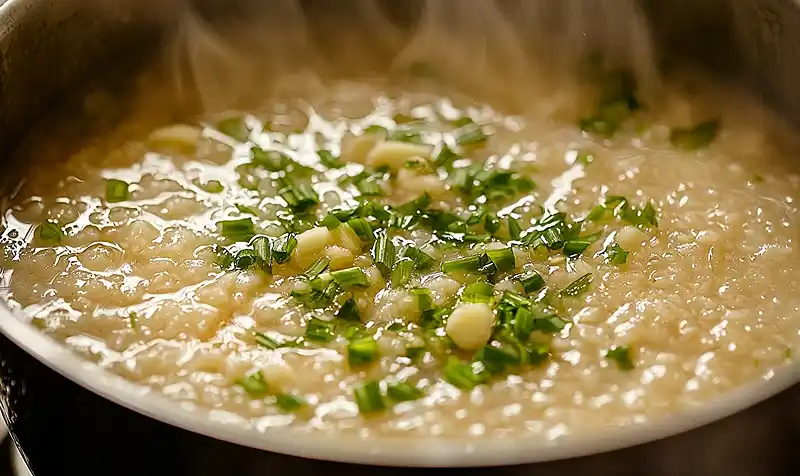
Once boiling, reduce heat immediately. You want a brisk simmer—steady bubbles breaking the surface, but not a violent boil. This prevents overflow and ensures even cooking.
Add your prepared ginger, garlic, and scallion whites. Stir everything together, making sure to scrape the bottom of the pan. Rice loves to stick and burn if ignored.
Set a timer for 30 minutes. Stir every 5 to 7 minutes, always scraping the bottom. The mixture thickens dramatically as rice breaks down and releases starch.
Sensory cue: After 20 minutes, the congee smells deeply aromatic and comforting. The ginger fragrance becomes more pronounced. By minute 30, the texture should coat your spoon like heavy cream.
Step 5: Season and Finish
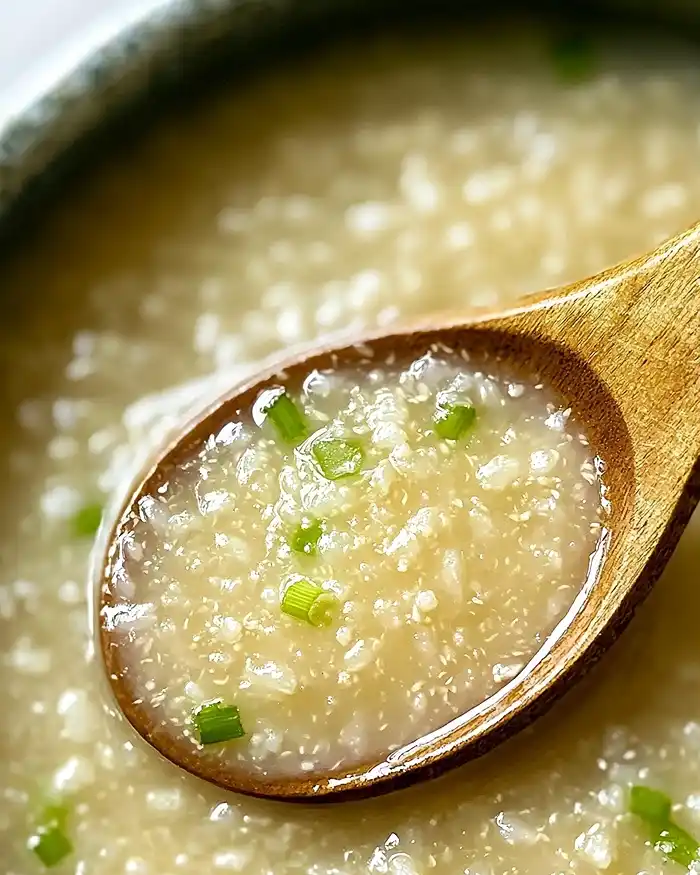
After 30 to 35 minutes, your congee reaches perfect consistency. It should flow off your spoon but leave a thick coating behind. The rice grains mostly disappear into silky, broken-down starch.
Add soy sauce, salt, sesame oil, and white pepper all at once. Stir vigorously for 30 seconds to distribute seasonings evenly. The aroma intensifies immediately—that’s how you know it’s ready.
Taste and adjust salt as needed. The porridge should taste savory and well-seasoned but not salty. Remember, toppings add more salt later.
Serve immediately in warmed bowls. Top with reserved scallion greens and a generous drizzle of toasted sesame oil. The oil creates glossy pools on the surface—absolutely beautiful.
Expert Tips for Perfect Congee Every Time
Consistency control: Prefer thicker congee? Simmer an extra 10 minutes. Want it thinner? Add ½ cup hot water and stir well. The beauty of this dish is its flexibility.
Make-ahead magic: Congee thickens considerably as it cools. Store it in the fridge and thin with water or broth when reheating. The flavor actually improves overnight.
Prevent sticking: Oops! If you notice rice clinging to the bottom, immediately reduce heat and stir more frequently. A small amount of sticking adds toasty flavor, but too much creates bitter, burnt notes.
As Thomas Keller teaches, gentle heat and patience create the best results. Rushing congee with high heat produces gummy, unevenly cooked rice. Low and slow always wins.
Creative Variations to Try
Chicken congee: Add 8 ounces shredded rotisserie chicken during the last 5 minutes. This transforms the dish into a complete meal. Perfect for using up leftover chicken.
Century egg congee: Top finished bowls with quartered century eggs (preserved duck eggs). The creamy, umami-rich yolks blend beautifully with hot porridge. Find these at Asian grocery stores.
Sweet breakfast version: Skip all savory seasonings. Instead, stir in brown sugar, cinnamon, and top with sliced bananas. This Filipino-style congee works wonderfully for lazy Sunday mornings.
Seafood luxury: Add raw shrimp or flaked fish during the last 3 minutes of cooking. The seafood poaches gently in the hot porridge. Drizzle with extra sesame oil and add crispy fried shallots.
Thanksgiving leftover special: Stir in chopped leftover turkey and a splash of gravy. The rich, holiday flavors transform humble congee into something extraordinary. My family requests this every year.
Storage and Make-Ahead Strategy
Refrigerate cooled congee in airtight containers for up to 5 days. The porridge becomes very thick when cold—this is completely normal and expected.
Reheat in a saucepan over medium-low heat. Add water or broth gradually, stirring constantly until you reach desired consistency. Microwave reheating works but requires frequent stirring to prevent hot spots.
Freeze portions in individual containers for up to 3 months. Thaw overnight in the refrigerator before reheating. Frozen congee maintains excellent flavor but texture becomes slightly grainy.
| Storage Method | Duration | Best Practices |
|---|---|---|
| Refrigerator | 5 days | Airtight container, thin with liquid when reheating |
| Freezer | 3 months | Individual portions, thaw in fridge overnight |
| Room temperature | 2 hours max | Discard after 2 hours at room temp for safety |
Perfect Pairings and Serving Ideas
Serve congee with crispy roasted chickpeas for textural contrast. The crunchy, spiced chickpeas complement the silky porridge perfectly.
Traditional toppings include fried wonton strips, soft-boiled eggs, pickled vegetables, and crispy fried garlic. Set up a toppings bar for weekend brunch—guests love customizing their bowls.
For a complete Asian-inspired breakfast spread, serve alongside homemade perfect bars and fresh fruit. The combination feels nourishing and balanced.
Pair with hot jasmine tea or strong black coffee. Both beverages cut through the richness while maintaining the comforting vibe. Green tea works beautifully too.
Internal link opportunity: This congee pairs wonderfully with best sushi rice techniques—both showcase how proper rice preparation elevates simple ingredients.
Congee Recipe FAQs
Can I make congee in a rice cooker?
Absolutely! Use the porridge setting if your rice cooker has one. Add rice, water, and aromatics, then let it run for about 2 hours. The hands-off method produces excellent results with minimal stirring required.
What’s the best rice for authentic Chinese rice porridge?
Medium or long-grain white rice creates the ideal silky texture for traditional 粥. Jasmine rice adds subtle fragrance, while standard white rice delivers classic results. Avoid short-grain or sticky rice—they produce gummy, overly thick congee.
How do I fix watery congee that won’t thicken?
Continue simmering uncovered for an additional 10 to 15 minutes, stirring frequently. The extended cooking time breaks down more rice starches and naturally thickens the mixture. Alternatively, mash some rice against the pan side to release extra starch.
Can I use brown rice instead of white rice?
Yes, but expect longer cooking time and different texture. Brown rice requires 60 to 75 minutes of simmering and produces a nuttier, less silky porridge. Increase water to 10 cups for proper consistency with brown rice.
Why does my congee taste bland?
The basic congee recipe creates a mild base intentionally—toppings and seasonings provide most flavor. Always taste and adjust salt before serving. Add more soy sauce, sesame oil, or white pepper to boost savoriness. Remember, congee should taste well-seasoned but not overpowering.
Your New Comfort Food Awaits
Well… there you have it. The simplest, most comforting bowl of Chinese rice porridge you’ll ever make. This congee recipe transforms basic pantry staples into something genuinely special.
The best part? You control everything—thickness, saltiness, toppings. Make it your own. Try it with healthy Greek yogurt blueberry protein muffins for a balanced breakfast that satisfies.
What toppings will you try first? Drop a comment below and let me know. I’m always hunting for new congee variations to test in my kitchen.
Ready to explore more Asian-inspired comfort foods? Check out my best ramen broth recipe for another soul-warming bowl. Both recipes share that same magical ability to make everything feel better.
Now grab your saucepan and get cooking. Your kitchen is about to smell absolutely amazing.