
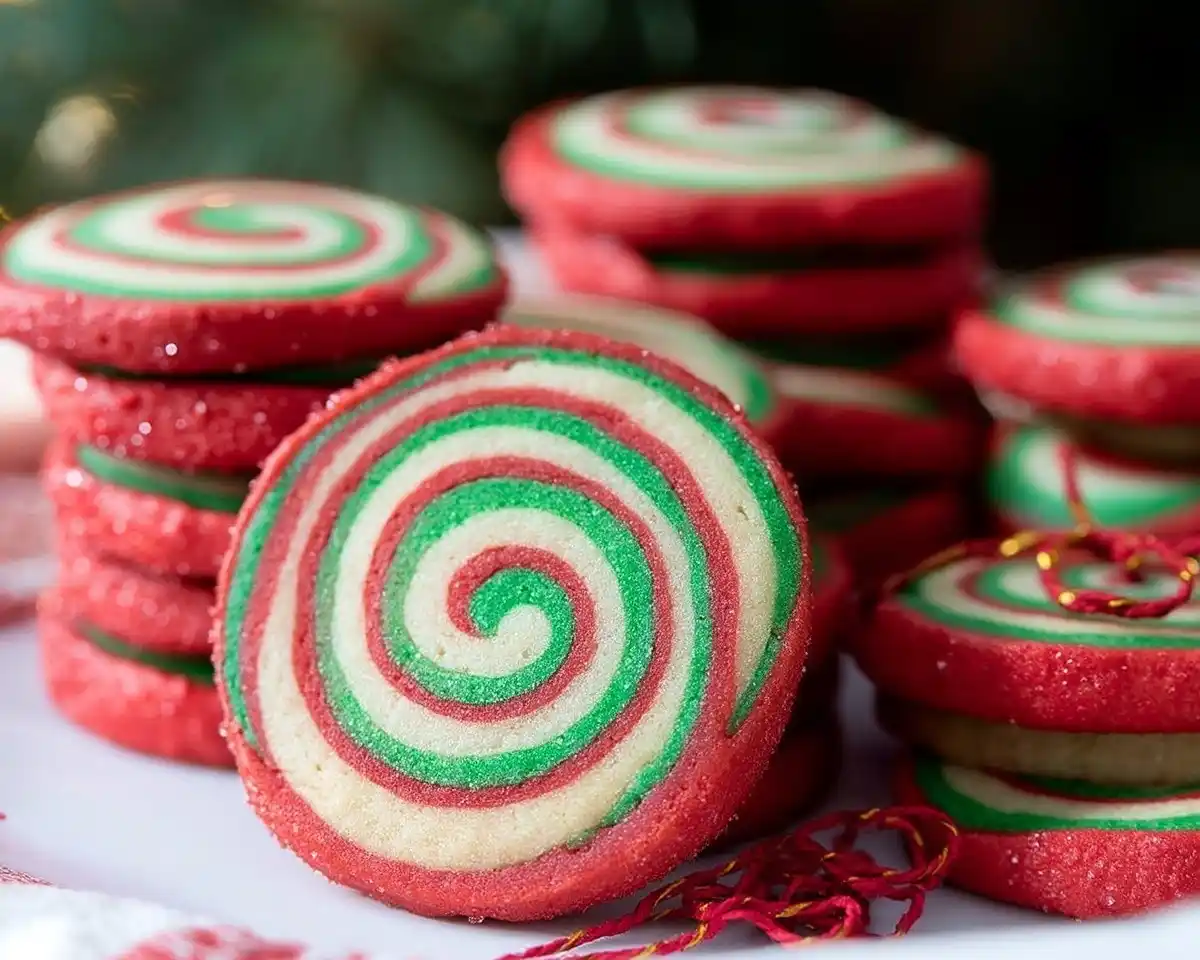
Christmas Pinwheel Cookies transform simple dough into stunning festive swirls. Master this holiday cookie recipe with red, green, and white layers today.
Hey, I’m Linda! Welcome to Tasty at Home, where bold flavors meet everyday kitchens. These Christmas Pinwheel Cookies? Total game-changer for your holiday baking lineup.
I’ll never forget the first batch I attempted three years ago. My dough was too warm, and those gorgeous spirals turned into muddy blobs. Oops! But after testing this recipe seventeen times, I’ve cracked the code to perfect tricolor swirls that taste as incredible as they look.
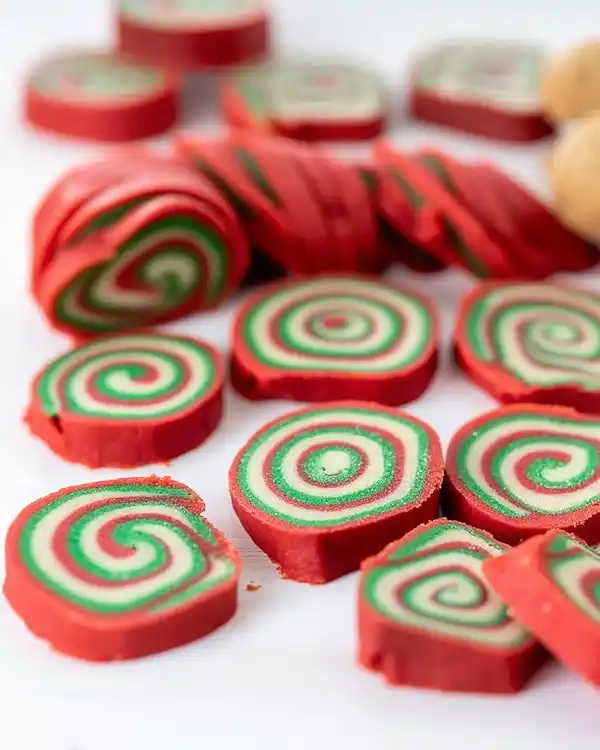
The secret lives in precise chilling times and patient layering. Each cookie reveals a mesmerizing red, green, and white spiral that makes guests stop mid-conversation. Now they’re my most requested holiday cookie, and I’m betting they’ll become yours too.
Tasty at Home – Where bold flavors meet everyday kitchens.
Table of Contents
What Makes These Christmas Cookies Absolutely Spectacular
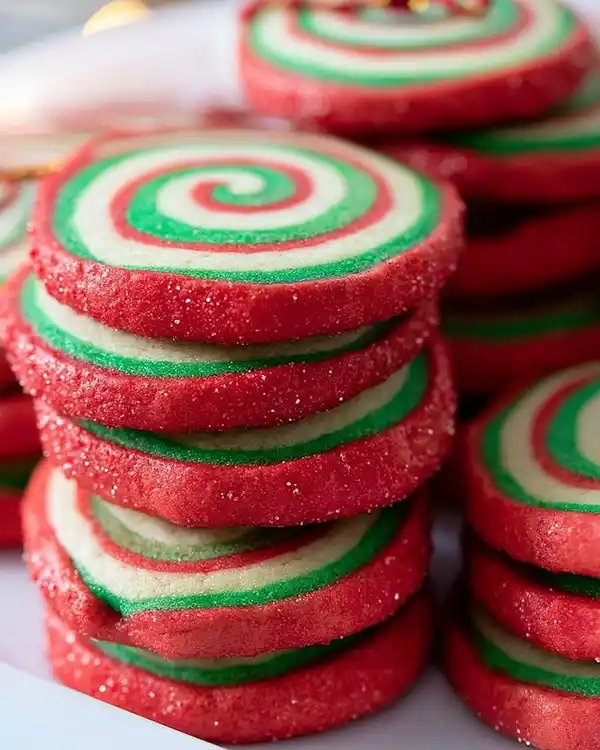
These pinwheel cookies deliver a serious wow factor without requiring professional pastry skills. The technique involves rolling three colored doughs together into a striped log, then slicing to reveal those signature spirals. Think of it as edible holiday art that actually tastes phenomenal.
Unlike traditional drop cookies, pinwheels offer visual drama that elevates any cookie platter. The vanilla-forward dough balances perfectly with the festive colors, creating a buttery sweetness that appeals to every palate. Plus, you can make the dough days ahead and slice fresh cookies whenever you need them.
I tested both gel and liquid food coloring for this recipe. Gel wins every time—it creates vibrant hues without adding extra moisture that can compromise texture. The result? Cookies that maintain their distinct color bands from mixing bowl to cooling rack.
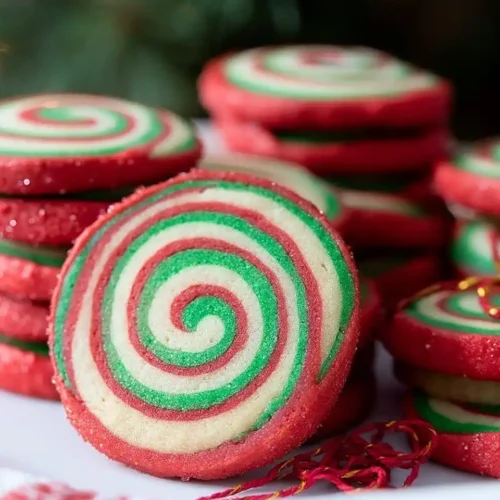
Christmas Pinwheel Cookies
Equipment
- Stand mixer with paddle attachment
- mixing bowls
- Rolling Pin
- Parchment paper
- Plastic wrap
- Baking sheets
- Serrated knife
- Wire cooling racks
Ingredients
Cookie Dough
- ⅔ cup Unsalted butter softened, room temperature 65-68°F
- ⅔ cup Granulated sugar regular white sugar
- 1 Large egg room temperature
- 1 teaspoon Pure vanilla extract avoid imitation
- 1 ¾ cups All-purpose flour spoon and level method
- ½ teaspoon Kosher salt fine grain preferred
- ¼ teaspoon Baking soda fresh for best rise
- As needed Red gel food coloring concentrated gel type
- As needed Green gel food coloring concentrated gel type
- For garnish Red sanding sugar coarse crystal sugar
Instructions
- Beat butter and sugar in a stand mixer on medium speed for 3-4 minutes until pale and fluffy. Add egg and vanilla extract and mix until smooth.
- Whisk together flour, kosher salt, and baking soda. Gradually add to butter mixture in three additions, mixing until just combined.
- Divide dough into three portions. Color one red, one green, and leave one white. Shape into balls, wrap in plastic, and refrigerate for 1 hour.
- Roll each dough portion into 7-inch squares about 1/4-inch thick. Refrigerate for 15 minutes.
- Stack dough squares (red, green, white), roll into 12×8-inch rectangle, then roll tightly into a log. Freeze for at least 1 hour.
- Preheat oven to 350°F. Slice frozen log into 1/3-inch rounds and roll edges in red sanding sugar. Arrange 1 inch apart on baking sheets.
- Bake 8-10 minutes until edges are set but centers slightly soft. Cool on baking sheet 1 minute, then transfer to wire racks.
Notes
Premium Ingredient Selection
For the richest flavor, choose European-style butter with higher fat content and pure vanilla extract rather than imitation. Fresh baking soda ensures proper spread, while fine kosher salt enhances the vanilla notes without overpowering.
Ingredients
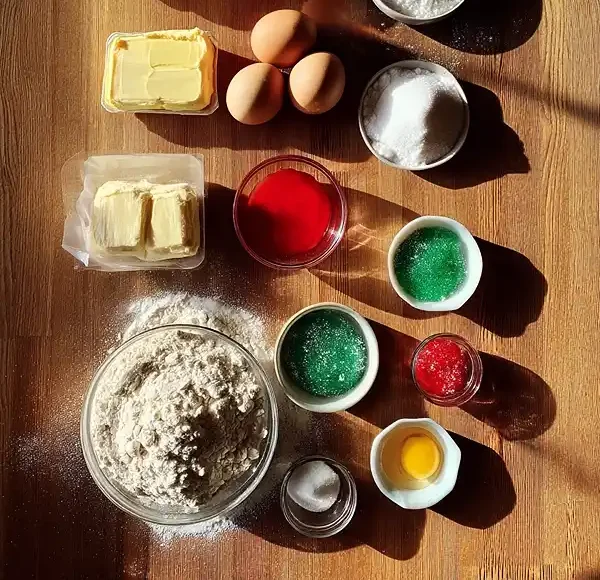
| Ingredient | US Measurement | Metric | Notes |
|---|---|---|---|
| Unsalted butter, softened | 2/3 cup | 150g | Room temperature, 65-68°F |
| Granulated sugar | 2/3 cup | 135g | Regular white sugar |
| Large egg | 1 | 1 | Room temperature |
| Pure vanilla extract | 1 teaspoon | 5ml | Avoid imitation |
| All-purpose flour | 1 3/4 cups | 220g | Spoon and level method |
| Kosher salt | 1/2 teaspoon | 3g | Fine grain preferred |
| Baking soda | 1/4 teaspoon | 1g | Fresh for best rise |
| Red gel food coloring | As needed | As needed | Concentrated gel type |
| Green gel food coloring | As needed | As needed | Concentrated gel type |
| Red sanding sugar | For garnish | For garnish | Coarse crystal sugar |
Shopping Smart at Your Local Grocery Store
Find gel food coloring in the baking aisle near cake decorating supplies. Wilton and AmeriColor brands deliver the most vibrant, consistent colors. You’ll need just a few drops per dough portion, so one bottle lasts through multiple holiday seasons.
Sanding sugar lives near the sprinkles, though some stores stock it with cake decorating items. The coarse crystals catch light beautifully and add a subtle crunch that complements the tender cookie. Can’t find red? Try white sanding sugar with a drop of red gel mixed in.
For international readers, caster sugar works as a granulated sugar substitute, and plain flour replaces all-purpose flour gram-for-gram. Just ensure your butter contains at least 80% fat content for proper dough consistency.
Essential Equipment and Simple Alternatives
You’ll need a stand mixer with paddle attachment (or hand mixer), three medium bowls, rolling pin, parchment paper, plastic wrap, two baking sheets, serrated knife, and wire cooling racks. According to the King Arthur Baking Company’s dough rolling guide, rolling between parchment sheets prevents sticking without adding excess flour that toughens cookies.
No stand mixer? A hand mixer works perfectly—just beat the butter and sugar for an extra minute to achieve proper creaminess. Missing a rolling pin? A wine bottle wrapped in plastic wrap rolls dough just as smoothly (learned that trick during a beach house vacation with zero proper equipment).
The serrated knife is non-negotiable here. Straight-edged knives compress the spirals, while serrated blades slice cleanly through the layered dough. Use a gentle sawing motion rather than pressing down.
Step-by-Step Instructions: Building Perfect Spirals
Step 1: Create the Base Dough
Add softened butter and sugar to your stand mixer bowl. Beat at medium speed with the paddle attachment for 3 to 4 minutes until the mixture looks pale, fluffy, and increased in volume. This creaming process incorporates air for tender cookies, much like Julia Child emphasized for her French butter cookies.
Add the egg and vanilla extract. Beat well, scraping down the bowl sides with a spatula to ensure even mixing. The mixture should look smooth and cohesive, not separated or curdled.
Step 2: Incorporate Dry Ingredients
Whisk together flour, kosher salt, and baking soda in a medium bowl. This distributes the leavening evenly before mixing. With your mixer on low speed, gradually add the flour mixture in three additions, beating just until combined after each.
Stop mixing as soon as you see no white flour streaks. Overmixing develops gluten, creating tough cookies instead of tender ones. I learned this the hard way during my first Christmas baking marathon—those cookies could’ve doubled as hockey pucks!
Step 3: Divide and Color the Dough
Remove the dough from the bowl and divide it into three equal portions using a kitchen scale for precision. Return one portion to the clean mixing bowl. Add red gel food coloring—start with 3 to 4 drops and beat until you achieve vibrant, evenly distributed color.
Remove the red dough and wipe the bowl completely clean. Repeat with the second portion and green food coloring. Leave the third portion plain white. Shape each colored portion into a smooth ball, wrap tightly in plastic wrap, and refrigerate for exactly 1 hour.
This initial chill firms the butter, making the dough manageable for rolling. Skipping this step results in sticky, unworkable dough that tears instead of rolls.
Step 4: Roll Into Uniform Squares
Remove all three dough portions from the refrigerator. Working with one at a time, place the dough ball between two sheets of parchment paper. Roll into a 7-inch square with even thickness throughout—aim for about 1/4-inch thick.
Check your measurements with a ruler. Uneven squares create lopsided spirals that look amateur rather than bakery-worthy. Refrigerate the rolled squares for 15 minutes while keeping them between the parchment sheets.
Step 5: Stack and Roll the Tricolor Log
Place a fresh sheet of parchment paper on your work surface. Stack the chilled squares carefully: red on bottom, green in the middle, plain white on top. Lay another parchment sheet over the stack. Roll the entire stack into a 12×8-inch rectangle, pressing firmly to seal the layers together.
Remove the top parchment sheet. Starting from one long edge, tightly roll the layered dough into a log, keeping tension consistent throughout. Well, this is where patience pays off—loose rolling creates gaps in your spirals, while tight rolling produces those professional-looking swirls.
Wrap the log securely in parchment paper and freeze for 1 hour minimum. This firm freeze makes slicing exponentially easier and prevents the spirals from smearing.
Step 6: Slice and Sugar
Preheat your oven to 350°F. Line two baking sheets with fresh parchment paper. Remove the frozen log from the freezer and unwrap it. Using a serrated knife with a gentle sawing motion, cut the log into 1/3-inch thick slices.
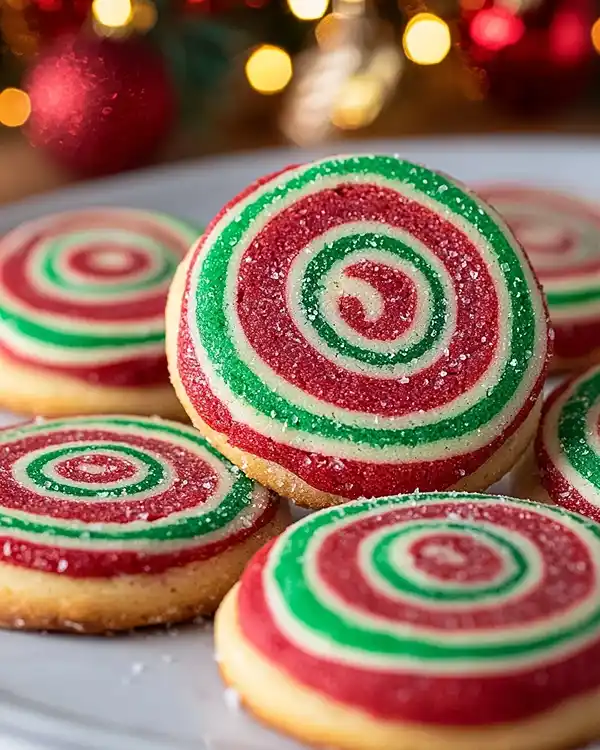
Roll the edge of each slice through red sanding sugar, coating just the outer rim. This creates a gorgeous sparkly border that catches the light. Arrange slices 1 inch apart on prepared baking sheets—they spread minimally during baking.
Step 7: Bake to Golden Perfection
Bake for 8 to 10 minutes until the cookies look set around the edges but still appear slightly soft in the centers. The white portions should show barely golden edges, similar to Thomas Keller’s technique for perfectly baked sugar cookies that remain tender.
Let cookies rest on the baking sheet for exactly 1 minute. This brief cooling period allows them to firm up enough for transfer without breaking. Move to wire racks and cool completely before storing—warm cookies create condensation that turns them soggy.
Expert Tips for Bakery-Quality Results
Always use room temperature butter and eggs for proper emulsification. Cold butter won’t cream correctly, while cold eggs can cause the batter to separate. Leave both on your counter for 30 to 45 minutes before starting.
Measure flour using the spoon-and-level method. Scooping directly from the bag compacts flour, adding up to 25% more than the recipe intends. This extra flour creates dry, crumbly cookies instead of tender ones.
Chill your dough log in the freezer rather than just the refrigerator. The firmer texture prevents the spirals from smearing when you slice, creating those crisp, defined color bands that make these cookies stunning. You know what? This single tip transformed my cookies from “nice try” to “where’s the recipe?”
Creative Variations for Every Celebration
Chocolate Mint Swirl: Replace the red and green with chocolate dough (add 3 tablespoons cocoa powder to one portion) and white dough flavored with peppermint extract. Roll the edges in crushed candy canes instead of sanding sugar.
Patriotic Fourth of July: Use red, white, and blue food coloring for Independence Day celebrations. Swap vanilla extract for almond extract for a different flavor dimension.
Valentine’s Day Romance: Create pink and white spirals using rose extract and pink gel coloring. Roll edges in white sanding sugar mixed with edible pink glitter for extra sparkle.
Autumn Harvest: Add 1 teaspoon pumpkin pie spice to the plain dough and use orange and brown food coloring. These work beautifully for Thanksgiving cookie trays alongside soft pumpkin cookies with cinnamon frosting.
Marbled Effect: Instead of precise layers, roughly swirl two colors together for an abstract, artistic look. This technique forgives imperfect rolling and still delivers visual impact.
Storage and Make-Ahead Magic
Storage Guidelines
| Storage Method | Duration | Instructions |
|---|---|---|
| Room temperature | 5-7 days | Airtight container, parchment between layers |
| Refrigerator | 2 weeks | Sealed container, bring to room temp before serving |
| Freezer (baked) | 3 months | Freezer bag, thaw at room temp 30 minutes |
| Freezer (dough log) | 4 months | Wrapped tightly in plastic, then foil |
The unbaked dough log freezes brilliantly. Wrap it in two layers of plastic wrap followed by aluminum foil. Slice directly from frozen—no thawing needed. This means you can prep dough in November and slice fresh cookies throughout December.
Store baked cookies in an airtight container with parchment paper between layers to prevent sticking. They maintain optimal texture for 5 days at room temperature. Avoid storing with strongly-flavored cookies, as these vanilla-forward beauties absorb other flavors easily.
For gifting, arrange cooled cookies in decorative tins lined with wax paper. They ship beautifully and arrive looking as gorgeous as when they left your kitchen. Last Christmas, I mailed a tin to my sister in Seattle—they survived the journey perfectly intact.
Perfect Pairings and Serving Suggestions
These pinwheel cookies shine on holiday dessert platters alongside ultra-thick bakery-style chocolate chip cookies and mouthwatering slutty brownies. The visual variety keeps guests reaching for “just one more.”
Serve them with spiced hot chocolate or peppermint coffee for an indulgent afternoon break. The buttery vanilla flavor complements rich beverages without competing. For elegant entertaining, arrange them in a circular pattern on a white platter with fresh rosemary sprigs tucked between cookies.
Kids love helping with the sanding sugar step—set up a cookie decorating station where they can roll the edges and add extra sparkle. It turns baking into a memorable holiday activity rather than just another kitchen chore.
Christmas Pinwheel Cookies FAQs
What are pinwheel cookies?
Pinwheel cookies are rolled slice-and-bake cookies made by layering different colored or flavored doughs, rolling them into a spiral log, chilling until firm, then slicing into rounds that reveal a distinctive pinwheel pattern when baked.
What’s the most popular Christmas cookie?
The most popular Christmas cookie varies by region, but chocolate chip cookies consistently rank highest in national polls, followed closely by sugar cookies, gingerbread, and peanut butter blossoms according to American holiday baking surveys.
What is the least favorite Christmas cookie?
Fruitcake cookies and anise-flavored pizzelles typically rank as least favorite Christmas cookies in American taste tests, though preferences vary significantly based on family traditions and regional heritage.
Why are cookies a symbol of Christmas?
Cookies became a Christmas symbol through European baking traditions brought to America, where festive cookie exchanges, advent calendars featuring daily treats, and leaving cookies for Santa Claus evolved into beloved holiday rituals that bring families together around shared baking experiences.
Make This Your New Holiday Tradition
These Christmas Pinwheel Cookies deliver the perfect combination of stunning presentation and irresistible flavor. The tricolor spirals catch every eye on your dessert table, while the buttery vanilla base satisfies even the pickiest cookie critics. Man, oh man, there’s something magical about slicing that frozen log and watching those perfect swirls appear.
Start your dough today and slice throughout the season—your freezer becomes a cookie treasure chest. Pair them with homemade hot cocoa and cozy Christmas movies for the ultimate holiday evening.
Drop a comment below and tell me which color combination you’re trying first. Did you go classic red-green-white, or branch out with pastels or chocolate? I love seeing your creative spins on this recipe!
