
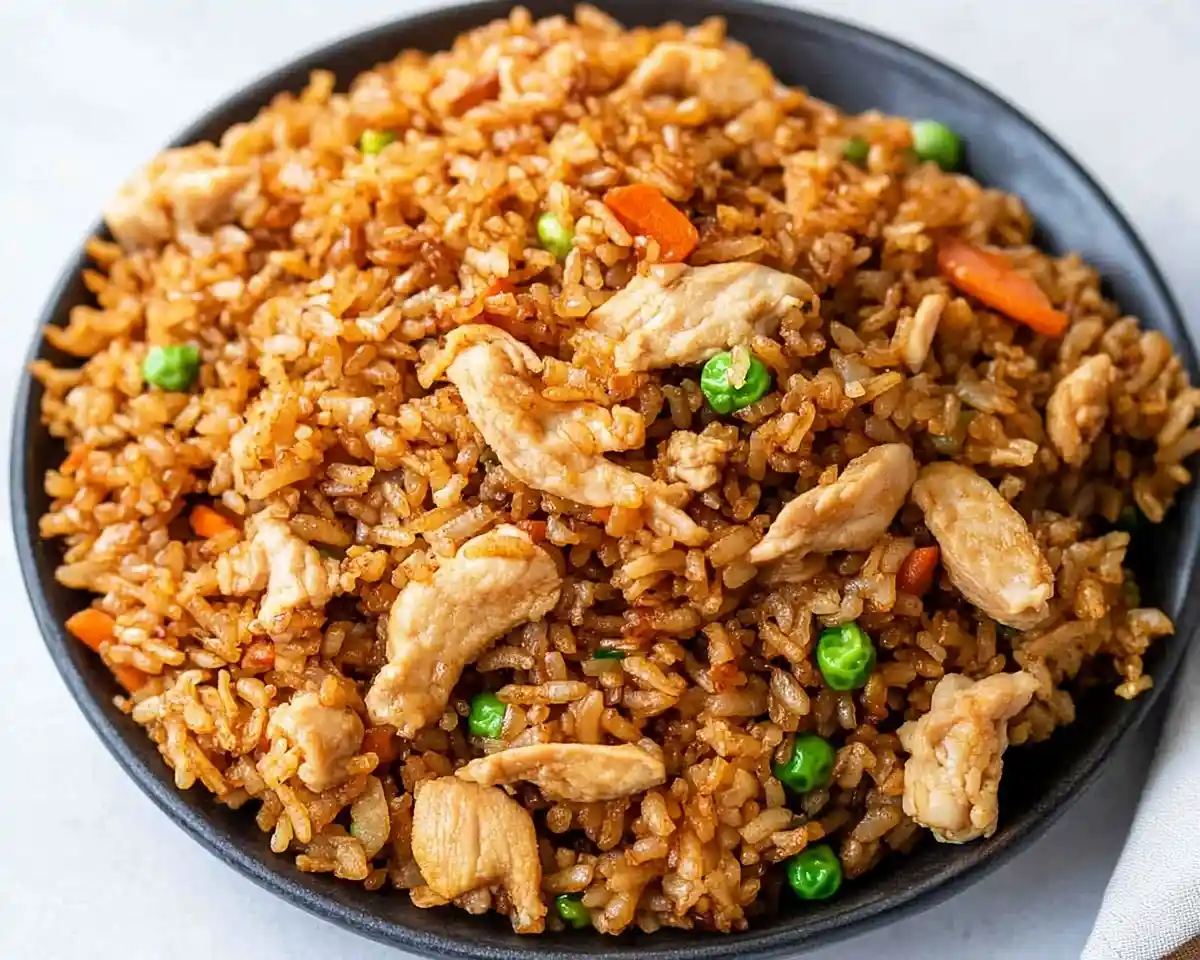
Chinese Chicken Fried Rice made restaurant-style at home in 15 minutes. Quick Chinese fried rice with easy chicken marinade—better than takeout!
Hey, I’m Sarah! Welcome to Tasty at Home, where bold flavors meet everyday kitchens.
Let me tell you about the night I tried ordering Chinese takeout and got hung up on. The restaurant was slammed, my stomach was growling, and I had leftover rice staring at me from the fridge. That’s when I realized—why not make Chinese Chicken Fried Rice myself?
I grabbed my wok, tossed in some chicken, and within 15 minutes, I had created something better than any delivery could offer. The aroma of toasted sesame oil filled my kitchen. My family gathered around the stove like moths to a flame.
Now, this recipe has become our Friday night tradition. It’s fast, it’s flavorful, and honestly? It tastes like the best neighborhood Chinese spot without leaving home.
Tasty at Home – Where bold flavors meet everyday kitchens.
Table of Contents
What Makes This Chinese Chicken Fried Rice Special
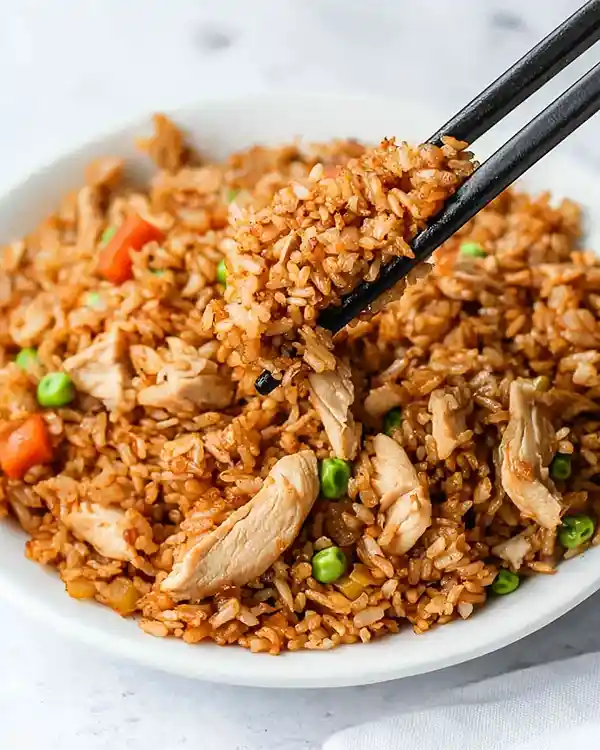
This isn’t your average fried rice recipe. I’ve spent months testing different techniques, oil temperatures, and sauce combinations to nail that restaurant-quality flavor.
The secret lies in three critical elements: day-old cold rice that fries without clumping, a proper chicken marinade with Shaoxing wine, and the technique of toasting your sauce along the pan’s edge. Professional Chinese chefs call this “wok hei”—that smoky, caramelized flavor you can’t replicate in a slow cooker.
Well… I’ll admit I tried making this with freshly cooked rice once. Disaster! The grains turned mushy and stuck together like glue. Always use cold, day-old rice or follow my quick-prep method in the notes below.
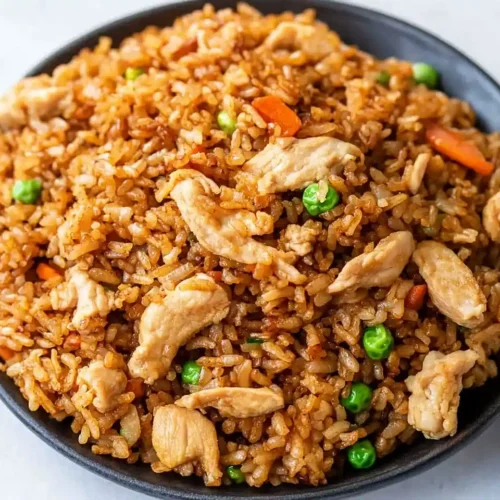
Chinese Chicken Fried Rice
Equipment
- Wok
- Large skillet
- mixing bowls
- Knife
- Cutting board
- spatula
Ingredients
Main Components
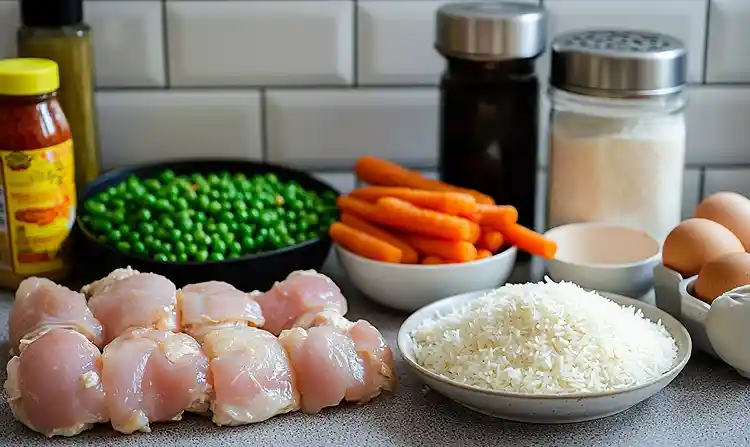
- 4.5 cups Cooked jasmine rice cold, day-old
- 0.5 lb Boneless skinless chicken thighs thinly sliced
- 1.5 cups Frozen peas and carrots or mixed vegetables
- 3 Large eggs beaten until smooth
- 1 small Shallot or onion finely diced
- 3 cloves Garlic cloves minced
- 4 tsp Vegetable oil divided
Chicken Marinade
- 1 tsp Regular soy sauce or light soy sauce
- 1 tsp Shaoxing cooking wine see substitutions
- 1 tsp Cornstarch for velveting
- 1 tsp Vegetable oil seals in moisture
Sauce
- 2 tbsp Regular soy sauce or light soy sauce
- 0.5 tbsp Dark soy sauce for color
- 2 tsp Sesame oil toasted preferred
- 1 tsp Chicken bouillon powder stock powder
- 0.125 tsp White pepper or black pepper
Instructions
- Slice chicken thighs thinly and marinate with soy sauce, Shaoxing wine, cornstarch, and oil for 5-10 minutes.
- Whisk together all sauce ingredients in a small bowl and set aside.
- Beat eggs, dice shallot, mince garlic, and break up any rice clumps before cooking.
- Heat oil in wok, cook chicken until golden and fully cooked, then remove from pan.
- Sauté garlic and shallots briefly, add frozen peas and carrots, push to one side.
- Cook eggs in empty pan space, scramble into small pieces, then combine with vegetables.
- Add cold rice and cooked chicken, toss continuously for 2 minutes.
- Pour sauce around pan edges, toast briefly, and toss everything until rice is glossy and coated.
Notes
Ingredient Groups: Building Flavor Layers
Quality ingredients make the difference between good and phenomenal Chinese Chicken Fried Rice. Look for jasmine rice with a slightly floral aroma—it’s the gold standard in Chinese cooking. Fresh garlic cloves should feel firm and heavy, never soft or sprouting.
For the chicken, boneless thighs stay juicier than breast meat during high-heat cooking. Choose pieces with even thickness for consistent cooking times.
Complete Ingredient Table
| Ingredient | US Measurement | Metric | Notes |
|---|---|---|---|
| Main Components | |||
| Cooked jasmine rice (cold, day-old) | 4 ½ cups | 700g | See prep notes below |
| Boneless skinless chicken thighs | ½ lb | 225g | Thinly sliced |
| Frozen peas and carrots | 1.5 cups | 225g | Or mixed vegetables |
| Large eggs | 3 | 3 | Beaten until smooth |
| Small shallot or onion | 1 or ¼ | 1 or ¼ | Finely diced |
| Garlic cloves | 3 | 3 | Minced |
| Vegetable oil | 4 tsp | 20ml | Divided |
| Chicken Marinade | |||
| Regular soy sauce | 1 tsp | 5ml | Or light soy sauce |
| Shaoxing cooking wine | 1 tsp | 5ml | See substitutions |
| Cornstarch | 1 tsp | 5g | For velveting |
| Vegetable oil | 1 tsp | 5ml | Seals in moisture |
| Sauce | |||
| Regular soy sauce | 2 tbsp | 30ml | Or light soy sauce |
| Dark soy sauce | ½ tbsp | 7.5ml | For color |
| Sesame oil | 2 tsp | 10ml | Toasted preferred |
| Chicken bouillon powder | 1 tsp | 5g | Stock powder |
| White pepper | ⅛ tsp | 0.5g | Or black pepper |
Smart Shopping Tips for US Grocery Stores
Find Shaoxing cooking wine in the Asian aisle at Whole Foods, Trader Joe’s, or any Asian market. Can’t locate it? Dry sherry makes an excellent substitute—just grab the cooking sherry from the vinegar section.
Dark soy sauce differs from regular soy sauce. It’s thicker, slightly sweet, and adds that signature brown color to restaurant fried rice. Look for brands like Pearl River Bridge or Kikkoman.
Chicken bouillon powder intensifies savory flavors without adding liquid. Find it near the soup bases, or substitute with ½ teaspoon of granulated chicken bouillon.
Ingredient Substitutions
For Shaoxing Wine: Dry sherry, dry white wine, or low-sodium chicken broth all work beautifully.
For Dark Soy Sauce: Mix 1 tablespoon regular soy sauce with ½ teaspoon molasses for similar color and sweetness.
For Sesame Oil: While nothing replaces that nutty aroma, you can skip it in a pinch and add an extra teaspoon of soy sauce.
For Jasmine Rice: Long-grain white rice or basmati rice work well. Avoid short-grain sushi rice—it’s too sticky for fried rice.
Essential Equipment and Preparation
Equipment You’ll Need
A large pan or wok makes all the difference. I prefer a 14-inch carbon steel wok, but a large nonstick skillet works perfectly for home stoves. You need enough surface area to spread rice in a single layer.
Two mixing bowls—one medium for chicken marinade, one small for sauce prep. A sharp knife and cutting board for slicing chicken and aromatics. Wooden spatula or wok spatula for tossing without scratching your pan.
DIY Alternative: No wok? Use your largest skillet—preferably 12 inches or bigger. Cast iron works great if seasoned properly.
The Rice Situation: Day-Old vs. Fresh
Day-old refrigerated rice is ideal because it’s dried out and firms up. Moisture evaporates during refrigeration, preventing mushy fried rice. If you’re starting from scratch, cook 1 ½ cups uncooked jasmine rice, spread it on a sheet pan, and refrigerate uncovered for at least 2 hours.
You know what? I’ve rushed this step before, using warm rice straight from the rice cooker. The result was gummy clumps instead of individual grains dancing in the wok. Patience pays off here.
Step 1: Marinate the Chicken
Slice chicken thighs into thin strips, about ¼-inch thick. Uniform thickness ensures even cooking—thick pieces stay raw while thin ones overcook.
In your medium bowl, combine chicken with 1 teaspoon soy sauce, 1 teaspoon Shaoxing wine, 1 teaspoon cornstarch, and 1 teaspoon oil. Mix thoroughly with your hands. The cornstarch creates a velvety coating called “velveting,” a technique Thomas Keller praises for tender Chinese proteins.
Let chicken marinate for 5-10 minutes while you prep everything else. This brief rest tenderizes the meat and infuses flavor.
Step 2: Prepare Your Sauce
In a small bowl, whisk together 2 tablespoons soy sauce, ½ tablespoon dark soy sauce, 2 teaspoons sesame oil, 1 teaspoon chicken bouillon powder, and ⅛ teaspoon white pepper. Mix until bouillon dissolves completely.
This sauce delivers that addictive umami punch. Set it within arm’s reach of your stove—fried rice moves fast once cooking starts.
Step 3: Mise en Place (Get Everything Ready)
Beat 3 eggs in a small bowl until no streaks remain. Dice your shallot finely—pieces should be about the size of a pea. Mince garlic cloves until nearly paste-like.
Break up any rice clumps with your hands. Cold rice tends to stick together, so separate grains before they hit the hot pan. This prep work prevents frantic scrambling mid-cook.
Man, oh man, I learned this lesson the hard way. I once started cooking with rice still clumped, garlic unminced, and sauce unprepared. Total chaos! The garlic burned, rice stayed lumpy, and my family got dinner 20 minutes late.
Step 4: Cook the Chicken
Heat your wok or large pan over medium-high heat for 2 minutes—you want it properly hot. Add 1 teaspoon vegetable oil and swirl to coat the surface.
Add marinated chicken in a single layer. Let it sear undisturbed for 45 seconds until the bottom turns golden. Flip pieces and cook another 45-60 seconds until fully cooked through with no pink remaining.
Transfer chicken to a clean plate. This prevents overcooking while you prepare the rest. Julia Child always emphasized cooking proteins separately in stir-fries for ideal texture.
Step 5: Sauté Aromatics and Vegetables
Return pan to medium-high heat. Add another teaspoon of oil. Toss in minced garlic and diced shallots, stirring constantly for exactly 10 seconds. The aroma should bloom instantly—that’s your signal.
Add frozen peas and carrots straight from the freezer. Stir-fry for 10 seconds to thaw slightly. Now push everything—garlic, shallots, vegetables—to one side of the pan, creating an empty space.
Step 6: Scramble the Eggs
Pour remaining 2 teaspoons oil into the empty space of your pan. Add beaten eggs immediately. Let them sit undisturbed for 20 seconds—this creates a thin omelet layer on the bottom.
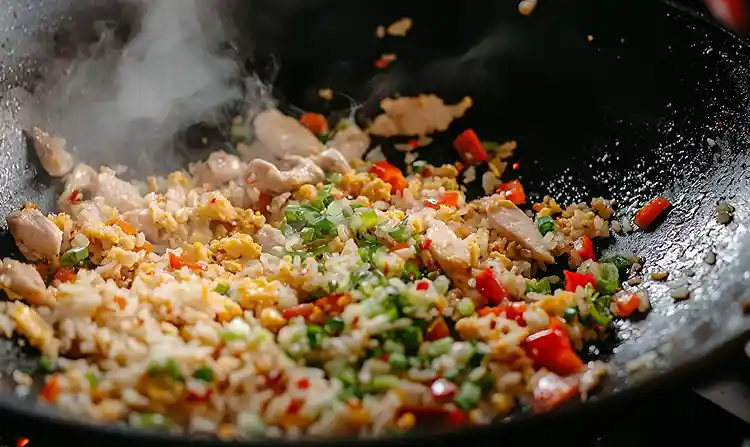
Now scramble eggs using your spatula, breaking them into small, bite-sized pieces. Work quickly to keep them soft and slightly wet, not dried out. Once scrambled, toss everything in the pan together—vegetables, aromatics, and eggs.
Step 7: Add Rice and Chicken
Add your cold, separated rice to the pan along with the cooked chicken. Use your spatula to break up any remaining rice clumps. Toss everything continuously for about 2 minutes.
The goal is heating rice through while coating every grain with egg and vegetables. You’ll hear a satisfying sizzle as rice hits the hot pan. Keep everything moving to prevent sticking or burning.
Step 8: The Sauce Magic
Pour your prepared sauce around the perimeter of the pan, along the edges where metal meets ingredients. Let sauce toast for exactly 5 seconds before tossing. This brief contact with hot metal caramelizes the sauce, creating depth.
Taste and adjust seasoning if needed. Some prefer extra soy sauce for saltiness or more white pepper for heat.
Expert Tips for Restaurant-Quality Results
Temperature Control is Everything
Your pan must stay screaming hot throughout cooking. If you add ingredients and don’t hear an immediate sizzle, the pan isn’t hot enough. Work in batches if your stove runs cool—overcrowding drops temperature and steams food instead of frying it.
Gas stoves provide ideal heat for fried rice. Electric stoves work too but require patience preheating your pan.
The Rice Temperature Secret
Cold rice fries better than room temperature rice. Those chilled grains resist moisture and separate easily. I always prep my rice the night before, spreading it on a sheet pan to maximize surface area for drying.
Oops! Forgot to make rice ahead? Cook it, spread it thin on a baking sheet, and blast it with a fan for 30 minutes while refrigerating. This emergency method works surprisingly well.
Batch Cooking for Crowds
This recipe serves 4 as a main dish or 6 as a side. Doubling it? Cook in two separate batches. Overcrowding creates steam, resulting in soggy rice instead of that crispy, separated texture you’re craving.
Keep the first batch warm in a 200°F oven while preparing the second batch.
Creative Variations to Try
Shrimp and Chicken Combo
Replace half the chicken with ½ pound medium shrimp, peeled and deveined. Add shrimp during the last 2 minutes of cooking—they cook lightning-fast and turn rubbery if overdone. This surf-and-turf version tastes like upscale Chinese restaurant fare.
Pineapple Fried Rice Hawaiian-Style
Add 1 cup diced fresh pineapple during step 5 with the vegetables. The sweet-savory contrast works beautifully. Garnish with cashews and cilantro for a tropical twist perfect for summer barbecues.
Spicy Szechuan Version
Mix 1-2 teaspoons chili garlic sauce or sriracha into your sauce mixture. Add ½ teaspoon Szechuan peppercorns, lightly crushed, for that numbing tingle. This variation brings serious heat—adjust spice level to your preference.
Vegetarian Buddha Bowl Style
Skip the chicken entirely and double the vegetables. Add sliced mushrooms, baby corn, and edamame. Replace chicken bouillon with vegetable bouillon. You’ll have a satisfying plant-based meal ready in 12 minutes.
Holiday Leftover Fried Rice
Transform Thanksgiving or Christmas leftovers into Chinese Chicken Fried Rice. Use diced turkey instead of chicken, add leftover green beans, and toss in some chopped cranberries for a festive fusion. My family requests this every year after Thanksgiving!
Storage, Reheating, and Make-Ahead Strategies
Storage Guidelines
| Storage Method | Duration | Best Practice |
|---|---|---|
| Refrigerator | 3-4 days | Airtight container, cool completely first |
| Freezer | 2-3 months | Freezer-safe bag, remove excess air |
| Room Temperature | Not recommended | Bacteria grows rapidly in cooked rice |
Portion leftovers into single servings for easy weekday lunches. Fried rice actually tastes better the next day once flavors meld together.
Reheating for Best Results
Microwave Method: Add 1 tablespoon water, cover loosely, and microwave in 1-minute intervals, stirring between each. This prevents drying out.
Stovetop Method: Heat 1 teaspoon oil in a pan over medium-high heat. Add fried rice and stir frequently for 3-4 minutes until heated through. This method restores that fresh-cooked texture.
Oven Method: Spread rice on a baking sheet, cover with foil, and bake at 350°F for 10-12 minutes. Best for reheating large portions.
Make-Ahead Strategies
Prep all ingredients the night before. Marinate chicken, prepare sauce, dice vegetables, and cook rice. Store everything separately in the refrigerator. When dinner time arrives, cooking takes just 10 minutes—faster than ordering delivery.
You can even cook the entire dish, refrigerate it, and reheat when needed. Perfect for meal prep Sundays or busy weeknight dinners.
Perfect Pairings and Serving Suggestions
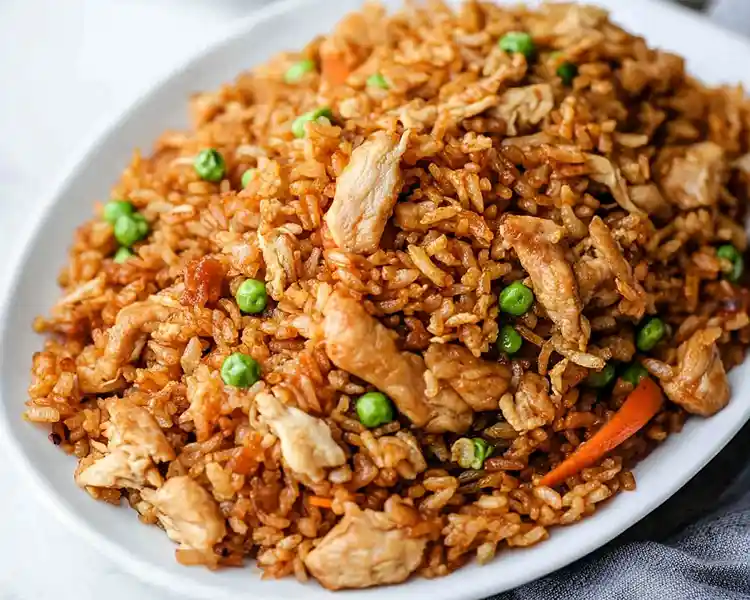
Serve your Chinese Chicken Fried Rice alongside crispy General Tso’s Chicken for a complete Chinese takeout feast. The sweet and spicy sauce complements the savory fried rice beautifully.
Add a simple cucumber salad dressed with rice vinegar and sesame seeds. The cool, crisp vegetables cut through the richness of fried rice. For drinks, try jasmine tea or a cold Tsingtao beer.
Want more quick Asian-inspired meals? Check out this delicious chicken fried rice guide or explore our Korean ground beef bowl for variety.
Garnish with sliced green onions, sesame seeds, or a drizzle of chili oil. These small touches elevate presentation from weeknight dinner to restaurant-quality meal.
Chinese Chicken Fried Rice FAQs
Can you use freshly cooked rice for Chinese Chicken Fried Rice?
Can you use freshly cooked rice for Chinese Chicken Fried Rice? You can, but the texture won’t match restaurant-style fried rice. Fresh rice contains too much moisture, causing grains to clump together and turn mushy. If you must use fresh rice, spread it on a baking sheet and refrigerate uncovered for at least 2 hours before cooking.
What’s the best way to get restaurant-style flavor at home?
What’s the best way to get restaurant-style flavor at home? The secret lies in high heat, cold day-old rice, and toasting your sauce along the pan’s edge. Use a carbon steel wok if possible, and don’t overcrowd the pan. That combination creates “wok hei”—the smoky, caramelized flavor Chinese restaurants are famous for.
How do you prevent fried rice from turning mushy?
How do you prevent fried rice from turning mushy? Always use cold, day-old rice that’s been refrigerated overnight. Keep your pan extremely hot, work in batches if needed, and avoid adding extra liquid during cooking. The cornstarch in the chicken marinade and quick cooking time also help maintain texture.
Can I make Chinese Chicken Fried Rice gluten-free?
Can I make Chinese Chicken Fried Rice gluten-free? Absolutely! Replace regular soy sauce with tamari or coconut aminos. Use gluten-free chicken bouillon powder and verify your Shaoxing wine is gluten-free (or substitute with dry sherry). The recipe works perfectly with these simple swaps.
Final Thoughts: Your New Weeknight Hero
Chinese Chicken Fried Rice proves that restaurant-quality meals don’t require complicated techniques or obscure ingredients. With day-old rice, a hot pan, and 15 minutes, you’ll create something absolutely phenomenal.
This recipe has saved countless weeknights in my household. It’s become my go-to solution for “what’s for dinner?” panic. Plus, it’s endlessly adaptable to whatever proteins, vegetables, or flavor profiles you’re craving.
Try making this tonight and tell me how it turns out! Drop a comment below sharing your favorite variation or any creative substitutions you discovered. Did you add extra vegetables? Swap in different proteins? I love hearing how readers make this recipe their own.
Pair your fried rice with these incredible Biscoff blondies or no-bake Biscoff pie for a complete dinner-to-dessert experience.
Now grab that cold rice from your fridge and let’s cook something amazing. This Chinese Chicken Fried Rice is about to become your family’s new favorite—I guarantee it!
