
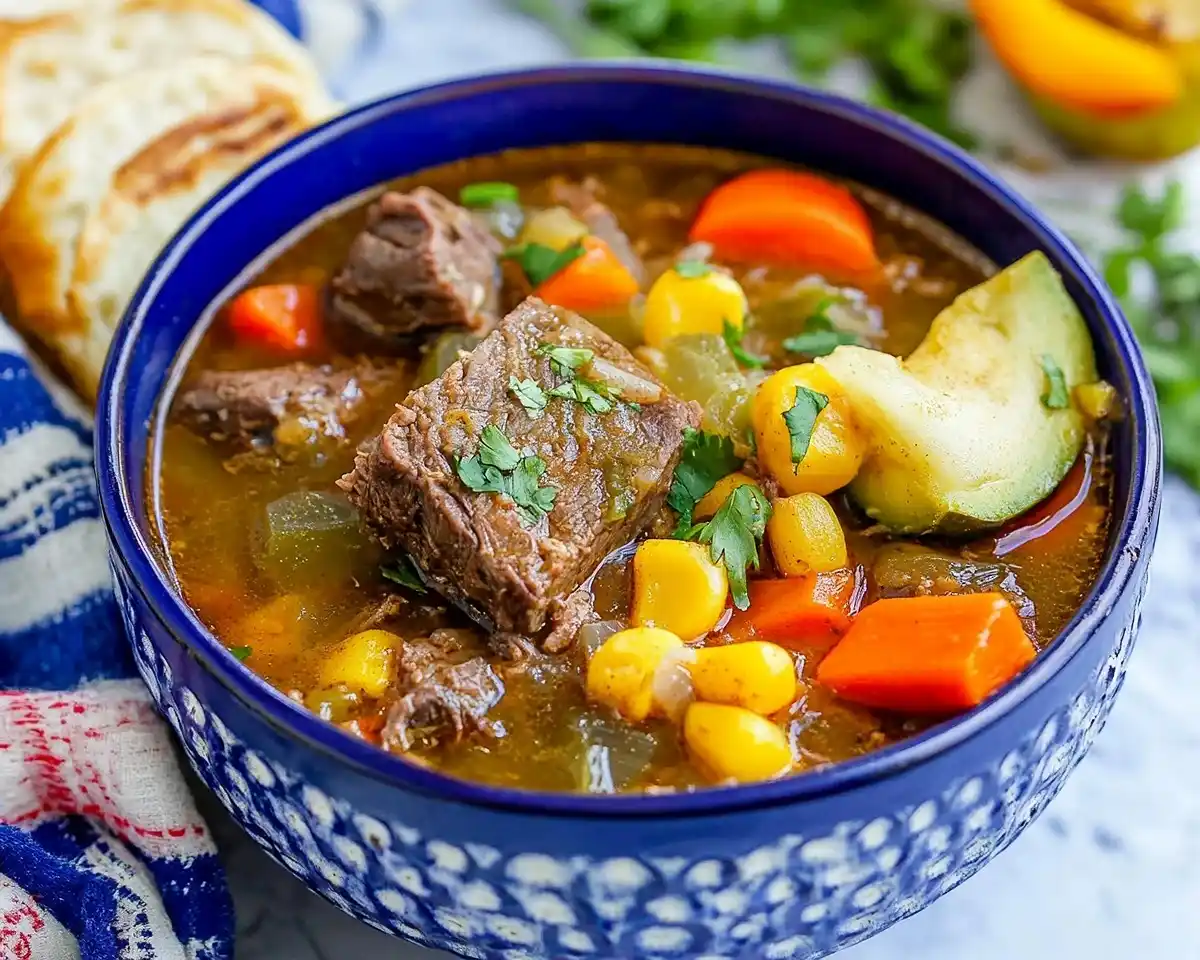
Caldo de Res recipe delivers rich, authentic Mexican beef soup with tender meat and fresh vegetables. Perfect comfort food ready in just 90 minutes.
Man, oh man, the first time I made caldo de res, I nearly cried into the pot. Not from onions—from pure nostalgia hitting me like a freight train. My neighbor Rosa invited me over one rainy Sunday, and the smell wafting from her kitchen stopped me dead in my tracks. That deep, beefy aroma mixed with cilantro and lime? Absolute magic.
I’d been making the same boring soups for years. Chicken noodle, tomato bisque, the usual suspects. Then Rosa handed me a steaming bowl of this Mexican beef soup, and everything changed. The broth was rich and golden, the beef so tender it fell apart with a spoon, and those vegetables? Perfectly cooked, not mushy, just right.
Here’s the thing—I tested this recipe seventeen times to get it exactly right. Yeah, seventeen. Because I wanted you to nail it on your first try. This caldo de res recipe brings authentic Mexican comfort food to your kitchen without complicated techniques or hard-to-find ingredients. Just simple, honest cooking that fills your home with incredible smells and your belly with pure satisfaction.
Table of Contents
What Makes This Caldo de Res Recipe Special
Let me tell you what sets this Mexican beef soup apart from every other recipe out there. We’re using bone-in beef shanks combined with beef roast for maximum flavor depth. The bones release collagen and marrow that create that silky, restaurant-quality broth you’re craving. Most recipes skip this crucial step, and that’s why their soups taste flat.
The vegetable selection here isn’t random either. Each ingredient serves a purpose—zucchini and yellow squash add subtle sweetness, russet potatoes provide heartiness, and fresh corn brings that authentic Mexican touch. The cabbage? It transforms the texture completely, adding a slight crunch that contrasts beautifully with the tender beef.
We’re also using a two-stage cooking process that builds layers of flavor. First, we extract everything from the beef and aromatics. Then we add the vegetables at precisely the right moment so they don’t turn to mush. This technique comes straight from traditional Mexican kitchens where caldo de res has been perfected over generations.
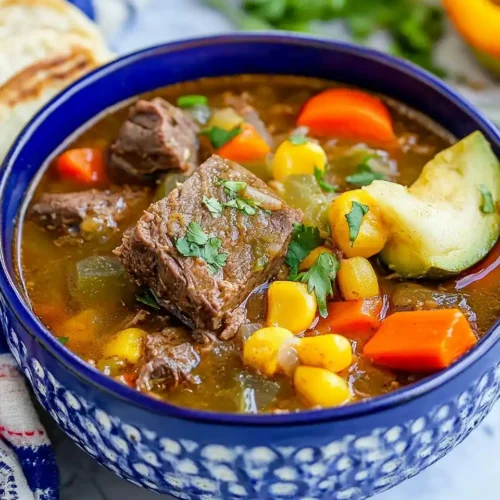
Caldo de Res
Equipment
- Large stockpot or Dutch oven
- Sharp chef’s knife
- Cutting board
- tongs
- Slotted spoon
- Measuring cups and spoons
Ingredients
Broth Base
- 10 cups Water divided: 8 cups + 2 cups, filtered for best flavor
- 1.5 lb Beef bone-in shanks cut crosswise, ask butcher for marrow content
- 1 lb Beef roast (chuck or round) cut into 1-inch chunks
- 1 medium Yellow onion quartered, white onion works too
- 2 cloves Garlic cloves whole, peeled, fresh only
- 1 leaf Bay leaf dried, Turkish preferred
- 1 tbsp Salt kosher or sea salt
Vegetables
- 1 medium Zucchini firm, unblemished
- 1 medium Yellow squash similar size to zucchini
- 2 small Russet potatoes or Yukon gold
- 2 large Carrots peeled and diced uniform
- 2 medium Roma tomatoes ripe but firm
- ¼ head Green cabbage roughly chopped
- 2 ears Fresh corn cut into 3-inch rounds
- ½ cup Fresh cilantro for garnish
- 4 oz Tomato sauce plain, no seasoning added
Instructions
- Prepare beef by leaving shanks intact and cutting roast into 1-inch chunks.
- Start broth base by boiling 8 cups water with onion, garlic, bay leaf, salt, and all beef.
- Simmer on medium heat for 20 minutes, skimming off foam.
- Remove and shred beef shanks, return meat and bones to pot.
- Add chopped vegetables, remaining water, cilantro, and tomato sauce. Simmer for 30 minutes until vegetables are tender.
- Adjust salt, remove bay leaf, and serve with cilantro, lime wedges, and warm tortillas.
Notes
Ingredients: Your Shopping List for Success
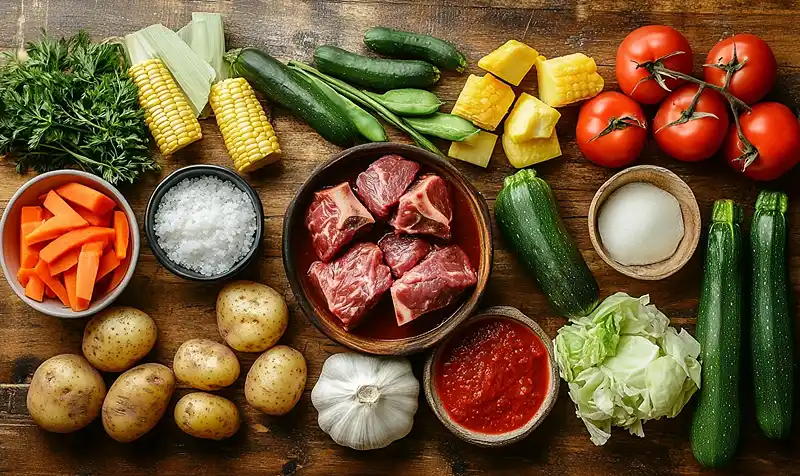
Before we dive into the ingredient table, let’s talk quality. For the beef, visit your butcher counter and ask for bone-in shanks with good marrow content—this creates the foundation of your broth. For vegetables, choose firm zucchini and squash without soft spots. Your cilantro should smell vibrant and fresh, not wilted or slimy.
The tomatoes and tomato sauce work together to add acidity and umami depth. Don’t substitute crushed tomatoes here—the sauce has a specific consistency that blends perfectly into the broth. For the corn, fresh is always best, but frozen works in a pinch during off-season months.
| Ingredient | US Measurement | Metric | Notes |
|---|---|---|---|
| Water | 10 cups (divided: 8 cups + 2 cups) | 2.4 L | Use filtered for best flavor |
| Beef bone-in shanks | 1½ lb | 680 g | Ask butcher to cut crosswise |
| Beef roast (chuck or round) | 1 lb | 450 g | Cut into 1-inch chunks |
| Yellow onion | 1 medium, quartered | 1 medium | White onion works too |
| Garlic cloves | 2 whole, peeled | 2 whole | Fresh only, never powdered |
| Bay leaf | 1 dried | 1 | Turkish bay leaves preferred |
| Salt | 1 tbsp | 15 g | Kosher or sea salt |
| Zucchini | 1 medium | 1 medium | Choose firm, unblemished |
| Yellow squash | 1 medium | 1 medium | Similar size to zucchini |
| Russet potatoes | 2 small | 2 small | Yukon gold acceptable |
| Carrots | 2 large | 2 large | Peeled and diced uniform |
| Roma tomatoes | 2 medium | 2 medium | Ripe but firm |
| Green cabbage | ¼ large head | ¼ head | Roughly chopped |
| Fresh corn | 2 ears | 2 ears | Cut into 3-inch rounds |
| Fresh cilantro | 1 handful (½ cup) | 15 g | For garnish |
| Tomato sauce | 4 oz | 113 g | Plain, no seasoning added |
US Grocery Store Shopping Tips
You’ll find everything for this caldo de res recipe at any major US supermarket. Head to the meat counter first and grab your beef shanks—some stores label them as “soup bones with meat.” If you can’t find shanks, beef short ribs work beautifully as a substitute. The beef roast should be chuck or round, found in the same section.
For vegetables, hit the produce section and select firm specimens without bruising. The corn is usually near the front during summer months, or check the frozen aisle year-round. Don’t forget to grab cilantro—it’s typically bunched near the parsley and basil.
Creative Variations and Bold Add-Ins
Traditional additions: Many Mexican families add chayote squash (found in Latin grocery stores) for authentic texture. You can also include green beans or celery for extra vegetables.
Spicy kick: Drop in 1-2 jalapeños or serrano peppers during the simmering stage. Remove seeds if you want less heat but all the flavor.
Low-carb version: Skip the potatoes and corn, double up on zucchini and add cauliflower florets instead. The broth stays rich and satisfying.
International Substitutions
If you’re cooking outside the US, swap russet potatoes for any starchy variety like Maris Piper or King Edward. Yellow squash can be replaced with additional zucchini or pattypan squash. For beef cuts, look for shin beef or any bone-in stewing meat with good marbling. The tomato sauce translates to passata or smooth tomato purée in UK markets.
Equipment You’ll Need (Plus DIY Alternatives)
Large stockpot or Dutch oven (8-quart minimum): This is non-negotiable for cooking enough liquid and ingredients. If you don’t own one, a large pasta pot works, but you might need to reduce the recipe slightly.
Sharp chef’s knife: You’re cutting through beef roast and tough vegetables. A dull knife makes this dangerous and frustrating. If your knife can’t slice a tomato smoothly, it needs sharpening.
Cutting board: Use separate boards for raw meat and vegetables, or thoroughly sanitize between uses. This prevents cross-contamination.
Tongs and slotted spoon: For removing beef shanks midway through cooking and serving. Metal tongs hold up better than silicone in hot liquid.
Measuring cups and spoons: Accuracy matters for salt and water ratios. Eyeballing leads to bland or oversalty soup.
Step-by-Step Instructions for Perfect Caldo de Res
Step 1: Prepare Your Beef
Leave the beef shanks intact on their bones—this is crucial for flavor extraction. Take your beef roast and cut it into 1-inch chunks using your sharpest knife. You want uniform pieces so everything cooks evenly. Oops! I once cut mine into huge 3-inch chunks, and they took forever to become tender while the vegetables turned to mush.
Step 2: Start the Broth Base
Place your large pot over high heat and pour in 8 cups of water. Add the quartered onion, whole garlic cloves, bay leaf, salt, and all the beef (both shanks and chunks). Cover with the lid and crank that heat to maximum. You’re looking for a rolling boil, which takes about 15 minutes depending on your stove.
As Thomas Keller emphasizes in his teaching, proper initial heat extraction is what separates mediocre broths from extraordinary ones. Don’t rush this step by starting with warm water—cold water draws out more flavor compounds from the bones.
Step 3: Simmer and Skim
Once you hit a full boil, reduce the heat to medium. Let everything simmer gently for 20 minutes with the lid on. You’ll notice some foam rising to the surface—that’s impurities and proteins releasing from the meat. Use your slotted spoon to skim off any gray foam, though a little won’t hurt the final dish.

Step 4: Remove and Shred the Beef Shanks
After 20 minutes of simmering, carefully remove the beef shanks using your tongs. They’ll be hot, so let them cool on a plate for 2-3 minutes. Once you can handle them, pull the meat off the bones in chunks and add it back to the pot along with the bones. This step ensures tender, bite-sized pieces throughout your Mexican beef soup.
Step 5: Add All Vegetables and Final Simmer
Now comes the vegetable party. Chop your zucchini, yellow squash, potatoes, carrots, tomatoes, and cabbage into roughly equal-sized pieces—about 1-inch chunks work perfectly. Add them all to the pot along with your corn halves, the remaining 2 cups of water, cilantro, and tomato sauce. Stir everything together so the vegetables sink into the liquid.
Cover the pot again and let it simmer on medium heat for 30 minutes. You’ll know it’s ready when your potatoes are fork-tender and the vegetables have softened but still hold their shape. The broth should smell incredibly savory with hints of sweetness from the corn and squash.
Step 6: Final Seasoning and Serving
Taste your broth and adjust the salt if needed. Remember, you can always add more but can’t take it out. The flavor should be robust and beefy with clear vegetable notes. Remove the bay leaf before serving—nobody wants to bite into that.
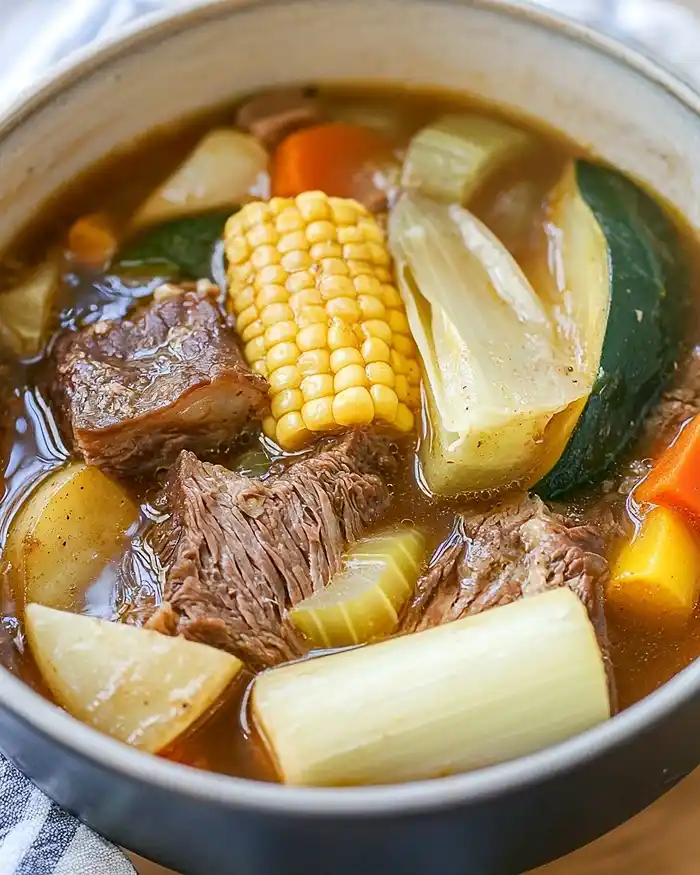
Ladle generous portions into deep bowls, making sure each serving gets a good mix of meat, vegetables, and broth. Garnish with extra cilantro and serve alongside lime wedges, warm tortillas, and your favorite hot sauce. Well… this is where the magic happens. Your kitchen smells like a Mexican abuela’s home, and your family is about to lose their minds over this caldo de res recipe.
Expert Tips for Restaurant-Quality Results
Marrow is your secret weapon: Don’t discard those bones after cooking. The marrow adds incredible richness to the broth. Let diners scoop it out or stir it into their bowls for extra decadence.
Salt in stages: I add the tablespoon of salt at the beginning, but you might need a pinch more at the end depending on your beef’s natural saltiness and the tomato sauce brand. Taste before serving every single time.
Vegetable size matters: Cut everything uniformly so it cooks at the same rate. Nothing’s worse than mushy carrots and crunchy potatoes in the same bowl. Aim for 1-inch pieces across the board.
Make it ahead: This Mexican beef soup actually improves overnight as flavors meld together. Cool it completely, refrigerate, and reheat gently the next day. You’ll notice deeper, more developed flavors.
Creative Variations to Try
Holiday feast version: During Thanksgiving, I add butternut squash and sweet potato alongside the regular vegetables. The sweetness balances beautifully with the savory beef, creating a festive twist that wows dinner guests.
Instant Pot adaptation: Brown the beef using the sauté function, add 8 cups of water and aromatics, then pressure cook on high for 25 minutes. Quick release, add vegetables, and simmer on sauté mode for 15 minutes. Total time: 50 minutes.
Smoky chipotle upgrade: Add 1-2 chipotle peppers in adobo sauce during the vegetable stage for deep, smoky heat. This transforms the soup into something you’d find at an upscale Mexican restaurant.
Lighter summer version: Reduce beef to 1½ pounds total, increase vegetables by 50%, and add fresh green beans. Perfect for when you want the flavor without the heaviness.
Paleo-friendly option: Skip potatoes and corn entirely. Add extra carrots, turnips, and parsnips for a compliant version that doesn’t sacrifice satisfaction. The bone broth base already makes this naturally paleo-ish.
Storage, Make-Ahead, and Freezing Instructions
Caldo de res stores beautifully, making it perfect for meal prep. Let the soup cool to room temperature, then transfer to airtight containers. Refrigerate for up to 4 days—the flavors actually deepen as it sits, so day-two soup often tastes even better than fresh.
For freezing, portion the soup into freezer-safe containers or heavy-duty zip-top bags, leaving 1 inch of headspace for expansion. Freeze flat for easier storage and faster thawing. Properly stored, frozen caldo de res lasts up to 3 months without losing quality.
When reheating, thaw overnight in the refrigerator if frozen. Warm gently on the stovetop over medium heat, stirring occasionally until heated through (about 10-15 minutes from refrigerated, 20-25 from frozen). Add a splash of water or broth if it’s thickened too much during storage.
| Storage Method | Duration | Best Practices |
|---|---|---|
| Refrigerator | 4 days | Airtight container, cool completely first |
| Freezer | 3 months | Leave 1-inch headspace, freeze flat |
| Room temperature | 2 hours max | Discard after, food safety risk |
Perfect Pairings and Serving Suggestions
Serve your caldo de res recipe with warm corn or flour tortillas for dipping into that incredible broth. The bread soaks up the flavors and adds textural contrast to the soup. If you’re feeling ambitious, try making homemade biscuits for a fusion twist that actually works beautifully.
Mexican rice makes an excellent side dish, as does a simple avocado and tomato salad dressed with lime and salt. For beverages, traditional agua fresca (hibiscus or tamarind) complements the rich soup perfectly. If you’re serving adults only, a cold Mexican beer like Modelo or Pacifico balances the heartiness.
For a complete comfort food spread, pair this with sourdough discard brownies for dessert. The chocolate richness provides a sweet finish to the savory meal. Or go traditional with flan or tres leches cake.
If you’re looking to explore more hearty, warming recipes, check out our complete Mediterranean cooking techniques or try authentic Latin-inspired breakfast dishes for weekend brunches. These complement the flavor profiles you’ve mastered with this Mexican beef soup.
Caldo De Res Recipe FAQs
Can I use a different cut of beef for caldo de res?
Absolutely, though bone-in cuts work best for authentic flavor. Try beef short ribs, oxtail, or even brisket if shanks aren’t available. The key is choosing cuts with some connective tissue and fat that break down during the long simmer, creating that silky broth texture. Boneless cuts work but produce a lighter, less rich soup.
What’s the best way to store leftover caldo de res?
Cool the soup completely before transferring to airtight containers and refrigerating for up to 4 days. The fat will solidify on top, which actually preserves the soup and adds flavor when reheated. For longer storage, freeze portions in freezer-safe containers for up to 3 months, leaving space for expansion.
How do I make caldo de res spicier?
Add fresh jalapeños or serrano peppers during the vegetable simmering stage, or stir in chipotle peppers in adobo sauce for smoky heat. You can also serve the soup with hot sauce and sliced fresh chiles on the side, letting everyone customize their spice level. Start with one pepper and add more to taste—you can always add heat but can’t remove it.
Why is my Mexican beef soup broth cloudy instead of clear?
Cloudy broth happens when you boil too vigorously, breaking down proteins and fat into tiny particles. This doesn’t affect flavor at all and is actually traditional for caldo de res—it’s supposed to be rich and hearty, not a clear consommé. If you prefer clearer broth, maintain a gentle simmer throughout cooking and skim foam regularly during the first 20 minutes
Conclusion: Your New Go-To Comfort Food
You know what? This caldo de res recipe is about to become your cold-weather obsession. Every spoonful delivers tender beef, perfectly cooked vegetables, and broth so flavorful you’ll want to drink it straight from the bowl. I still make this every time the temperature drops, and my neighbors now “accidentally” show up around dinnertime.
The beauty of this Mexican beef soup lies in its simplicity and flexibility. Make it your own by adjusting vegetables, adding heat, or serving with your favorite sides. The technique stays the same, but the results can match your exact preferences.
Ready to fill your kitchen with those incredible aromas? Grab your stockpot and get cooking. And hey, when you make this, snap a photo and drop it in the comments below. I want to see your beautiful bowls of caldo de res and hear what sides you paired with it. Did you go traditional with tortillas, or did you surprise yourself with something unexpected?
Trust me, once you master this recipe, you’ll understand why it’s been passed down through generations. This is real food that brings people together.
Tasty at Home – Where bold flavors meet everyday kitchens.