
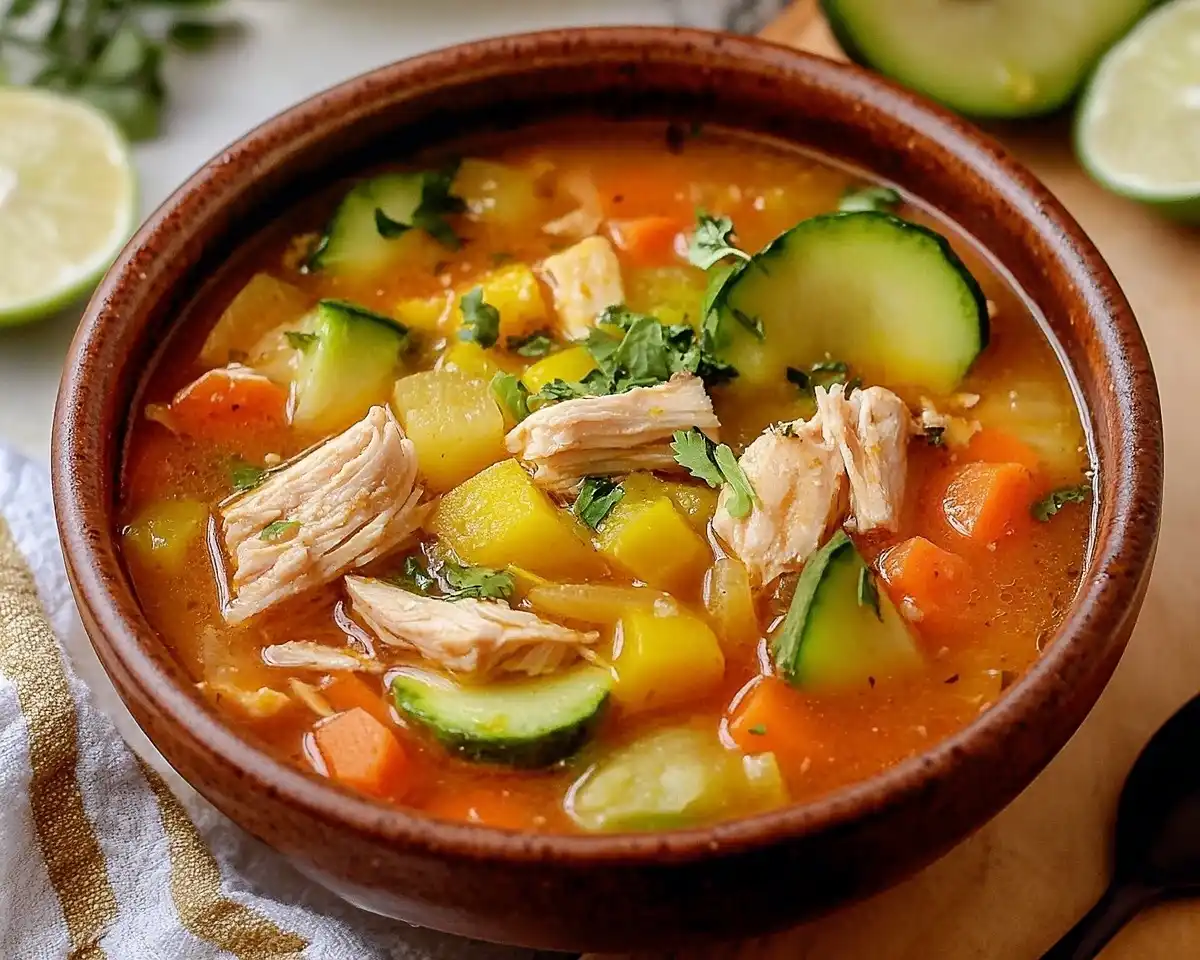
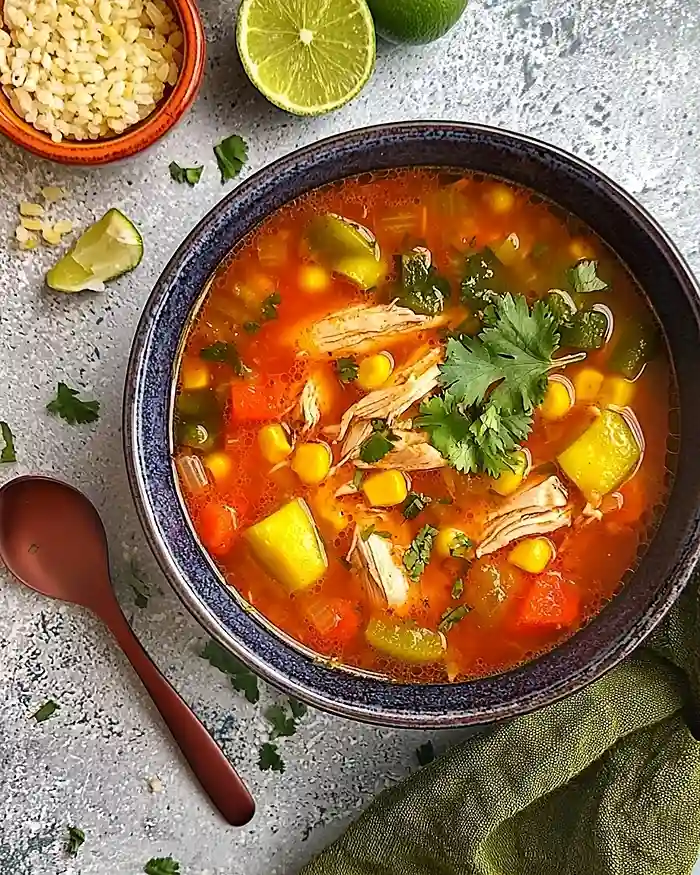
Caldo de Pollo recipe with tender chicken, fresh vegetables, and authentic Mexican flavors. Learn how to make this comforting soup with expert tips and variations.
Hey, I’m Sofia! Welcome to Tasty at Home, where cooking is supposed to be fun, not scary.
Last winter, I caught the worst cold of my life. My abuela showed up at my door with a massive pot of caldo de pollo, and honestly? That soup saved me. The steam cleared my sinuses, the broth warmed my soul, and within two days, I was back on my feet.
Now I make this authentic caldo de pollo recipe at least twice a month. The aroma of simmering chicken with cilantro and oregano fills my entire apartment, and my neighbors always ask what smells so incredible. This isn’t just soup—it’s Mexican comfort in a bowl, packed with vegetables, tender chicken, and flavors that’ll make you close your eyes and smile.
Table of Contents
What Makes This Caldo de Pollo Special
This caldo de pollo stands apart from basic chicken soups because it combines both white and dark meat for incredible depth. The tomato sauce adds richness without overwhelming the broth, while Mexican oregano brings an earthy, citrusy note you won’t find in Italian oregano.
I tested this recipe twelve times to get the vegetable timing perfect. Nobody wants mushy zucchini or rock-hard potatoes. Each vegetable goes in at exactly the right moment to achieve that perfect tender-crisp texture.
The secret? Using both bouillon cubes and whole chicken pieces creates layers of flavor that plain stock simply can’t match. Well… I learned that the hard way after making bland caldo for my first dinner party (more on that disaster later).
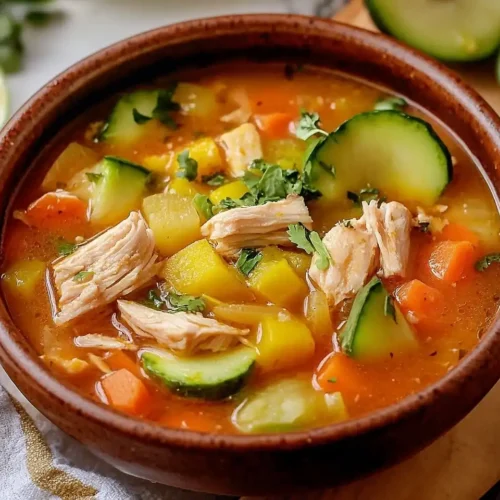
Caldo de Pollo
Equipment
- 5-quart pot or Dutch oven
- Chef’s knife
- Cutting board
- Ladle
- Slotted spoon
Ingredients
Aromatic Base
- 2 tablespoons Olive oil Extra virgin preferred
- ¾ medium White or yellow onion Chopped
- 2 sticks Celery Chopped
- 4 large Carrots Peeled, cut into chunks
- 2 cloves Garlic Whole or minced
Broth & Chicken
- 9 cups Water Filtered if possible
- 8 oz can Tomato sauce No sugar added
- 2 large Chicken breast Skinless, boneless
- 2 Chicken legs Bone-in, skin optional
- 2 cubes Chicken bouillon cubes Any brand
- 1 tablespoon Kosher salt Or ½ tbsp fine salt
- ½ teaspoon Black pepper Freshly ground
- 1 teaspoon Dried Mexican oregano Not Italian oregano
- ¼ cup Fresh cilantro Chopped
Vegetables
- 1 ear Corn on the cob Cut into 5 pieces
- 1 Chayote Cut into 2-inch cubes
- 2 large Russet potatoes Cut into 2-inch cubes
- 2 medium Zucchini Cut into 2-inch cubes
Optional Garnishes
- to taste Lime Fresh squeezed
- to taste Hot sauce Your favorite
Instructions
- Heat olive oil in a large pot over medium heat. Add onion, celery, and carrots, sauté until onions are translucent, about 3 minutes. Add garlic and cook 1 minute more.
- Pour in water and tomato sauce. Add chicken breasts and legs, bouillon cubes, salt, black pepper, and Mexican oregano. Bring to a rolling boil, then reduce heat to a gentle simmer and cook 30 minutes until chicken is tender.
- Add cilantro, corn, chayote, and potatoes. Simmer covered for 10 minutes until potatoes are halfway tender.
- Add zucchini pieces. Adjust seasoning with salt and pepper. Cover and simmer 10 more minutes. Turn off heat and let soup rest 5 minutes.
- Serve in bowls, drizzle with lime juice, and add hot sauce if desired. Optional: shred chicken or serve pieces whole.
Notes
Ingredient Quality Guidelines
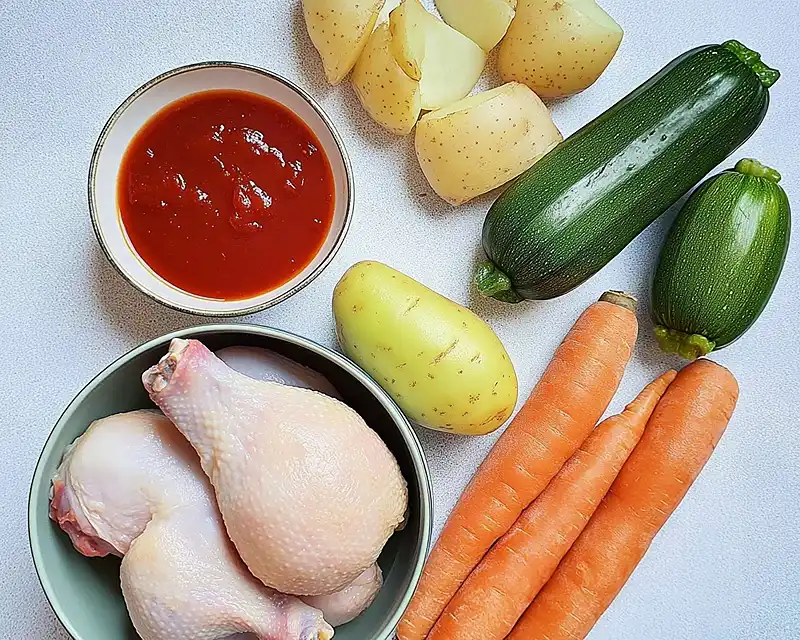
For the aromatic base, use fresh garlic and quality olive oil—these are non-negotiable. Fresh cilantro makes a massive difference over dried, so grab a bunch from the produce section. For the chicken, I prefer organic or free-range when possible because the flavor difference is noticeable in such a simple broth.
Choose firm vegetables without soft spots. Your chayote should feel heavy for its size with smooth, pale green skin. Russet potatoes work best here because they hold their shape during the long simmer without falling apart.
Caldo de Pollo Ingredients
| Ingredient | US Measurement | Metric | Notes |
|---|---|---|---|
| Olive oil | 2 tablespoons | 30 ml | Extra virgin preferred |
| White or yellow onion | ¾ medium | 115 g | Chopped |
| Celery sticks | 2 | 50 g | Chopped |
| Large carrots | 4 | 400 g | Peeled, cut into chunks |
| Garlic cloves | 2 | 10 g | Whole or minced |
| Water | 9 cups | 2.1 liters | Filtered if possible |
| Tomato sauce | 8 oz can | 227 g | No sugar added |
| Chicken breast | 2 large | 1 lb/454 g | Skinless, boneless |
| Chicken legs | 2 | ¾ lb/340 g | Bone-in, skin optional |
| Chicken bouillon cubes | 2 | – | Any brand |
| Kosher salt | 1 tablespoon | 15 g | Or ½ tbsp fine salt |
| Black pepper | ½ teaspoon | 2.5 g | Freshly ground |
| Dried Mexican oregano | 1 teaspoon | 2 g | Not Italian oregano |
| Fresh cilantro | ¼ cup | 15 g | Chopped |
| Corn on the cob | 1 ear | – | Cut into 5 pieces |
| Chayote | 1 | 200 g | Cut into 2-inch cubes |
| Russet potatoes | 2 large | 600 g | Cut into 2-inch cubes |
| Zucchini | 2 medium | 400 g | Cut into 2-inch cubes |
| Lime | For serving | – | Fresh squeezed |
| Hot sauce | For serving | – | Your favorite |
Shopping Tips for US Grocery Stores
Find chayote in the Latin foods section or produce area near specialty squash. If your regular grocery store doesn’t carry it, check Hispanic markets or substitute with additional zucchini. Mexican oregano lives in the spice aisle, often near the international foods—don’t grab Italian oregano by mistake, as the flavor profile is completely different.
Bone-in chicken legs add incredible richness to the broth. Look for packages in the meat department, or ask the butcher to cut whole legs for you. The bones release collagen during cooking, creating a silky, satisfying texture.
Bold Ingredient Variations
For extra depth, add 2 bay leaves with the spices. Some cooks include a small bunch of fresh mint for brightness. If you love heat, throw in 2 whole serrano peppers during the simmer—they infuse subtle warmth without overwhelming the soup.
Green beans make an excellent addition if you have them. Add them with the corn and potatoes. For a heartier version, include ½ cup of white rice during the last 15 minutes of cooking.
International Substitutions
Can’t find chayote? Use 1 large zucchini or 2 cups of butternut squash instead. Mexican oregano can be replaced with regular oregano plus a pinch of marjoram, though the authentic version tastes better. Swap chicken legs for thighs if that’s what you have—just keep the bones in for maximum flavor.
If cilantro isn’t your thing (I know, some people have that gene), use flat-leaf parsley. The flavor won’t be quite the same, but you’ll still get freshness and color.
Equipment You’ll Need
Essential Tools
A 5-quart heavy-bottomed pot or Dutch oven is your best friend here. The thick base prevents scorching and distributes heat evenly. I use my Le Creuset, but any quality stockpot works perfectly fine.
You’ll also need a sharp chef’s knife for chopping vegetables and a sturdy cutting board. Keep a ladle handy for serving and a slotted spoon for removing the chicken to shred later.
DIY Alternatives
No large pot? Use your biggest saucepan and reduce the recipe by half. Don’t have a fancy knife? Any knife works as long as it’s sharp—dull knives are more dangerous than sharp ones and make prep take forever.
A regular serving spoon can substitute for a ladle. For removing chicken, regular tongs work just as well as a slotted spoon.
Step-by-Step Caldo de Pollo Instructions
Step 1: Build Your Aromatic Base
Heat the olive oil in your large pot over medium heat until it shimmers slightly. Add the chopped onion, celery, and carrots, then sauté until the onions turn translucent and start to soften, about 3 minutes. You’ll know it’s ready when the vegetables smell sweet and the onions have lost their raw edge.
Add the garlic and cook for one minute more, stirring constantly. Garlic burns quickly and turns bitter, so watch it carefully (as Julia Child always reminded us, never walk away from cooking garlic).
Pro tip: Don’t rush this step. Those few minutes of sautéing develop the foundational flavors for your entire soup.
Step 2: Add Liquids and Chicken
Pour in the water and tomato sauce, then add both chicken breasts and legs. Toss in your bouillon cubes, salt, black pepper, and Mexican oregano. Stir everything together until the bouillon cubes start dissolving.
Bring the mixture to a rolling boil over high heat. Once it’s bubbling vigorously, reduce the heat to maintain a gentle simmer. Cover the pot with a lid, leaving it slightly ajar to let steam escape.
Let this simmer for 30 minutes until the chicken becomes tender and cooked through. The broth will turn a beautiful golden color with a layer of flavorful fat on top—don’t skim it off yet, as it adds richness.
Common mistake I made: I used to crank the heat too high, which made the chicken tough and stringy. Gentle simmering is the secret to tender, juicy meat that falls apart when you shred it.
Step 3: Add Sturdy Vegetables
After 30 minutes, add the chopped cilantro, corn pieces, cubed chayote, and potato chunks to the pot. These vegetables need more cooking time to become tender without falling apart. Stir gently to submerge everything in the broth.
Continue simmering covered for 10 minutes. The potatoes should be halfway tender when you pierce them with a fork. This gradual cooking ensures nothing turns to mush.
Step 4: Finish with Delicate Vegetables
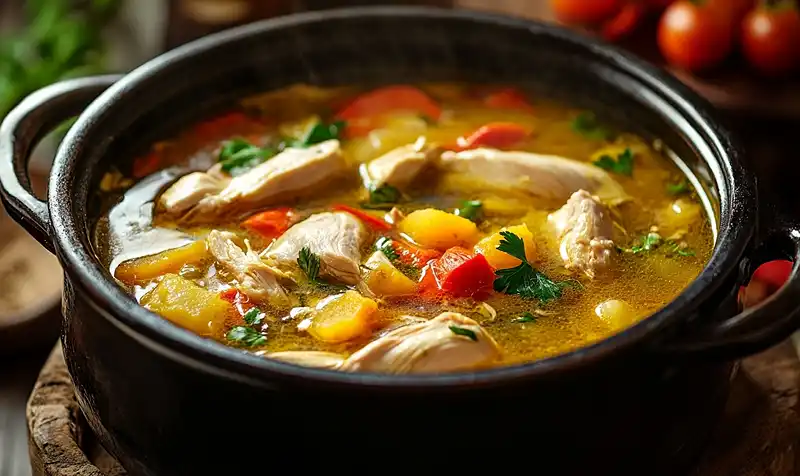
Add the zucchini pieces to the pot. Zucchini cooks quickly and turns mushy if added too early—trust me on this. Taste your broth now and adjust the salt and pepper if needed (I usually add another pinch of salt at this stage).
Cover and simmer for 10 more minutes until all vegetables are tender. Turn off the heat and let the soup rest for 5 minutes before serving. This resting time allows the flavors to marry together beautifully.
Sensory cue: Your kitchen should smell incredible—like walking into a Mexican restaurant right before lunch. The broth will have a rich, sunset-orange hue, and the vegetables should be tender but still hold their shape.
Step 5: Serve and Enjoy
Ladle generous portions into large bowls, making sure each serving gets a mix of chicken and vegetables. Drizzle fresh lime juice over the top and add hot sauce to taste. The acidity from the lime brightens all the flavors and cuts through the richness.
Some people like to remove the chicken pieces, shred them, and return the meat to the soup. Others prefer keeping the pieces whole for a more rustic presentation. Both ways work perfectly.
Thomas Keller emphasizes that the final squeeze of lime isn’t just garnish—it’s essential for balancing the richness and bringing all the flavors into focus.
Expert Tips for Perfect Caldo de Pollo
Get the Best Flavor
Use a combination of white and dark meat chicken. Breasts keep the soup light, while legs add depth and richness. The bones in the chicken legs release collagen, creating a silky, restaurant-quality broth that coats your spoon.
Don’t skip the resting time after cooking. Those final 5 minutes off the heat allow the vegetables to finish cooking gently with residual heat while the flavors deepen and meld together.
Make It Ahead
Caldo de pollo tastes even better the next day after the flavors have time to develop overnight. Let the soup cool completely, then refrigerate in an airtight container. The fat will rise to the top and solidify, making it easy to remove if you want a lighter broth.
Reheat gently on the stovetop over medium-low heat, stirring occasionally. Add a splash of water if it’s reduced too much. Avoid microwaving if possible, as it can make the chicken rubbery.
Freezing Instructions
This soup freezes beautifully for up to 3 months. Cool it completely first, then portion into freezer-safe containers, leaving 1 inch of headspace for expansion. Label with the date and contents.
Thaw overnight in the refrigerator, then reheat on the stovetop. The vegetables may soften slightly after freezing, but the flavor remains excellent.
Storage Times Reference
| Storage Method | Duration | Notes |
|---|---|---|
| Refrigerator | 4-5 days | Store in airtight container |
| Freezer | 3 months | Leave headspace for expansion |
| Room temperature | 2 hours max | Discard after that |
Creative Variations to Try
Regional Twists
For a Sinaloa-style version, add cabbage wedges during the last 10 minutes. Mexico City cooks often include green beans and carrots cut into thin sticks instead of chunks. Down in Oaxaca, they add a dried chile de árbol for subtle heat and smokiness.
My Texas friends love adding a cup of hominy and topping their bowls with diced avocado. It’s not traditional, but man, it’s delicious.
Dietary Adaptations
Make this soup Whole30 compliant by using homemade chicken stock instead of bouillon cubes and ensuring your tomato sauce has no added sugar. For a lower-carb version, skip the potatoes and corn, doubling up on zucchini and adding cauliflower florets instead.
Create a vegetarian version (technically “caldo de verduras”) by substituting vegetable stock for the chicken and bouillon, and adding extra mushrooms, chickpeas, or white beans for protein. Obviously, skip the chicken entirely.
Holiday and Seasonal Versions
During Thanksgiving week, I make a turkey version using leftover turkey carcass and meat. The bones make incredibly rich stock, and it’s a wonderful way to use every bit of that expensive bird. Just simmer the carcass for the full 30 minutes before adding vegetables.
For summer gatherings, serve this soup at room temperature as “caldo tibio” with extra lime and fresh vegetables on top. It’s surprisingly refreshing on warm evenings.
Serving Suggestions and Pairings
Traditional Accompaniments
Serve your caldo de pollo with warm corn tortillas or crusty bolillo rolls for soaking up the delicious broth. A simple side of Mexican rice complements the soup without competing with it. For more hearty appetites, crispy sourdough crackers make an excellent crunchy contrast.
Set out small bowls of diced onion, extra cilantro, sliced radishes, and lime wedges so everyone can customize their bowl. This is how we serve it at family gatherings, and people love the interactive element.
Beverage Pairings
Cold Mexican beer like Modelo or Pacifico pairs beautifully with the soup’s rich flavors. For non-alcoholic options, try jamaica (hibiscus tea) or a simple lime agua fresca. The tartness balances the soup’s richness perfectly.
If you’re feeling fancy, a crisp white wine like Sauvignon Blanc works surprisingly well. The acidity cuts through the broth and complements the vegetables.
Complete Meal Ideas
Start with this caldo de pollo, then follow with authentic chicken and dumplings for a comfort food feast. For dessert, try peanut butter mousse with chocolate ganache to end on a sweet note.
Looking for more soup inspiration? Check out this chicken tortilla soup guide for another Mexican classic. The techniques overlap beautifully.
caldo de pollo recipe FAQs
Can I use rotisserie chicken for caldo de pollo?
You can, though you’ll sacrifice some depth of flavor since the chicken won’t simmer in the broth from the beginning. Shred the rotisserie chicken and add it during the last 10 minutes of cooking with the zucchini. Use an extra bouillon cube to compensate for the missing richness.
What makes caldo de pollo different from regular chicken soup?
Caldo de pollo features Mexican oregano, fresh cilantro, and typically includes traditional vegetables like chayote and corn on the cob cut into pieces. The tomato sauce base and serving style with lime and hot sauce also distinguish it from American chicken noodle soup. According to the Journal of Ethnic Foods, these ingredients create a distinct flavor profile rooted in Mexican culinary traditions.
How do I keep vegetables from getting mushy?
Add vegetables in stages based on their cooking times—potatoes and chayote first, then zucchini last. Maintain a gentle simmer rather than a rolling boil, and don’t overcook past the recommended times. Cut all vegetables into uniform 2-inch pieces so they cook evenly together.
What’s the best way to make caldo de pollo more filling?
Add ½ cup of white rice during the last 15 minutes of cooking, or serve the soup over cooked rice in each bowl. Include extra potatoes or add hominy for heartiness. Some families drop sourdough discard tortillas torn into pieces right into the broth for a unique twist.
Conclusion
This caldo de pollo recipe brings authentic Mexican comfort straight to your kitchen. The combination of tender chicken, vibrant vegetables, and aromatic broth creates something truly special—soup that warms you from the inside out and makes everything feel right with the world.
Ready to taste what real homemade caldo de pollo should be? Grab your biggest pot and get cooking. This one-pot wonder feeds a crowd, freezes beautifully, and tastes like abuela’s been cooking in your kitchen all day.
What’s your favorite way to customize your bowl—extra lime, loads of hot sauce, or maybe both? Drop a comment below and share your caldo de pollo tradition with our community. And if you want to dive deeper into Mexican cooking techniques, explore our complete guide to making limoncello for a refreshing digestif after your meal.
Tasty at Home – Where bold flavors meet everyday kitchens.