
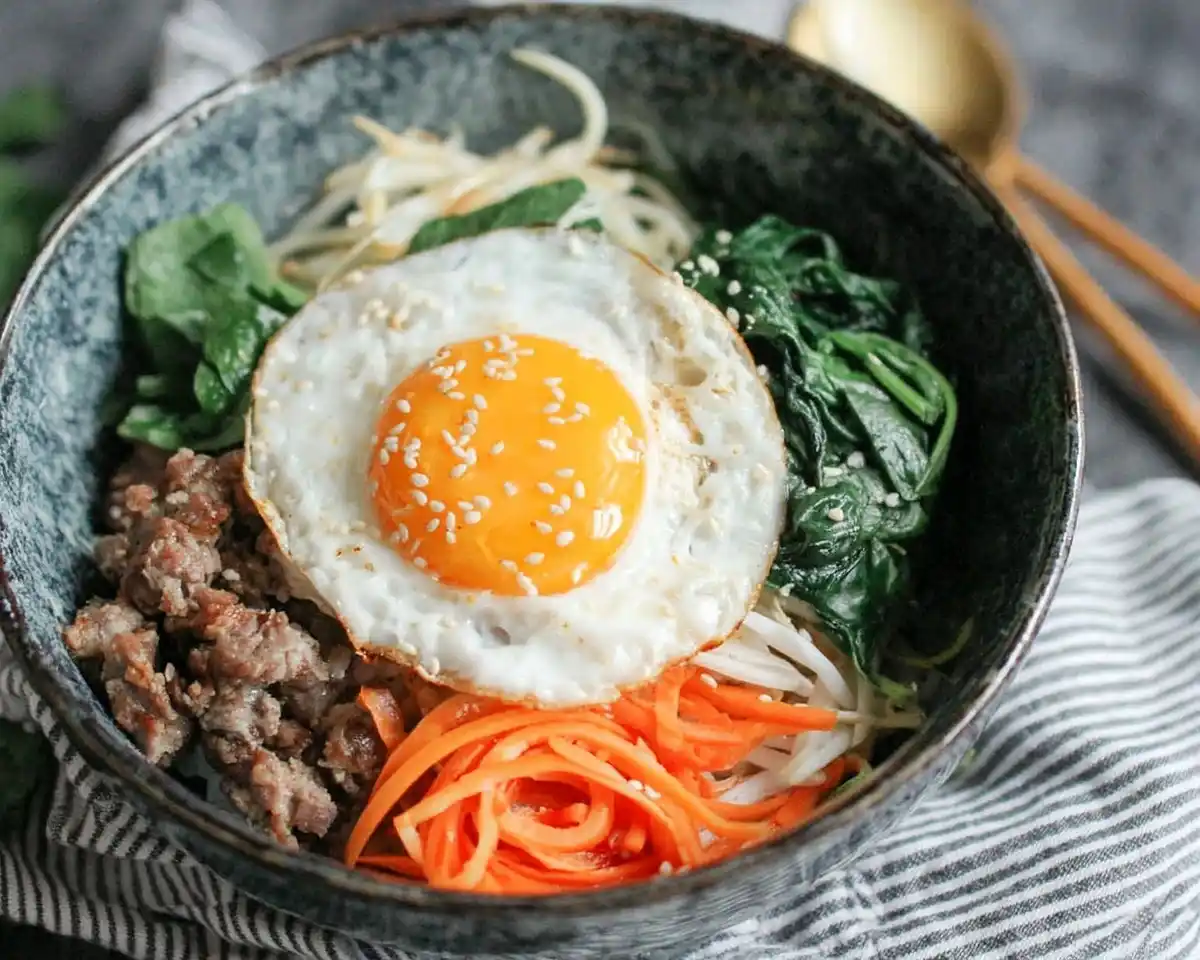
This vibrant Korean bibimbap recipe brings together perfectly seasoned beef, crisp vegetables, and a spicy-sweet sauce in one gorgeous bowl. It’s easier than you think and absolutely worth making at home!
You know that feeling when you find a recipe that looks intimidating but turns out to be totally doable? That’s bibimbap for me. I’ll never forget the first time I ordered this at a Korean restaurant—this beautiful bowl arrived at my table, literally sizzling in a hot stone pot, piled high with colorful vegetables arranged like edible art. I was obsessed. But here’s the thing: I thought it was way too complicated to make at home. Spoiler alert—I was so wrong.
Bibimbap (비빔밥) literally translates to “mixed rice,” and honestly, that’s the beauty of it. You’ve got warm rice as your base, savory seasoned beef, a rainbow of vegetables each cooked to perfection, a fried egg on top, and the most addictive gochujang-based sauce that ties everything together. The best part? You get to mix it all up and create this incredible medley of flavors and textures in every bite.
This Korean mixed rice with meat and assorted vegetables has become my go-to dinner when I want something that feels special but doesn’t require me to be a culinary genius. Plus, it’s one of those meals where you can prep everything ahead and just assemble when you’re ready to eat. Game changer for busy weeknights, am I right?
Table of Contents
What Makes This Bibimbap Recipe So Special
Let me tell you why this version is going to blow your mind. First off, we’re using beef mince instead of traditional bulgogi-style strips, which cuts down on prep time significantly. The meat gets marinated in a simple mixture of soy sauce, sesame oil, brown sugar, and garlic—nothing fancy, but trust me, it packs serious flavor.
Then there’s the vegetable situation. We’re talking spinach, bean sprouts, shiitake mushrooms, and carrots. Each one gets its own mini cooking session so they all shine with their unique flavors and textures. Yeah, it sounds like a lot of pans, but hear me out—each vegetable only takes 2-3 minutes to cook. You’ll be done before you know it.
The bibimbap sauce is where the magic happens. It’s got that perfect balance of spicy, sweet, savory, and tangy that makes you want to lick the bowl clean. Don’t skip the toasted sesame seeds in there—they add this nutty depth that’s absolutely essential.
Ultimate Bibimbap
Equipment
- Wok
- Skillet
- Bowl
- spatula
Ingredients
Meat & Marinade
- 100 g beef mince any ground beef works
- 1 Tbsp soy sauce
- 1 Tbsp sesame oil
- 1 tsp brown sugar
- ¼ tsp minced garlic
Vegetables
- 250 g spinach
- 350 g bean sprouts
- 100 g shiitake mushrooms
- 120 g carrots 1 small, julienned
- ½ tsp fine sea salt divided
Base & Toppings
- 3 cups steamed rice
- 3-4 pieces eggs sunny side up
- cooking oil rice bran or vegetable
- toasted seasoned seaweed shredded
Bibimbap Sauce
- 2 Tbsp gochujang
- 1 Tbsp sesame oil
- 1 Tbsp sugar raw sugar preferred
- 1 Tbsp water
- 1 Tbsp toasted sesame seeds
- 1 tsp vinegar apple cider
- 1 tsp minced garlic
Instructions
- Marinate beef mince with soy sauce, sesame oil, brown sugar, and garlic for 30 minutes.
- Whisk together bibimbap sauce ingredients: gochujang, sesame oil, sugar, water, sesame seeds, vinegar, and garlic. Set aside.
- Blanch spinach and bean sprouts briefly, shock in ice water, squeeze out water, season with sesame oil and salt.
- Julienne carrots and stir-fry with oil and salt for 2-3 minutes until tender-crisp.
- Slice shiitake mushrooms and cook in oil with salt for 2-3 minutes until golden.
- Cook marinated beef mince in hot oil over medium-high heat for 3-5 minutes until browned with some crispy edges.
- Fry eggs sunny side up with runny yolk for topping.
- Assemble bowls with rice, vegetables, beef, seaweed, egg, and sauce. Serve immediately.
Notes
Ingredients You’ll Need
Here’s everything laid out nice and simple. I’ve organized it by component so you can tackle this like a boss.
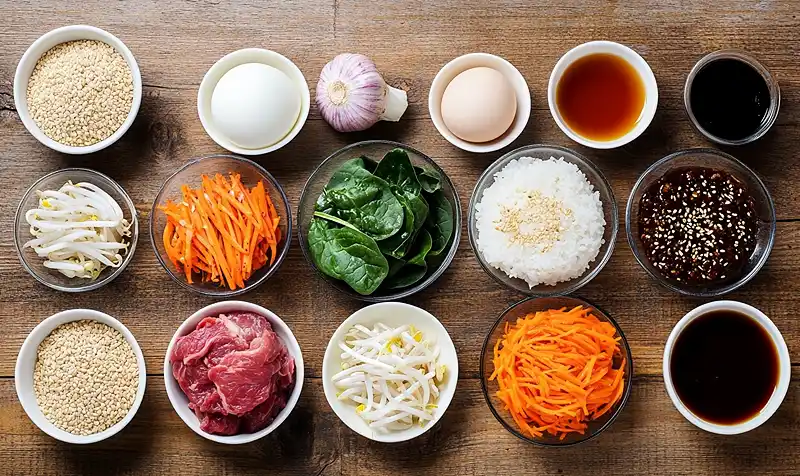
| Component | Ingredients | Notes |
|---|---|---|
| Meat & Marinade | 100g beef mince (3.5 oz) 1 Tbsp soy sauce 1 Tbsp sesame oil 1 tsp brown sugar 1/4 tsp minced garlic |
Any ground beef works! The marinade is simple but so flavorful. |
| Vegetables | 250g spinach (0.6 lbs) 350g bean sprouts (0.8 lbs) 100g shiitake mushrooms (3.5 oz) 120g carrots (1 small) 1/2 tsp fine sea salt (divided) |
Go ahead and use all those bean sprouts—more veggies = better bibimbap! |
| Base & Toppings | 3 cups steamed rice 3-4 eggs Cooking oil (rice bran or vegetable) Toasted seasoned seaweed, shredded |
Fresh rice is best, but day-old works too. Sunny side up eggs are classic! |
| Bibimbap Sauce | 2 Tbsp gochujang<br>1 Tbsp sesame oil 1 Tbsp sugar (raw sugar preferred) Tbsp water 1 Tbsp toasted sesame seeds 1 tsp vinegar (apple cider) 1 tsp minced garlic |
This makes enough for 3 servings if you like it spicy. Double it if you’re sauce-obsessed like me! |
A quick note on the vegetables: if 350g of bean sprouts seems like a mountain (it kind of is), you can totally use less. But I’m Team More Vegetables when it comes to bibimbap. The crunch factor is real, and they balance out the richness of the beef and egg perfectly.
Step-by-Step Instructions
Alright, let’s get cooking! This might seem like a lot of steps, but I promise it’s just organized chaos. Put on some K-pop and let’s do this.
Getting Your Mise en Place Ready
Start by marinating that beef mince. In a small bowl, mix together your soy sauce, sesame oil, brown sugar, and minced garlic. Add the beef and give it a good mix with your hands or a spoon. Let this hang out for about 30 minutes while you prep everything else. This marinating time isn’t just for show—it really lets those flavors penetrate the meat and makes a huge difference in the final dish.
While the meat’s getting happy in its marinade, whisk together your bibimbap sauce ingredients in another bowl. Gochujang, sesame oil, sugar, water, sesame seeds, vinegar, and garlic all become best friends in there. Give it a taste—it should be spicy, slightly sweet, and totally addictive. Set it aside and try not to eat it with a spoon (I’ve been there, no judgment).

Cooking the Vegetables
Here’s where we channel our inner prep chef. Each vegetable gets its moment to shine, and trust me, it’s worth the effort.
Spinach and bean sprouts: If you’ve got a tried-and-true method for these, go for it! I usually blanch my spinach in boiling water for about 30 seconds, then shock it in ice water to keep that gorgeous green color. Squeeze out the excess water and season with a touch of sesame oil and salt. For the bean sprouts, same deal—quick blanch, ice bath, done.
Carrots: Rinse, peel, and julienne your carrot into thin matchsticks. Heat a wok or large skillet over medium-high heat, add a splash of cooking oil and 1/4 teaspoon of salt, then toss in those carrots. Stir-fry for 2-3 minutes until they’re tender but still have a bit of crunch. You want them bright and sweet, not mushy. Transfer to a plate.
Shiitake mushrooms: Clean your mushrooms with a damp paper towel (don’t soak them—they’re like little sponges and will get waterlogged). Slice them thinly. Using the same wok, add another splash of oil and the remaining 1/4 teaspoon of salt. Cook those mushrooms over medium-high heat for 2-3 minutes until they’re golden and smell absolutely incredible. There’s something about cooked shiitake that just screams umami, you know?
Cooking the Beef
Now it’s time for the star protein. Heat your wok over medium-high to high heat and add a bit of cooking oil. Once it’s shimmering, add your marinated beef mince. Use your spatula to break it up as it cooks, making sure it gets nice and caramelized in spots. This should take about 3-5 minutes. You want it thoroughly cooked with some crispy edges—that’s where the flavor lives. The sesame oil in the marinade will make your kitchen smell like a Korean restaurant, and I’m not mad about it.
The Perfect Fried Egg
Last but definitely not least, let’s talk eggs. The classic bibimbap egg is sunny side up with a runny yolk that acts like an extra sauce when you mix everything together. Heat a clean pan over medium heat, add a little oil, and crack in your eggs. Cook them gently until the whites are set but the yolks are still jiggly. If you prefer your eggs over-easy or scrambled, honestly, you do you. This is your bibimbap journey.
Assembly Time – Where the Magic Happens
Grab your serving bowls (individual rice bowls work great, or go traditional with a stone bowl if you have one). Divide your steamed rice among the bowls. Now comes the fun part—arranging your components like you’re creating edible art.
Place portions of each cooked vegetable around the bowl in separate sections. Add the seasoned beef to one section. Sprinkle some of that shredded toasted seaweed over everything. Crown it all with a fried egg right in the center. Drizzle or dollop your bibimbap sauce over the top (or serve it on the side if someone at your table is spice-sensitive).
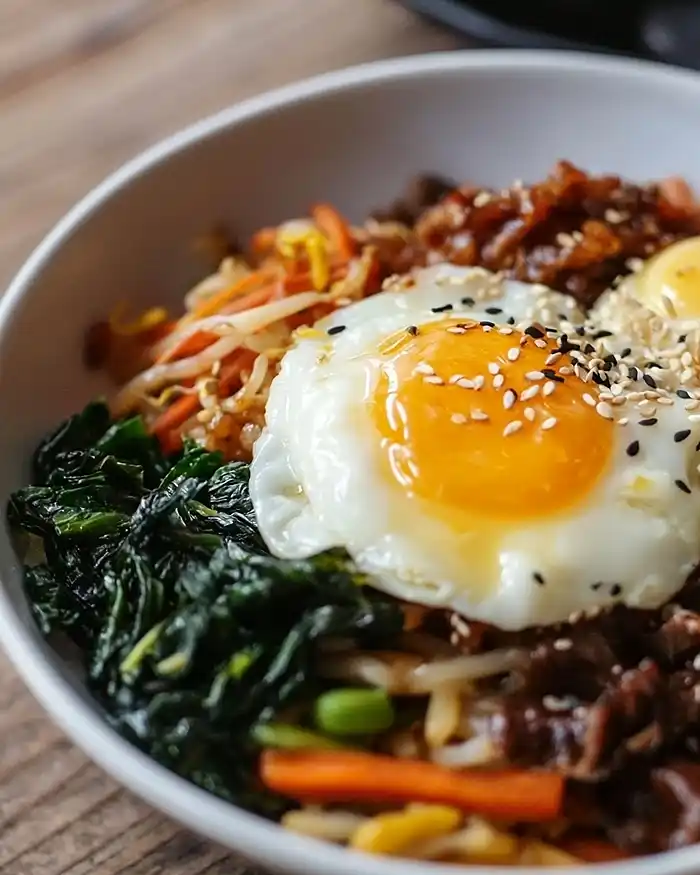
Serve it up and let everyone admire their beautiful bowl before the ceremonial mixing begins. Because that’s the whole point, right? You literally stir everything together until it’s this gorgeous, cohesive, flavor-bomb of a meal.
Expert Tips for Bibimbap Success
Temperature Control Matters
Keep your heat at medium-high to high for most of the vegetable and meat cooking. You want things to cook quickly and retain their texture, not steam and get soggy. A good hot wok is your friend here.
Meal Prep Like a Pro
This recipe is incredibly meal-prep friendly. Cook all your vegetables and meat ahead of time, store them in separate containers in the fridge, and they’ll keep for 3-4 days. When you’re ready to eat, just heat everything up (or eat it cold—also delicious), cook a fresh egg, and assemble. Boom, weeknight dinner sorted.
Rice Temperature Options
While warm rice is traditional, some people actually prefer cold rice for texture contrast. Room temperature works great too. Experiment and see what you like best!
Adjust the Spice Level
The gochujang sauce can be pretty spicy depending on the brand you use. Start with less gochujang if you’re heat-sensitive, or add more if you’re a spice warrior. You can also add a bit more sugar to balance out the heat without reducing the flavor.
Delicious Variations to Try
Vegetarian Bibimbap
Skip the beef entirely and add more vegetables! Zucchini, bell peppers, and cucumber are excellent additions. You could also add some crispy tofu seasoned with soy sauce and sesame oil. The bibimbap sauce is already vegetarian, so you’re good to go.
Dolsot Bibimbap (Stone Pot Version)
If you have a stone pot (dolsot), heat it until it’s super hot, brush the inside with sesame oil, add your rice, then top with everything else. The rice gets crispy and forms this amazing crust called “nurungji” at the bottom. It’s next-level delicious and totally worth the investment in a stone pot if you make this often.
Seafood Swap
Replace the beef with sautéed shrimp, squid, or even canned tuna mixed with the same marinade. My friend does a spicy tuna version that’s honestly incredible and comes together in like 10 minutes.
Breakfast Bibimbap
Use whatever leftover vegetables you have, skip the meat, and make this a veggie-forward breakfast bowl. The runny egg becomes even more essential here. It’s basically a Korean-inspired breakfast hash but better.
Troubleshooting Common Issues
Vegetables releasing too much water? Make sure you’re cooking them hot and fast, and squeeze out excess moisture from the spinach and bean sprouts after blanching. Nobody wants a soggy bibimbap.
Beef is tough? You might be overcooking it or your heat is too low. Beef mince cooks super quickly, so keep it moving in the pan and pull it off as soon as it’s browned.
Sauce too spicy? Add more sugar, water, or sesame oil to mellow it out. You can also serve extra rice to balance the heat.
Rice sticking to the bowl? If you’re using a regular bowl, brush it with a tiny bit of sesame oil before adding the rice. Problem solved.
Storage and Reheating Guide
| Component | Storage | Duration | Reheating |
|---|---|---|---|
| Cooked vegetables | Airtight containers in fridge | 3-4 days | Microwave 30-60 seconds or enjoy cold |
| Cooked beef | Airtight container in fridge | 3-4 days | Microwave 1 minute or reheat in pan |
| Bibimbap sauce | Sealed jar in fridge | Up to 2 weeks | No reheating needed |
| Assembled bibimbap | Not recommended | Eat fresh | Microwave 2-3 minutes, add fresh egg |
| Cooked rice | Airtight container in fridge | 3-5 days | Microwave with damp paper towel |
Zero-waste kitchen tip: Leftover vegetables that seem a bit sad for bibimbap make excellent additions to tortilla soup or caldo de res. The seasoned beef freezes beautifully for up to 3 months—perfect for quick bibimbap assembly later!
Nutritional Information (Per Serving)
| Nutrient | Amount |
|---|---|
| Calories | 520-580 |
| Protein | 22g |
| Carbohydrates | 65g |
| Fat | 18g |
| Fiber | 6g |
| Sodium | 850mg |
Note: Nutritional values are approximate and will vary based on specific brands and portions used. This is based on a serving with sauce.
bibimbap recipe FAQs
Can I use a different type of meat?
Absolutely! Chicken, pork, or even ground turkey work great with this marinade. If you’re using chicken breast, slice it thinly and cook it a bit longer—about 5-7 minutes until fully cooked. The cooking method stays the same, just adjust the time based on your protein.
What if I can’t find gochujang?
Gochujang is really the soul of bibimbap sauce, but in a pinch, you can substitute sriracha mixed with a bit of miso paste or tomato paste. It won’t be exactly the same, but it’ll still be tasty. Most Asian grocery stores and even regular supermarkets carry gochujang now, though!
Do I have to use all these vegetables?
Nope! The beauty of bibimbap is its flexibility. Use what you have or what’s in season. Zucchini, cucumber, radishes, lettuce—they all work. The key is having a variety of colors and textures for visual appeal and flavor balance.
Can I make this gluten-free?
Yes! Just swap the regular soy sauce for tamari or coconut aminos, and make sure your gochujang is gluten-free (some brands add wheat). Everything else in this recipe is naturally gluten-free.
How spicy is this bibimbap recipe really?
The heat level is moderate and customizable. The gochujang sauce has a warm, slightly sweet spiciness rather than burning heat. If you’re feeding kids or spice-sensitive folks, serve the sauce on the side so everyone can control their own heat level.
There you have it—your complete guide to making restaurant-quality bibimbap at home! Honestly, once you nail this recipe, you’ll find yourself craving it constantly. There’s something so satisfying about that moment when you mix everything together and take that first perfect bite with all the flavors melding together.
The first time I made this for friends, they couldn’t believe I’d cooked all those components from scratch. But between you and me? It’s mostly just chopping and quick cooking. The marinade and sauce do most of the heavy lifting flavor-wise.
I’d love to hear how your bibimbap adventure turns out! Try this recipe, snap a pic of your gorgeous bowl, and pin it to your Pinterest boards so you can find it again. Drop a comment below and let me know what variations you tried or if you have any questions. Did you go classic or get creative with your toppings? Either way, I’m here for it.
Now go forth and create some bibimbap magic in your kitchen. Your taste buds will thank you!